

The glossiest yacht listing doesn’t prove that the yacht, operator, or booking terms have been checked. Effective charter broker due diligence means following the evidence behind a recommendation, not judging it by presentation alone. Before you commit, get clear answers to practical questions: Who operates the vessel? What does the price include? What happens if plans change?
This 2026 checklist will help you assess a broker’s process, request written evidence, and compare charter options. You’ll learn what to check about the yacht and operator, which contract details to clarify, and how to assess whether the vessel, route, and onboard arrangements suit your group. Ask for specifics on vessel identity, crew information, insurance, payment handling, cancellation terms, and inclusions. Then compare the answers with your guests’ needs, from accommodation and onboard preferences to the pace of the itinerary. A broker may coordinate the yacht, route, crew, and guest services, but written documentation helps you see who is responsible for each detail. Ask focused questions, get key answers in writing, and book with clearer expectations.
Key Takeaways
- Use charter broker due diligence to assess the evidence behind a recommendation, not just the yacht listing or sales presentation.
- Ask for the vessel’s exact identity and clarify which operator and responsible parties are named in the booking documents.
- Compare brokers on how clearly they document answers, explain contract terms, and coordinate itinerary details.
- Work through a step-by-step checklist covering your group’s needs, vessel and crew information, insurance evidence, payment, cancellation, and route.
- For a Greek charter, check that the proposed island sequence and yacht suit your guests, then confirm feasibility and operational details with the responsible parties.
Charter Broker Due Diligence: What Should a Yacht Client Actually Check?
Charter broker due diligence is the documented checking and clear communication that help you understand a proposed yacht charter before booking. Ask what the broker has checked, which party supplied each detail, and what written evidence supports the recommendation. A polished listing or confident verbal assurance can start a conversation, but it isn’t proof.
A broker arranges the charter and coordinates information; the yacht operator handles vessel operations. Confirm who the operator is and who makes operational decisions during the trip. Your checks should reflect the specific vessel, operator, itinerary, contract, and applicable jurisdiction. A bareboat arrangement may place more control and responsibility with the charterer than a crewed charter. For background, see Bareboat charter.
For another perspective on broker selection and the charter experience, watch this video:
What does due diligence mean when booking a yacht charter?
Ask the broker to distinguish information they’ve reviewed from details supplied by the operator or another party. For example, the vessel’s identity, operating arrangements, insurance information, and crew details should be tied to a named source, not presented as unqualified assurances. Request written answers and relevant documents, then check that they match the yacht and terms in your proposed booking.
Use this checklist to frame questions, not as a substitute for legal, insurance, or maritime advice. If a detail is unclear, ask who can confirm it and request that confirmation in writing.
What can a broker verify, and what needs independent confirmation?
A broker may collect and explain information, coordinate with the operator, and help align the proposed route and guest services with your plans. Ask who confirmed the vessel’s identity, who operates the yacht, and who supplied the insurance and crew details. Direct contractual or legal questions to the responsible operator, insurer, or a qualified adviser, as appropriate.
Aviation certificates and safety ratings aren’t substitutes for yacht-specific evidence. Focus on documents and operational details relevant to the vessel, its crew, and the planned charter. For booking context, explore this luxury yacht charter experience overview, then compare the proposed arrangements with your own priorities.
Check the Yacht, Operator, Insurance, and Crew Before You Commit
A yacht can look right on paper and still leave important questions unanswered. As part of charter broker due diligence, check that the vessel, operator, insurance information, and crew details are specific, consistent, and supported by written evidence. The broker can coordinate these checks, but the operator or another responsible party may need to confirm the underlying facts.
Which vessel and operator details should you confirm?
Request the yacht’s exact name and identifying details, plus specifications that matter to your booking, such as capacity and accommodation. Compare them across the proposal, charter agreement, and documents supplied. If the name or specifications change between documents, ask for an explanation before proceeding.
Ask which legal entity operates the yacht and who makes operational decisions during the charter. If details don’t match, contact the operator directly and get written clarification before signing or transferring funds.
What should you ask about insurance and crew?
Request current insurance information relevant to the proposed charter and passenger use. Ask the responsible provider to explain what the policy covers, any relevant exclusions, and whether the planned use falls within its scope. Don’t assume that a document proves coverage for your specific trip or that the broker’s summary replaces confirmation from the insurer or operator.
Ask who confirmed the crew’s identities, roles, and relevant qualifications. Promotional biographies can introduce the team, but they aren’t verification. If you need to know whether a credential or arrangement meets applicable requirements, seek confirmation from the operator, relevant authority, or a qualified maritime adviser.
Use this evidence-request checklist. Items marked for professional confirmation shouldn’t be treated as a client’s independent legal or technical assessment:
- Vessel: Written vessel identity and specifications, matched across the offer and agreement.
- Operator: Legal entity name, operational contact, and confirmation of who is responsible during the charter.
- Insurance: Current, relevant insurance information. Professional confirmation: Ask the insurer or operator to confirm scope and applicability.
- Crew: Names or roles and relevant qualification details. Professional confirmation: Ask the operator how credentials were checked and seek qualified advice if compliance is uncertain.
- Discrepancies: Written answers from the responsible party before signing or sending funds.
The NBAA’s professional broker due diligence standards address aviation, not yacht requirements, but offer useful context on asking clear questions about responsibility and verification. For trip-planning context, review these yacht charter experiences and compare the proposed arrangements with your evidence checklist.
Compare Charter Brokers by Transparency, Not Just Yacht Listings
A long yacht list and polished presentation may look impressive, but neither shows whether a particular recommendation has been checked or suits your trip. Compare how brokers handle evidence, communication, contract terms, and itinerary planning. The quality and clarity of their answers matter more than the size of their catalogue.
How can you tell whether a broker is transparent?
Ask what was verified, who checked it, and when. Compare the written answers with the yacht proposal and draft agreement. A clear response identifies the source and flags anything that still needs confirmation. Vague assurances, conflicting details, or pressure to commit before questions are resolved are reasons to pause and ask for clarification.
AreaLook forFollow-up question
Evidence
Specific documents or details, with the source identified
Who supplied this information, and when was it confirmed?
Communication
Direct answers that distinguish confirmed facts from open questions
Can you put that answer in writing?
Contract clarity
Terms that match the offer, including named parties and stated inclusions
Which party is responsible for this obligation?
Itinerary coordination
A proposed route connected to your timing, guest needs, and vessel
Who confirms feasibility, and what might require a change?
Use the same questions with each broker. That makes it easier to compare the process behind each proposal, rather than just the language used to sell it. Strong charter broker due diligence is evident in consistent, documented answers that can be traced to a responsible party.
Does a broker’s yacht selection prove the charter is suitable?
No. An appealing yacht may still be a poor fit for your group. Compare guest numbers and accommodation needs with the vessel’s stated capacity and layout. Ask about accessibility and onboard preferences that matter to your guests, then check whether the proposal addresses them instead of relying on general descriptions.
For a Greek-island itinerary, ask who confirms that the route is feasible for the planned dates and vessel, and how changing conditions could affect the sequence or timing. Don’t treat a suggested stop as guaranteed access. Ask how alternatives would be discussed if plans need to change.
Use the broker’s answers alongside the yacht listings to compare vessel details with your priorities. A suitable proposal is one whose evidence, terms, and planning approach fit your trip, with clear responsibilities for anything that still needs confirmation.
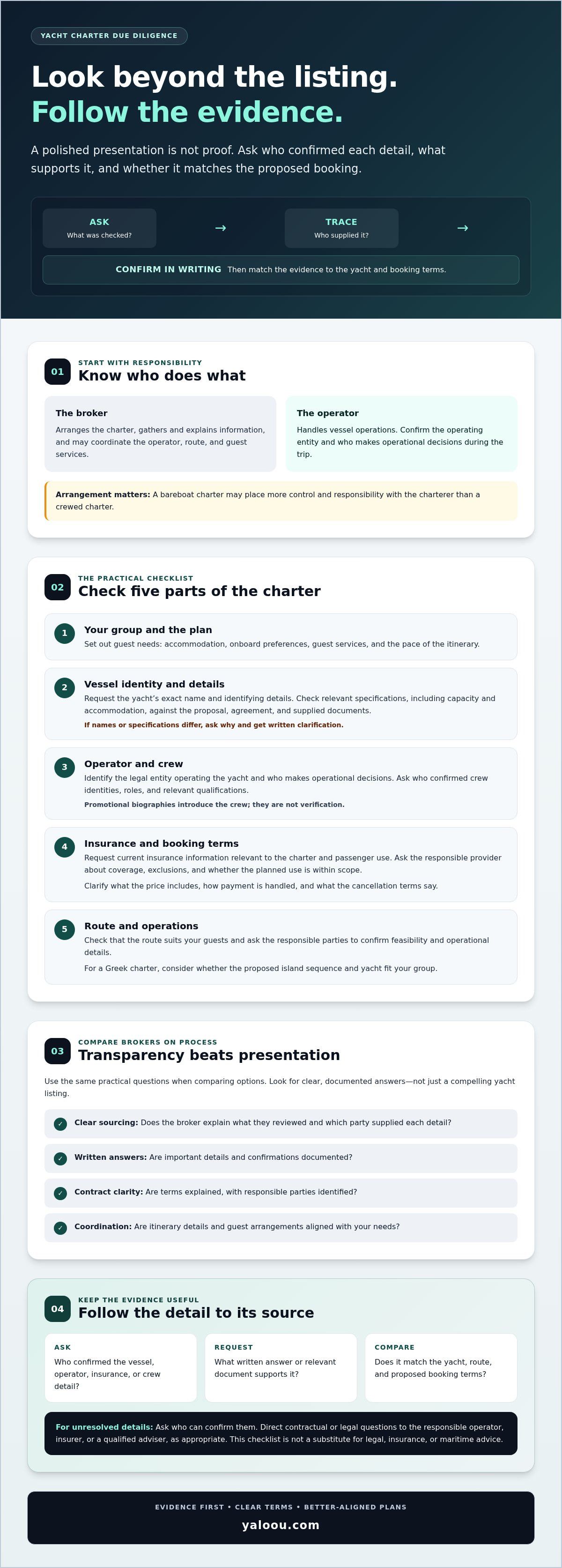
Use This Yacht Charter Due Diligence Checklist Before Signing
Turn your research into a clear sequence before authorizing payment. This charter broker due diligence checklist takes you from trip planning to written terms while keeping questions and responsibilities visible.
- Define the trip. Write down your dates, guest count, accommodation needs, accessibility considerations, onboard preferences, and intended Greek destinations. Ask how the proposed yacht and itinerary match these priorities.
- Confirm the yacht. Request the final vessel name and relevant specifications in writing. Check that they match across the proposal, invoice, and draft agreement. Ask for an explanation of any difference.
- Identify the operator. Ask which legal entity operates the yacht and who handles operational decisions during the charter. Make sure the agreement identifies the parties and their responsibilities.
- Request insurance and crew information. Ask for current insurance details relevant to the proposed charter and passenger use, and find out who can confirm the policy’s scope. Request the crew’s roles and relevant qualification information, along with confirmation of who supplied or checked those details.
- Review payment and cancellation terms. Ask who will receive each payment, when it is due, and how the payment schedule is documented. Request the cancellation terms and ask which provisions of the proposed agreement apply to your booking. If the proposal, invoice, and contract differ, resolve the discrepancy in writing before paying.
- Check the itinerary and inclusions. Ask who confirms route feasibility for the vessel and planned dates, what is included or excluded, and how changes may be handled. Treat stops and timing as proposed plans, not guaranteed access or conditions.
- Confirm the final version. Before signing, make sure the agreement reflects the vessel, operator, itinerary, payment terms, and any agreed changes. Pause if documents conflict, key answers remain unclear, or no one accepts responsibility for an important detail.
What evidence should you save after your checks?
Keep dated copies of the yacht proposal, agreement and its versions, invoice, insurance information, and written answers about the vessel, operator, and crew. Note who provided each response, when they provided it, and which details still need confirmation. Save agreed changes in writing rather than relying on memory or informal conversations.
For broader route-planning context, explore these Greek island destinations. Once your questions are clear, explore yacht charter experiences and compare the proposed arrangements with your checklist.
Plan a Greek Yacht Charter with Clear Checks and Next Steps
Once the documents and responsibilities are clear, turn your attention to the trip itself. A strong Greek charter proposal connects your guests’ priorities with a suitable yacht, a realistic island sequence, and clear operational coordination. Discuss the route with the party responsible for the yacht; don’t treat it as a promise that every stop or schedule will be possible.
How do Greek destinations affect the questions you ask?
Start with what your group wants from the trip. Is the priority time around Mykonos, a visit to Paros or Antiparos, or a mix of island stops and time on board? Share your travel dates, preferred pace, and any guest needs that affect the vessel or itinerary. This gives the broker useful criteria for shaping a proposal around your plans, rather than simply presenting a list of destinations.
Next, ask who assesses whether the route works for the proposed yacht and dates, and who will communicate changes if conditions or operational considerations affect the plan. A broker can coordinate route details, but confirm feasibility and operational decisions with the responsible operator. As you consider Greek destinations, including Athens, Aegina, Poros, Spetses, Syros, Tinos, Sifnos, Serifos, Milos, Poliaigos, Kimolos, Santorini, Ios, Koufonisia, Amorgos, Crete, Corfu, and Zakinthos, ask how each possible stop fits your guests and the proposed charter.
What should happen after you choose a broker?
Before committing, make sure the written proposal and agreement reflect the same essential plan: the selected vessel, operating party, itinerary, payment arrangements, cancellation terms, and agreed inclusions. If an important detail is still open, ask who will confirm it and when. That final alignment makes for a clearer handoff from planning to booking.
YAL’OOU Exclusive Yachting & More arranges daily and weekly yacht charters across Greek destinations and coordinates tailored routes, crew, and onboard-service details. It acts as an intermediary, not the yacht owner or operator. Compare the proposed planning support with your checklist, and direct vessel-operation questions to the responsible operator.
With your questions in hand, explore yacht and travel experiences. Bring your preferred dates, guest priorities, and island ideas into the conversation so you can assess the proposal against the trip you want.
Make Your Next Charter Decision with Confidence
A memorable yacht charter starts with more than an appealing listing. Ask for written evidence, confirm who operates the vessel, and check that the yacht, itinerary, payment terms, and cancellation conditions match across your booking documents. Strong charter broker due diligence gives you clear answers, named responsibilities, and realistic expectations before you commit.
Use your checklist to compare not only the yacht, but also how well the proposed experience fits your guests and plans. Route coordination and local details matter for a Greek charter. YAL’OOU arranges daily and weekly private yacht charters and coordinates tailored routes, crews, and local supplier services. The agency arranges the experience; the yacht operator remains responsible for vessel operations.
Ready to explore possibilities for your trip? Explore curated yacht and travel experiences, and bring your questions and priorities into the planning process. With clear checks and thoughtful coordination, you can move toward your time at sea with greater confidence.
Frequently Asked Questions
What does due diligence mean for a yacht charter broker?
Yacht charter due diligence means checking and documenting relevant information before recommending or arranging a charter. Ask the broker what was checked, who supplied the information, and when it was confirmed. The checks depend on the vessel, operator, itinerary, and jurisdiction, so no single checklist fits every booking. Aviation standards aren’t yacht-charter requirements. Clear written answers help distinguish verified details from assumptions or promotional claims.
What documents should I ask for before booking a yacht charter?
Request the proposed vessel’s identity, operator details, relevant insurance information, and a written charter agreement. Check that the documents explain inclusions and exclusions, payment arrangements, cancellation terms, and how itinerary changes are handled. Appropriate documents can vary by charter and location. If details conflict or remain unclear, ask the responsible operator or a qualified maritime professional to confirm them before signing or paying.
How can I verify that a yacht charter broker is legitimate?
Ask for the broker’s business identity, their role in the booking, and the name of the yacht’s operator. Compare the parties named in the proposal, contract, and payment instructions, and request explanations in writing. Independently confirm important details with the named operator. A polished website, testimonials, or a wide yacht selection may help you assess presentation, but none proves that the vessel or its arrangements have been verified.
Is a yacht charter broker responsible for the yacht’s safety?
A broker may arrange and coordinate a charter, while the yacht operator is generally the party to ask about vessel operations. Don’t infer legal responsibility from marketing language or assume the same arrangement applies in every location. Ask both broker and operator to explain their roles in writing. If the contract leaves operational responsibilities unclear, pause and seek guidance from a qualified maritime or legal professional before committing.
What should I check in a yacht charter contract?
Review the named parties, vessel, dates, itinerary, inclusions, exclusions, payment schedule, cancellation terms, and process for changes. Compare the agreement with the proposal and payment instructions to ensure the details align. Ask for written clarification if a responsibility or term is ambiguous. Contract requirements can vary by booking and jurisdiction, so consult a qualified professional if you need legal interpretation rather than relying on informal explanations.
How do I compare yacht charter brokers fairly?
Give each broker the same trip details, then compare how specific and documented their answers are, how clearly they explain the contract, and who confirms operational details. Consider whether the proposed yacht and planning approach fit your guests and preferred destinations, from Mykonos, Paros, and Antiparos to Athens, Aegina, Poros, Spetses, Syros, Tinos, Sifnos, Serifos, Milos, Poliaigos, Kimolos, Santorini, Ios, Koufonisia, Amorgos, Crete, Corfu, and Zakinthos.
What should I do if a broker cannot provide requested information?
Ask what’s unavailable, who can confirm it, and when you can expect a written response. Don’t pay or commit while a material discrepancy remains unresolved. Contact the named yacht operator or another appropriate professional to confirm important details. Keep a record of the questions and answers. If key terms or responsibilities are still unclear, pause the booking and compare alternatives based on the quality and transparency of their verification process.
Disclaimer
The YAL’OOU Travel Guide is curated with care to inspire and inform discerning travelers. While every effort is made to ensure the accuracy and relevance of the information provided, all content is offered for general guidance only and may evolve over time.
Details such as local regulations, availability, pricing, and services are subject to change without prior notice. We encourage guests to seek personalized advice and confirm arrangements directly when planning their journeys.
YAL’OOU accepts no liability for any inaccuracies, omissions, or outcomes arising from the use of this information. The Travel Guide may feature recommendations, insights, and selected third-party experiences, presented solely as a source of inspiration and not as formal endorsements.
By accessing this section of our website, you acknowledge and accept this disclaimer as part of your experience with YAL’OOU.