
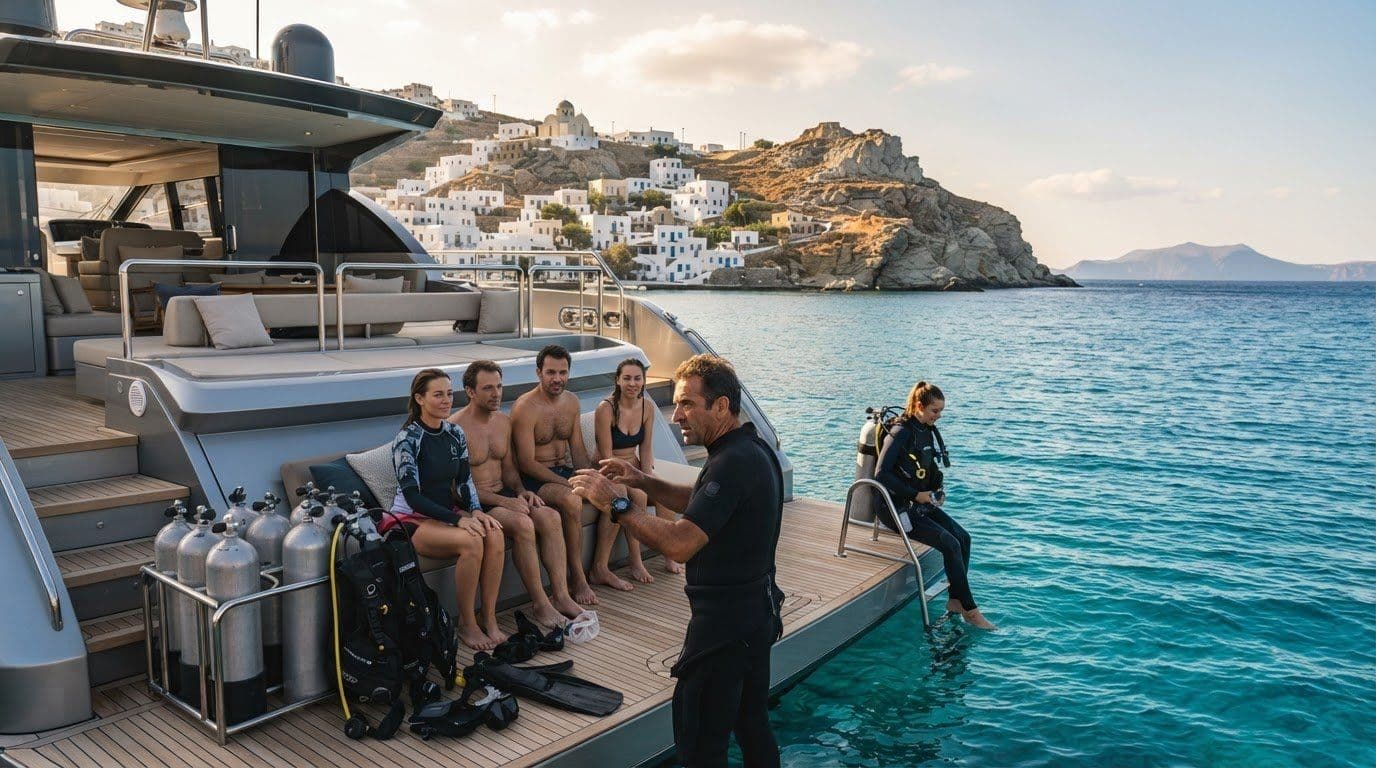
What makes a dive charter work is not simply an impressive deck. Chartering yachts with onboard scuba dive masters in Greece means aligning dive support, crew, vessel, and route with your group’s priorities. Look for a yacht suited to your guests, a realistic balance of diving and cruising, and a clear understanding of what the dive master will do for certified divers.
A well-planned charter fits diving around the day’s route and onboard routine, while leaving room for relaxed meals, time on board, and stops ashore. The details matter: who plans and briefs each dive, how the captain’s vessel operations shape the schedule, and how the itinerary can adapt to local conditions.
This guide covers dive-master support, vessel comparisons, Greek cruising areas, and practical itinerary planning. YAL’OOU arranges tailored Greek yacht routes and crewed charter experiences, coordinating the trip’s logistics around your group’s priorities.
Key Takeaways
- Understand how a dive master’s role differs from general yacht crew duties, including support for briefings and guest coordination.
- Compare your group’s dive priorities, onboard comfort, vessel layout, and preferred pace before choosing a charter.
- Consider how the Cyclades, Ionian Sea, and Saronic Gulf shape route planning, without assuming identical conditions or dive access.
- Plan chartering yachts with onboard scuba dive masters in Greece around the group, vessel, route, and a flexible daily rhythm.
- See how YAL’OOU’s tailored routes and crew coordination can bring diving, island visits, and onboard comfort together.
What Does Chartering a Yacht with an Onboard Scuba Dive Master in Greece Mean?
An onboard dive master focuses on the diving experience, while the captain and yacht crew manage navigation, vessel safety, and daily operations. Depending on the arrangement, dive support may include orienting guests, discussing a dive plan, and coordinating timing with the route and onboard routine.
A dive-led yacht charter coordinates diving with the vessel’s route and daily rhythm. That is the idea behind chartering yachts with onboard scuba dive masters in Greece: dive plans and yacht plans work together, while remaining responsive to the group, location, and conditions.
For a general foundation on scuba equipment and safety considerations, see this Scuba Diving Overview.
For a glimpse of the Greek yacht-charter experience, watch this video:
What an onboard dive master contributes to a charter
A dive master can help guests understand the dive plan, coordinate preparation, and fit activities into the day’s route. The title alone does not define every responsibility or qualification, so the professional’s role should be clear for the group’s plans. The captain’s role is different: the captain oversees vessel operations and makes decisions about navigation and the yacht’s movements.
How a private yacht changes the diving experience
A private yacht offers a more personal rhythm, with space to relax between activities and flexibility to shape the day around the group. That flexibility does not guarantee access to every dive site. Weather, local conditions, access requirements, and vessel operations all affect what is practical. The plan may need to change, leaving more time for a shore visit or a relaxed day on board.
The right vessel and a suitable route are the starting point. Explore crewed yacht options when planning a charter that brings dive activities, island time, and onboard routines together. YAL’OOU coordinates tailored Greek yacht routes and crewed charter experiences, helping organize these elements into a considered plan.
How to Evaluate Dive Support, Safety, and Yacht Fit Before You Charter
A smooth scuba-focused charter depends on more than having a dive master in the plan. Match the people, vessel, and daily pace to the diving your group wants to do. The right yacht is the one whose crew, layout, and itinerary suit the planned experience.
Before choosing, map out a few essentials:
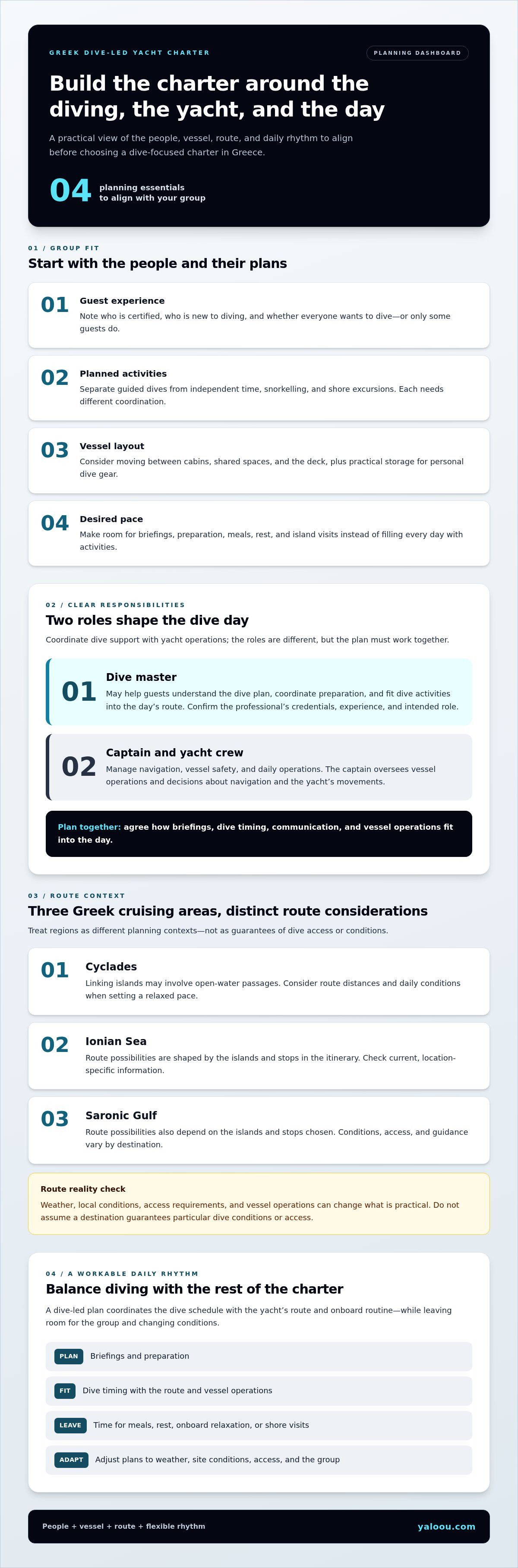
- Guest experience: Note who is certified, who is new to diving, and whether everyone wants to dive or only some guests do.
- Planned activities: Distinguish guided dives from independent time, snorkelling, or shore excursions. Each calls for different coordination.
- Vessel layout: Consider movement between cabins, shared spaces, and the deck, along with practical storage for personal dive gear.
- Desired pace: Leave room for briefings, preparation, meals, rest, and island visits instead of filling every day with activities.
Which dive-master and safety details matter?
Consider the dive professional’s relevant credentials, experience, and intended role. The title alone does not describe their full qualifications or scope. Establish how guest briefings, dive timing, and communication with the captain fit together. The captain remains responsible for vessel operations, so dive plans need to work within those operations.
Safety planning should account for changing weather, site conditions, and each diver’s experience. Understand how the group will be briefed, how plans may adapt, and what emergency procedures apply aboard. Greek regulatory, access, and protected-site requirements can depend on the destination and activity. Treat them as itinerary-specific details and use current authoritative guidance. For general destination context, consult PADI Diving in Greece.
Does the yacht suit your group’s diving plans?
Look beyond passenger capacity. A group bringing personal gear needs a practical way to store it and move around the deck. Guests who are not diving may also value comfortable alternatives on board. Equipment, facilities, and vessel capabilities vary, so compare the yacht’s stated specifications with your needs. The route and operating requirements also affect how much time can be devoted to diving.
Use the YAL’OOU yacht selection as a starting point for comparing vessels with your group’s priorities. For chartering yachts with onboard scuba dive masters in Greece, look at crew coordination, vessel layout, and route together. To plan the wider trip around time on board and ashore, explore Greek yacht experiences.
Greek Cruising Areas and Yacht Types: Compare Options for a Dive-Led Trip
Choose the cruising area and yacht together. A route that looks appealing on a map may leave little time for diving if it involves long passages or frequent stops. For chartering yachts with onboard scuba dive masters in Greece, match the region’s route pattern and the vessel’s pace to your group. Do not assume a destination guarantees particular dive conditions.
How to think about the Cyclades, Ionian Sea, and Saronic Gulf
These are distinct planning regions, not interchangeable promises of dive access. In the Cyclades, linking islands may involve open-water passages, so route distances and daily conditions matter when setting a relaxed pace. The Ionian and Saronic areas offer different route possibilities shaped by the islands and stops on the itinerary. Conditions, seasonal factors, site access, and guidance vary. Base the plan on current, location-specific information.
RegionPlanning characterDive-focused consideration
Cyclades
Island-to-island cruising, with passage lengths shaping the rhythm.
Allow flexibility for travel time and conditions when fitting dives into the route.
Ionian Sea
A separate island-cruising area with its own route options.
Plan stops around the group’s priorities and site-specific guidance, not assumptions.
Saronic Gulf
A distinct cruising choice whose pace depends on the chosen route.
Balance intended dive activities with passage time, local access, and onboard routines.
Compare possible routes across Greek island destinations. Before finalizing dive activities, account for the season, conditions, and access guidance for each intended stop.
Which yacht type best complements diving and downtime?
No yacht type is automatically the right choice for diving. A motor yacht may suit guests who value powered cruising and an itinerary shaped around covering distance. A sailing yacht makes time under sail part of the experience and can influence the pace. Catamarans offer a different layout and shared onboard space. These are broad distinctions, not specifications: comfort, storage, speed, deck arrangement, and facilities vary by yacht.
- Motor yacht: Consider how its cruising pace fits your itinerary and the time you want to spend on board.
- Sailing yacht: Decide whether time under sail is part of the trip’s appeal and how it fits the schedule.
- Catamaran: Compare the available living and deck areas with your group’s comfort and gear needs.
Compare each vessel’s stated specifications with your priorities rather than assuming it carries dive equipment or has dedicated facilities. Tailored routing and crew coordination can help align vessel choice, dive plans, and island time.
How to Plan a Scuba-Focused Yacht Itinerary in Greece
A rewarding dive-led charter starts with the guests, not a list of famous stops. Build the route around the group’s experience and priorities, then match the vessel and daily rhythm to the plan. When chartering yachts with onboard scuba dive masters in Greece, allow for flexibility: the captain and relevant dive professional adapt activities to conditions, site guidance, and vessel operations.
Build the route around guests, conditions, and pace
Use this sequence to turn broad ideas into a workable itinerary:
- Set guest priorities. Note each diver’s experience, preferred dive frequency, and interest in other activities. Include plans for non-divers.
- Choose a broad cruising area. Select the part of Greece that best suits the group, then consider route distances and possible island visits.
- Match the vessel to the plan. Compare onboard comfort, group needs, and the yacht’s operating style with the intended pace.
- Shape flexible days. Allow time for briefings and preparation, diving, meals, rest, and exploring ashore. Keep room to adjust instead of promising a specific site or number of dives.
A relaxed day might include a dive activity, a leisurely meal, and an island stop without treating every element as fixed. The captain makes decisions about yacht operations, while the dive professional contributes to dive planning within their role. Weather, site conditions, and operational needs can change the plan.
Prepare for the onboard diving routine
Briefings, equipment handling, and time to rest all affect how much fits comfortably into a day. Share relevant experience, preferences, comfort levels, and practical needs early so the itinerary reflects the whole group. Choose what to pack for the planned activities and conditions, which can vary by season and location.
Before departure, use this checklist:
- Experience: Record each diver’s certification level and recent experience, where relevant to planning.
- Preferences: Note desired dive frequency, non-diving activities, and how much downtime the group values.
- Equipment: Identify personal gear and clarify what equipment is part of the diving arrangements rather than assuming the yacht carries it.
- Accessibility and comfort: Share mobility considerations, dietary needs, and other practical details that may affect time on board or ashore.
A considered route makes room for underwater exploration and the pleasures of a private yacht. Explore Greek yacht experiences as you shape a charter around your group’s interests, onboard comfort, and island time.
Plan a Tailored Greek Yacht Charter with YAL’OOU
A dive-led Greek charter comes together when your group’s priorities, crew coordination, vessel, and route support one another. Each shapes the experience. A route with room for discovery and downtime, for example, may suit a group that wants scuba to be part of the holiday without defining every moment.
YAL’OOU arranges daily and weekly crewed yacht charters across Greek destinations and coordinates tailored routes, crew, and onboard-service planning. This brings dive priorities into a broader yacht experience while keeping the itinerary responsive to the group and route. Plan around the specific crew role, equipment, and yacht features needed for your trip.
Bring your diving priorities into the charter plan
Start with an honest picture of the group: who has diving experience, how often guests hope to dive, and what else matters during the trip. Some may prioritize time underwater; others may look forward to unhurried meals, time on deck, or exploring ashore. Sharing these preferences helps shape the route and onboard services around the whole group rather than a single activity.
For chartering yachts with onboard scuba dive masters in Greece, crew coordination and vessel fit belong in the same conversation as route planning. Consider how the group expects to use the yacht, what pace feels comfortable, and how diving can sit alongside island visits. The captain and dive professional remain central to adapting activities to conditions and vessel operations.
Turn a Greek charter idea into a considered next step
Before exploring options, gather a few essentials: group size, diving experience and preferences, preferred cruising area, the desired balance of dive time and island exploration, and practical onboard needs. Include equipment requirements and accessibility considerations. A concise brief makes it easier to compare charter experiences with what your group actually wants.
With those priorities in hand, explore Greek yacht experiences and start shaping a charter around your preferred route, crew coordination, and onboard comfort. Plan a tailored trip that gives diving and island time room to belong in the same journey.
Shape Your Greek Charter Around the Dive Experience
A successful dive-led charter brings together suitable dive support, a yacht that fits the group, and a route with space for underwater time and island exploration. When chartering yachts with onboard scuba dive masters in Greece, plan around your group’s experience and priorities, while keeping the itinerary flexible enough to respond to conditions and vessel operations.
YAL’OOU coordinates tailored routes and crewed yacht experiences across Greek destinations, including Mykonos, Paros, and Antiparos. Crew coordination and onboard-service arrangements help shape a considered trip. Share your preferred pace, diving interests, and ideas for time ashore, then explore a charter planned around the wider holiday you have in mind.
Explore tailored Greek yacht experiences and take the next step toward a charter that brings diving, comfort, and island discovery together.
Frequently Asked Questions
What does an onboard scuba dive master do on a yacht charter?
An onboard dive master can help coordinate dive planning, guest briefings, and activity timing around the yacht’s itinerary. A dive master may guide certified divers, while teaching and issuing certifications is the role of a qualified instructor. The captain remains responsible for vessel operations. Consider the professional’s experience and responsibilities alongside the group’s diving plans.
Can you charter a yacht with a scuba dive master in Greece?
A Greek yacht charter can be planned around scuba diving with dive-master support as part of the trip arrangements. The professional’s role needs to fit the route, vessel operations, and guests’ experience. YAL’OOU coordinates tailored daily and weekly crewed yacht charters across Greek destinations, including Mykonos and Paros. Plan around the specific crew arrangements and vessel details, including equipment and onboard facilities.
Which Greek islands are best for a yacht charter with scuba diving?
There is no single best island group for every diver. Choose a cruising area based on route pace, guest interests, and current site-specific guidance, rather than assuming conditions or access. Options include Cycladic destinations such as Mykonos, Paros, Antiparos, Syros, Tinos, Sifnos, Serifos, Milos, Kimolos, Poliaigos, Santorini, Ios, Koufonisia, and Amorgos; the Saronic area around Athens, Aegina, Poros, and Spetses; and Ionian destinations including Corfu and Zakynthos, as well as Crete.
Is a motor yacht or sailing yacht better for a scuba charter?
Neither is automatically better. Choose the vessel that suits your group’s preferred pace and onboard routine. A motor yacht may appeal if powered cruising is central to the plan, while a sailing yacht makes time under sail part of the experience. Catamarans offer a different layout and shared-space experience. Compare individual yacht specifications, deck arrangements, storage, and facilities rather than assuming every vessel supports diving in the same way.
What should I check before booking a dive-focused yacht charter?
Consider how the dive professional’s qualifications and role fit your group, how briefings and safety planning are handled, and how diving activities coordinate with the captain’s vessel operations. Share guests’ experience levels, preferred pace, accessibility needs, and equipment requirements. Review the yacht’s stated layout and facilities, and plan around local conditions and site access. A dive-master title does not guarantee particular services.
When is the best time to plan a scuba yacht charter in Greece?
The best timing depends on the route, planned dive activities, guest preferences, and conditions at the intended destinations. Season can affect the overall charter experience, but it does not guarantee conditions at a specific site. Plan flexibly and use current, location-specific guidance for weather, sea conditions, and access. The captain and dive professional can adapt activities to conditions and vessel operations during the trip.
Can a Greek yacht itinerary combine scuba diving with island visits?
Yes. A thoughtful itinerary can combine dive activities with meals, recovery time, and visits ashore. Start with the group’s diving priorities, choose a broad cruising area, and shape a route that leaves room for travel and changing conditions. Avoid packing every day too tightly. YAL’OOU coordinates tailored routes, crew, and onboard-service arrangements to bring diving priorities, island exploration, and comfort into a considered Greek yacht charter.
Disclaimer
The YAL’OOU Travel Guide is curated with care to inspire and inform discerning travelers. While every effort is made to ensure the accuracy and relevance of the information provided, all content is offered for general guidance only and may evolve over time.
Details such as local regulations, availability, pricing, and services are subject to change without prior notice. We encourage guests to seek personalized advice and confirm arrangements directly when planning their journeys.
YAL’OOU accepts no liability for any inaccuracies, omissions, or outcomes arising from the use of this information. The Travel Guide may feature recommendations, insights, and selected third-party experiences, presented solely as a source of inspiration and not as formal endorsements.
By accessing this section of our website, you acknowledge and accept this disclaimer as part of your experience with YAL’OOU.