
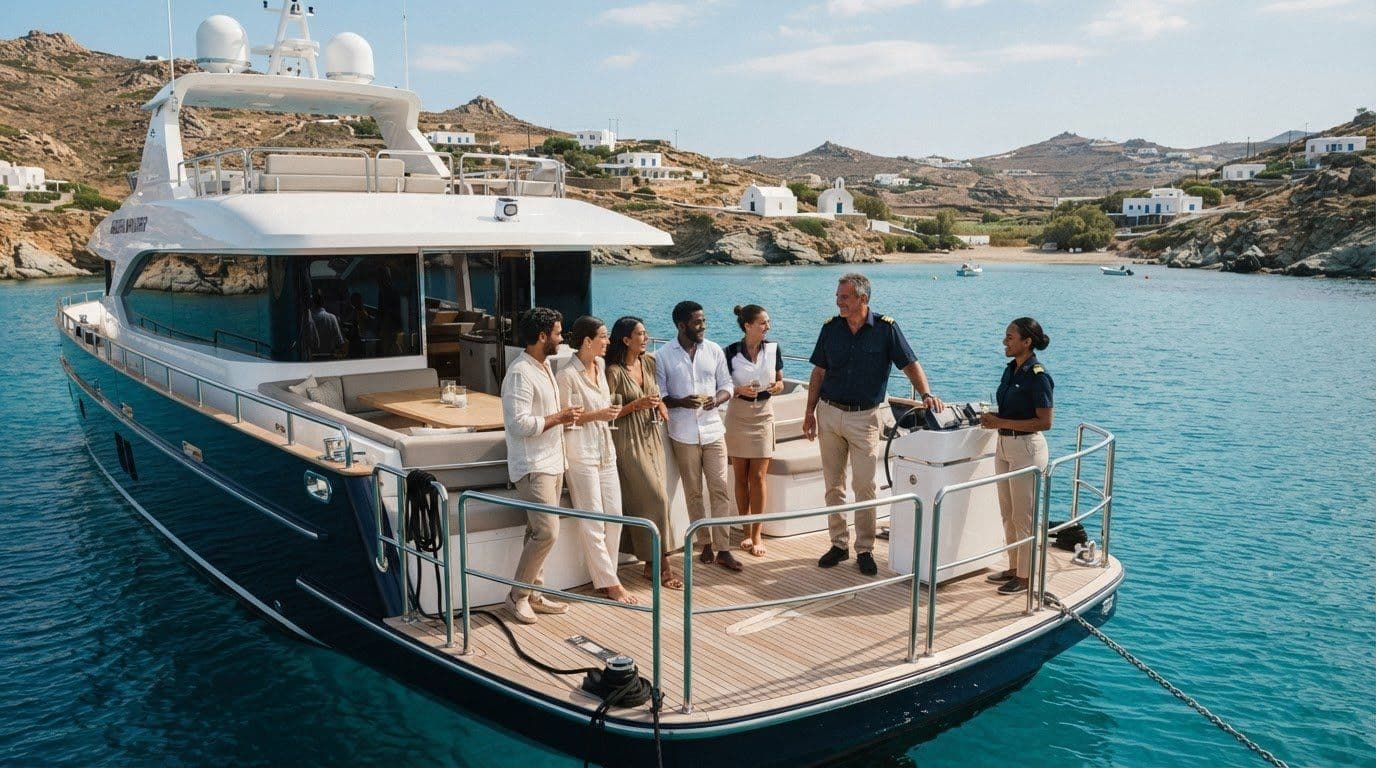
What if the smoothest Greek yacht charter starts with a simple conversation? It’s natural to want attentive service without seeming demanding, or to wonder whether a request might cross a boundary. The right etiquette for interacting with professional yacht crew and captain makes that balance easier: communicate preferences clearly, respect crew spaces, and let safety lead.
A capable crew can help shape an enjoyable day, but a smooth charter depends on clear expectations and mutual consideration. From the first welcome to a change of plans underway, small, thoughtful habits make the experience more comfortable for everyone on board. This guide explains how to make requests courteously, raise concerns, and understand why the captain’s instructions take priority when safety calls for a change. You’ll also find practical guidance on onboard boundaries, footwear, luggage, and gratuities, so you can settle in confidently and enjoy the Greek islands.
Key Takeaways
- Make requests easier to act on by stating what you need, sharing useful context, and allowing time for a response.
- Use the etiquette for interacting with professional yacht crew and captain to balance warm communication with respect for onboard roles and privacy.
- Follow the captain’s safety instructions promptly, and save non-urgent questions for a suitable moment.
- Prepare for Greek island charter days with simple before, during, and end-of-day habits that help the experience run smoothly.
- Share your preferences early so route ideas and onboard service can better reflect what matters to your group.
Yacht Crew Etiquette Starts with Understanding the Captain’s and Crew’s Roles
Good yacht etiquette means interacting in ways that support both guest comfort and safe operations. Understanding who leads, who handles different onboard needs, and where professional boundaries lie helps everyone enjoy the charter with confidence.
“Professional service is attentive work within clear roles, not personal availability on demand.” Crew members are there to create a welcoming experience and support the yacht’s operation. They also have assigned responsibilities and private spaces. Treating them as skilled professionals, rather than expecting constant personal attention, sets a considerate tone from the start.
What does the captain handle during a private charter?
The captain leads navigation and makes operational decisions for the vessel. Guests can share what they’d enjoy, such as a preferred destination or more time at anchor. Those preferences help shape the experience, but they don’t replace the captain’s judgment about how and when the yacht can travel.
Routes and timing may change because of conditions or operational considerations. If a planned stop or departure shifts, ask calmly and listen to the explanation. You can express priorities without directing navigational choices; the captain is responsible for deciding how to operate the yacht.
How should guests understand different crew roles?
Crew arrangements differ by yacht and charter, so don’t assume every vessel has the same positions or staffing. In general, some crew focus on guest service while others support the vessel’s operation. On larger yachts, roles may be organized into departments such as captain, chef, interior, deck, and engineering. The professional yacht crew structure overview provides more context, though individual arrangements vary.
When you know who is responsible for an area, direct your request to that crew member. For example, share a meal preference with the person coordinating onboard service, or ask the captain about the itinerary. If you’re unsure, ask politely who can help. This lets the right person respond without requiring you to know every detail of the yacht’s staffing.
That awareness is central to the etiquette for interacting with professional yacht crew and captain: be friendly, direct, and considerate of each person’s responsibilities. A charter feels more relaxed when guest expectations and crew roles are clear from the outset.
How to Communicate Requests Clearly with Yacht Crew
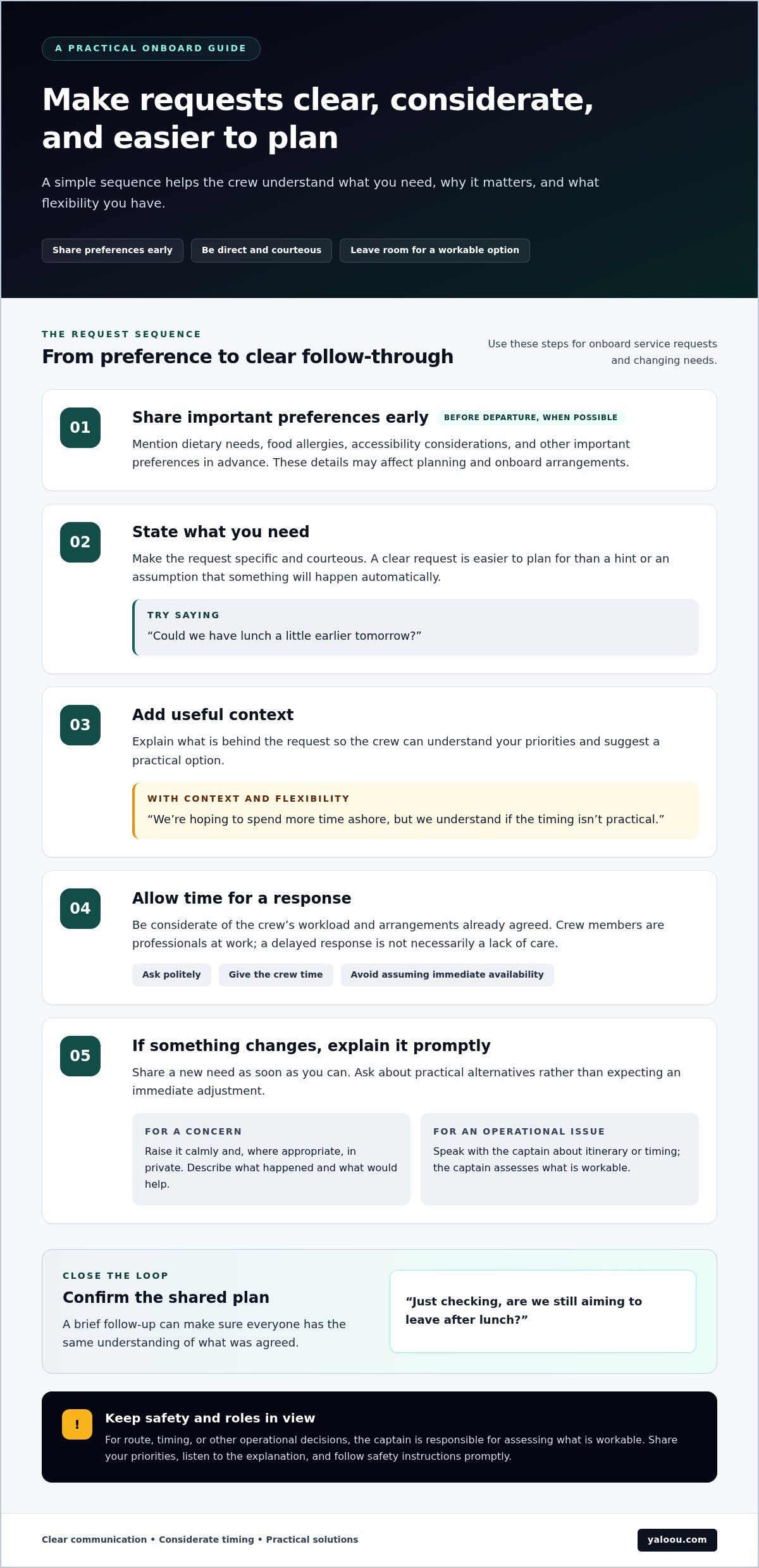
Clear requests help the crew shape onboard service around your preferences instead of relying on guesswork. Say what you need, add any context that affects the request, then give the crew time to respond. A specific, courteous request is easier to plan for than a hint or an assumption that something will happen automatically.
When and how should guests make requests?
Share non-urgent preferences before departure whenever possible. Dietary needs, food allergies, accessibility considerations, and other important preferences are especially useful to discuss early because they may affect planning and onboard arrangements. During the charter, be direct and considerate of the crew’s workload and the arrangements already agreed.
For example: “Could we have lunch a little earlier tomorrow? We’re hoping to spend more time ashore, but we understand if the timing isn’t practical.” This explains what you’d like and why, while leaving room for the crew to suggest a workable option.
Respect also means recognizing that crew members are professionals with working conditions, not people who are personally available at every moment. The International Labour Organization’s Maritime Labour Convention sets international standards for seafarers’ work and living conditions. You don’t need to know its details to communicate thoughtfully: ask politely, allow time for a reply, and don’t treat a delayed response as a lack of care.
How can guests handle misunderstandings or changing needs?
Raise concerns calmly and, where appropriate, in a private conversation rather than making assumptions in front of the group. Describe what happened and what would help. For instance: “I think my dietary preference may have been missed. Could we talk about what alternatives are possible?” This gives the crew a clear starting point without assigning blame.
If circumstances change, explain the new need as soon as you can. Ask about practical alternatives rather than expecting an immediate adjustment. For itinerary, timing, or other operational concerns, speak with the captain, who can assess what is workable. A brief follow-up can confirm what was agreed: “Just checking, are we still aiming to leave after lunch?” If there’s been confusion, focus on the next step, not who was at fault.
This kind of etiquette for interacting with professional yacht crew and captain makes communication more confident and considerate. Sharing preferences while planning your Greek yacht charter experience can help align your group’s priorities with the route and onboard service from the outset.
Captain-Led Safety and Crew Privacy: Boundaries Guests Should Respect
A luxury charter is designed around guest comfort, but service never means setting aside safety procedures or professional boundaries. The captain’s instructions and the crew’s guidance help keep the experience safe. Follow directions promptly, even if the reason isn’t immediately obvious. If you have a question, wait for a suitable moment unless you need clarification to follow an instruction safely.
Why should guests follow the captain’s safety decisions?
The captain may be accounting for operational factors guests can’t see. A route change, delayed departure, or pause in an activity isn’t necessarily a service failure; it may be a practical decision based on conditions or the yacht’s operation. Cooperate first, then ask for an explanation when the immediate situation allows. You can share preferences and ask about alternatives, but safety-related decisions rest with the captain.
Which onboard boundaries protect crew and guests?
Keep crew-only and working areas private unless a crew member invites you in. These spaces support the crew’s work and privacy. Be thoughtful about photography and personal questions, too: ask before taking close-up photos of crew, and don’t assume a friendly conversation means someone is available off duty. If you’re unsure whether an area is accessible or when to make a request, ask.
Good boundaries are clear, not awkward. A polite “Is it okay if I step in here?” or “Is now a good time to ask?” gives the crew room to guide you without pressure. If a crew member is focused on a task, let them finish before starting a non-urgent conversation. Respectful timing supports both service and the smooth operation of the yacht.
This is a core part of the etiquette for interacting with professional yacht crew and captain: enjoy attentive service while recognizing that the yacht is also a workplace with operational priorities and private spaces. When expectations are unclear, ask rather than assume. A little consideration helps everyone feel comfortable on board.
Yacht Etiquette Guide for Greek Island Charter Days
A Greek island charter can combine time on board, stops ashore, and changing plans. A little coordination helps the day feel relaxed without treating the itinerary as fixed. Whether you’re discussing a day around Mykonos or considering time near Paros, share what matters to your group and stay open to the captain’s operational judgment.
What should guests align with the crew before departure?
Before setting off, make sure the crew understands your priorities, preferred pace, and any personal needs that may shape the day. Agree on the general plan and how to communicate if something changes. This helps the crew coordinate guest service with the route and schedule. For broader trip-planning context, explore this Greek Islands destination guide.
How can guests be considerate throughout an island-hopping day?
Use this simple checklist to keep communication clear at each stage:
- Before departure: Share preferences and relevant needs, understand the day’s broad plan, and be ready at the agreed time.
- During the day: Follow agreed arrangements, ask before using onboard equipment, and speak up promptly if your priorities change.
- At the end of the day: Check in about the next planned step, gather your belongings, and let the crew know if you need anything before disembarking or settling in for the evening.
Flexibility matters. If your group is considering a different stop during a Cyclades outing, ask the captain whether it fits the day’s plan rather than assuming the yacht can change course or timing. The same approach works around Mykonos or Paros: explain what you’d like to do, then allow the crew to discuss what’s workable. Plans may need adjustment, and a respectful question keeps the conversation constructive.
Thoughtful timing and clear updates are practical parts of the etiquette for interacting with professional yacht crew and captain. Share preferences early, be ready when agreed, and approach changes as a conversation. To shape a Greek sailing day around your group’s priorities, explore yacht charter experiences in Greece.
Plan a Crew-Friendly Charter That Feels Relaxed from the First Conversation
A comfortable crewed charter begins before you step aboard. Share what your group enjoys, communicate important needs clearly, and stay open to the captain’s decisions about the route and schedule. These habits help align guest priorities with onboard service and give the crew useful information for planning a smooth, welcoming experience.
What details make charter planning smoother for everyone?
Before your trip, gather the details that will help shape the experience. Consider:
- Group preferences: Does your party prefer a relaxed pace, time ashore, or a day focused on enjoying the yacht?
- Dietary needs: Share allergies, dietary requirements, and food preferences in advance.
- Itinerary priorities: Note destinations or activities that matter to your group, while allowing flexibility in the final route.
- Accessibility or comfort needs: Explain any considerations that could affect how you spend time on board.
Sharing these details early gives the charter team useful context for coordinating routes, onboard services, and crew expectations before departure. If you’re considering a crewed charter, explore the yacht charter options to get a sense of the experience available.
How can guests find a charter experience that fits their style?
Think about the pace you want, the Greek destinations you’d like to explore, and the kind of onboard experience that feels right for your group. A day around Mykonos may call for different priorities than time near Paros. Sharing those ideas helps shape the plans around your preferences while leaving room for the captain’s operational judgment.
That balance is at the heart of the etiquette for interacting with professional yacht crew and captain: be clear about what matters, treat the crew as professionals, and respect safety decisions. YAL’OOU coordinates crewed charters across Greek destinations, aligning guest priorities, route ideas, and onboard service to create a considered trip.
For a smoother arrival on board, ask about footwear guidance and luggage stowage during planning. Follow the crew’s instructions about shoes, and choose manageable bags that can be stored without obstructing working areas. If you plan to leave a gratuity, ask in advance about the preferred handover process rather than interrupting the crew during a busy moment.
Ready to picture your time on the water? Explore YAL’OOU charter experiences and find inspiration for a Greek getaway that feels personal, comfortable, and well planned.
Make Your Greek Charter Feel Effortless from the Start
A rewarding yacht charter is built on good coordination, not complicated etiquette. Share your needs early, make requests clearly, and treat the crew’s professional roles and privacy with consideration. Above all, follow the captain’s safety guidance, even when it changes your preferred plans. These habits give everyone a clearer starting point and leave more room to enjoy the journey.
That’s the heart of etiquette for interacting with professional yacht crew and captain: be courteous, stay flexible, and work with the crew. YAL’OOU coordinates daily and weekly crewed yacht charters across Greek destinations, including Mykonos and Paros, bringing guest priorities, routes, and onboard service together.
Ready to imagine your time on the water? Explore YAL’OOU charter experiences and start shaping a Greek getaway that feels comfortable, personal, and well planned.
Frequently Asked Questions
How should you address a yacht captain?
Address the captain politely and use “Captain” unless they introduce another preference. A calm greeting and clear question are enough; there’s no need for elaborate formality. For example, “Captain, could I ask about tomorrow’s departure timing?” makes your request clear while recognizing their role. If you’re unsure how they prefer to be addressed, ask once and follow their lead for the rest of the charter.
Is it acceptable to ask the yacht crew to change the itinerary?
Yes, you can ask about itinerary changes, but the captain decides what’s operationally workable. Explain what you’d like and stay open to alternatives if the route or timing needs to change. YAL’OOU coordinates Greek charters across Mykonos, Paros, Antiparos, Athens, Aegina, Poros, Spetses, Syros, Tinos, Sifnos, Serifos, Milos, Poliaigos, Kimolos, Santorini, Ios, Koufonisia, Amorgos, Crete, Corfu, and Zakinthos. Don’t assume a route is fixed.
Can yacht guests enter crew-only areas?
No, stay out of crew-only spaces unless a crew member invites you in. These may be private or working areas, and respecting that boundary supports the crew’s privacy and ability to do their jobs. If you’re unsure whether an area is accessible, ask before entering. The same consideration applies to taking close-up photos of crew or interrupting them while they’re focused on a task.
What should you do if you disagree with a captain’s safety decision?
Follow the instruction first, then ask for an explanation when the situation allows. The captain may be weighing operational factors you can’t see, so don’t disregard a direction or try to continue a restricted activity. If you still have concerns, raise them calmly and ask what alternatives are possible. Safety decisions belong to the captain, even when they change your preferred plan.
How should guests communicate dietary needs to yacht crew?
Share dietary needs before departure whenever possible, using clear and specific details. Explain allergies, dietary requirements, and food preferences, and identify any concern the crew should know about when planning meals. Don’t rely on hints or wait until food is being served to mention an important need. Good etiquette for interacting with professional yacht crew and captain starts with timely information and respectful follow-up.
Are yacht crew available whenever guests need them?
No, attentive service doesn’t mean crew members are personally available at every moment. They have assigned duties, working areas, and private time. For a non-urgent request, ask politely and allow time for a response rather than interrupting someone who’s occupied. If you’re unsure whom to approach or when, ask the crew how best to communicate your needs during the charter.
What is the best way to raise a concern during a yacht charter?
Raise it calmly, describe what happened, and explain what would help. If the matter isn’t urgent, speak privately with the appropriate crew member instead of making assumptions in front of the group. For example, say, “I think my request may have been missed. Could we talk about an alternative?” For itinerary or operational concerns, speak with the captain and focus on a workable next step.
Disclaimer
The YAL’OOU Travel Guide is curated with care to inspire and inform discerning travelers. While every effort is made to ensure the accuracy and relevance of the information provided, all content is offered for general guidance only and may evolve over time.
Details such as local regulations, availability, pricing, and services are subject to change without prior notice. We encourage guests to seek personalized advice and confirm arrangements directly when planning their journeys.
YAL’OOU accepts no liability for any inaccuracies, omissions, or outcomes arising from the use of this information. The Travel Guide may feature recommendations, insights, and selected third-party experiences, presented solely as a source of inspiration and not as formal endorsements.
By accessing this section of our website, you acknowledge and accept this disclaimer as part of your experience with YAL’OOU.