
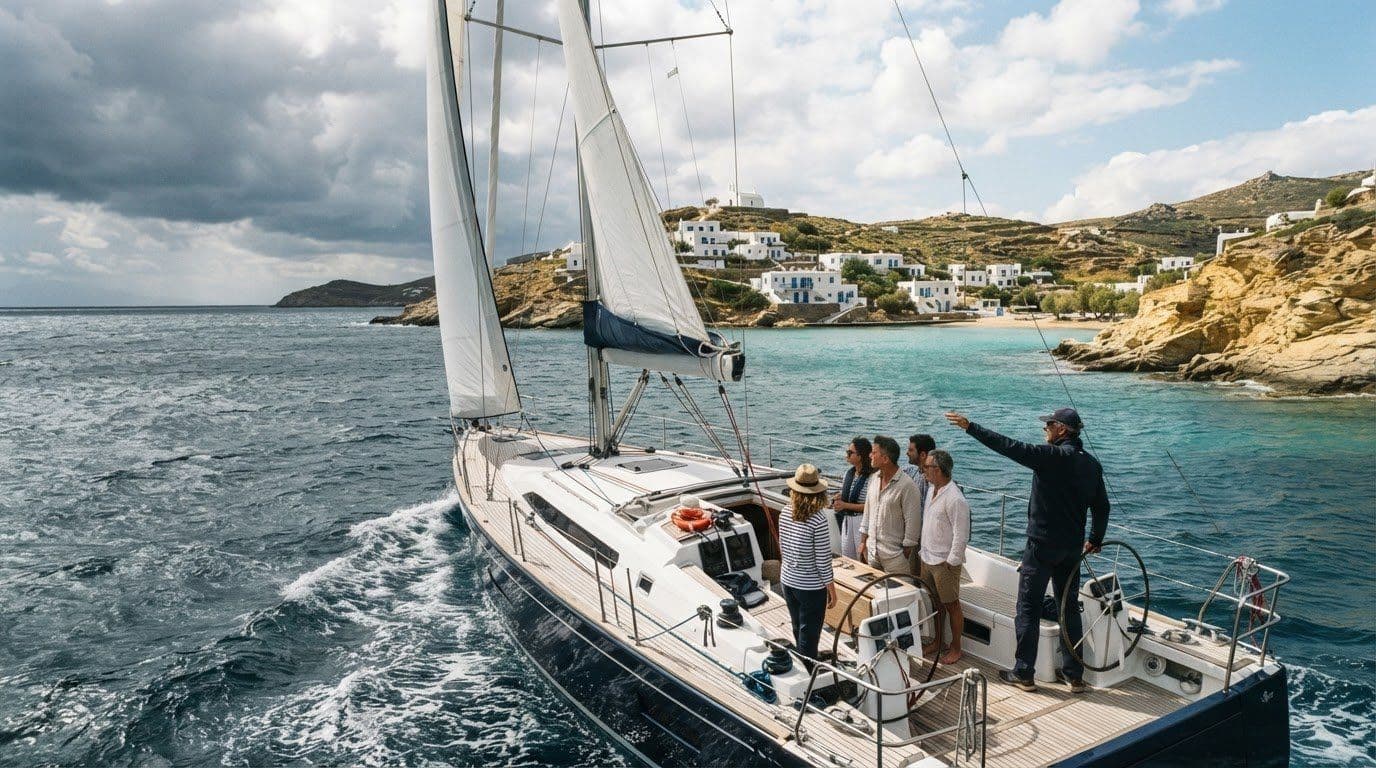
What if changing course is the best way to save your Greek island charter? It’s natural to feel disappointed when weather puts a planned stop or swim ashore in doubt. If you’re wondering how to adjust your yacht itinerary mid trip due to changing weather, start here: a reroute isn’t a failed plan. It’s a safety-led decision that can keep the experience enjoyable while respecting conditions at sea.
The skipper assesses the forecast and conditions, with passenger and yacht safety guiding any change. You can explain what matters most to your group, but leave the operational decision to the crew. A flexible route may mean choosing a more sheltered anchorage, shortening a crossing, changing the order of stops, or spending more time on board.
This guide explains how route decisions are made, what alternatives to discuss, and how clear communication between guests, crew, and charter support can make a change feel smoother. You’ll find practical ways to share your priorities while keeping expectations flexible.
Key Takeaways
- Understand why weather may require a route or stop change, and how that differs from changing plans on a whim.
- See how the skipper reviews updated forecasts, assesses the route, weighs options, and communicates a decision.
- Compare keeping the route, changing the order of stops, or choosing a sheltered alternative by considering safety, passage practicality, guest priorities, and available time.
- Learn how to adjust your yacht itinerary mid trip due to changing weather: listen to the briefing, ask focused questions, and share your priorities without pressuring the skipper to continue an unsuitable plan.
- See how tailored routes and clear crew communication can help keep a flexible charter aligned with what matters to your group.
Why a yacht itinerary may change when Greek island weather shifts
A long-awaited charter often comes with favorite islands, swim stops, and evenings you’ve already pictured. So a route change can feel disappointing, especially when you’re unsure what it means for the rest of the trip. A weather-driven itinerary adjustment changes the route or a planned stop in response to conditions. It doesn’t mean the whole experience is lost. A different anchorage or stop order may still leave room for swimming, exploring, and relaxed time on board.
Safety comes first. The skipper uses professional judgment to decide whether the planned passage remains suitable, even if that means changing the schedule. If you’re learning how to adjust your yacht itinerary mid trip due to changing weather, think of the itinerary as a flexible plan, not a promise that every stop will happen exactly as expected.
Across Greek destinations, conditions can vary between routes and over the course of a journey. Knowing what can affect a passage makes a change easier to understand and helps you focus on enjoying the charter.
Which weather and sea conditions can affect a route?
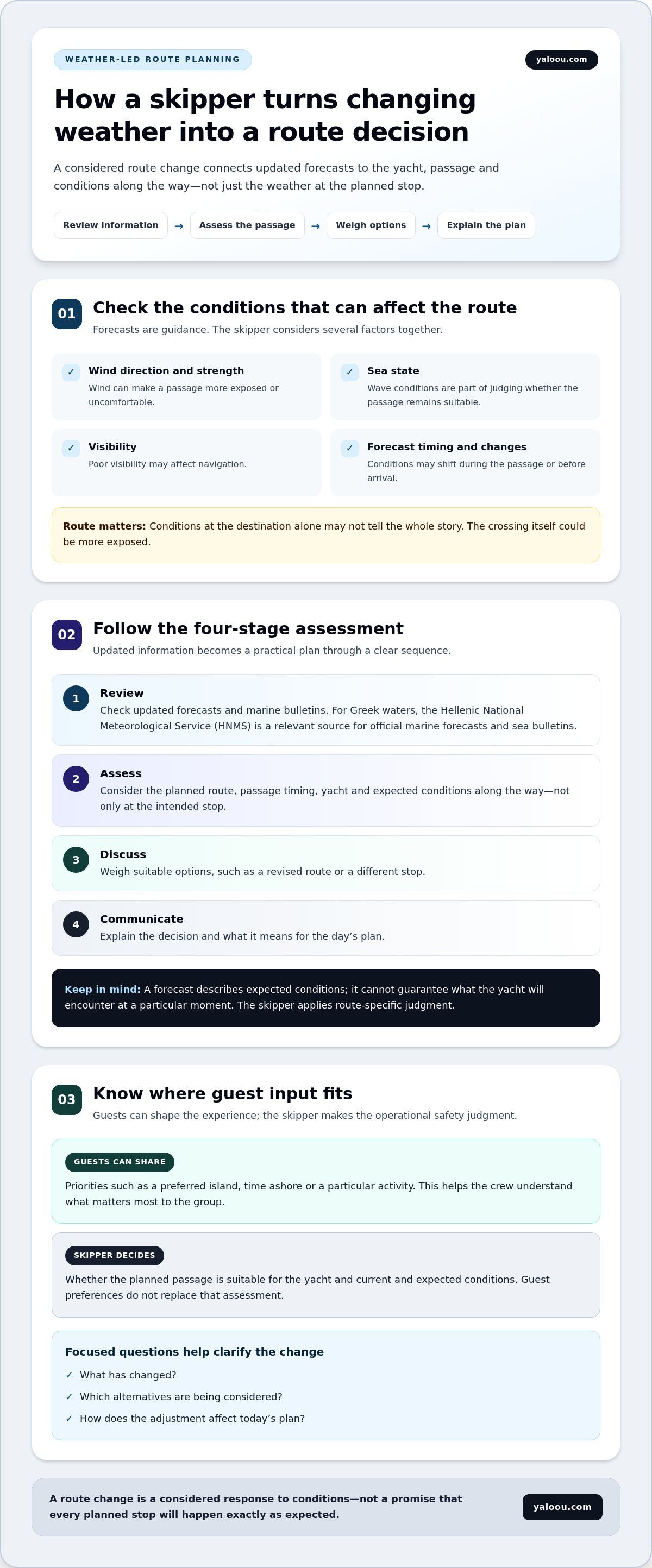
Wind direction and strength can make a passage more exposed or uncomfortable. Wave conditions matter too, while poor visibility may affect navigation. Forecasts can change, prompting the crew to reassess a crossing or stop. The Marine weather forecasting overview explains how marine forecasts draw on observations and forecasting methods, but a forecast is only one part of a route decision.
The Beaufort scale gives sailors a shared reference for describing wind strength. It isn’t a standalone go-or-no-go rule. The skipper considers the yacht, route, sea state, visibility, and latest conditions together.
Why the Cyclades can call for flexible planning
The Cyclades sit in the Aegean, where wind and sea conditions can differ from one route or day to another. The Meltemi is a regional wind consideration, but its effect on a particular passage depends on the current conditions and route. Some legs are more exposed, while other routes or anchorages may offer more shelter. Tailored planning leaves room to adapt rather than assuming every island passage will feel the same.
A forecast describes expected conditions; the skipper assesses what those conditions mean for the yacht and route. This distinction helps explain why a plan may change even when the forecast doesn’t tell the whole story. A revised stop can support the pace and comfort of the charter while keeping the trip focused on what your group most wants to enjoy.
How the skipper assesses changing weather before altering the route
A route change usually follows a practical decision process, not a reaction to one forecast update. The skipper reviews the latest information, considers how it applies to the planned passage, weighs workable alternatives, and explains the decision to guests. Forecasts provide a picture of expected conditions. The skipper’s route-specific assessment connects that picture to the yacht, timing, and conditions along the way.
What information informs a route decision?
For Greek waters, the Hellenic National Meteorological Service (HNMS) is a relevant source for official marine forecasts and sea bulletins. The National Weather Service marine forecasts offer another example of how public marine weather information is presented. Forecasts are guidance, not a guarantee of what the yacht will encounter at a particular moment.
The skipper considers factors such as forecast wind direction and timing, sea state, visibility, and expected changes during the passage. Conditions at the destination alone may not tell the whole story: the crossing could be more exposed, or the weather may shift before the yacht arrives. A route decision depends on conditions along the passage, not just at the planned stop.
From forecast to decision
The assessment typically moves through four stages:
- Review: Check updated forecasts and marine bulletins.
- Assess: Consider the planned route, passage timing, yacht, and expected conditions along the way.
- Discuss: Weigh suitable options, including a revised route or different stop.
- Communicate: Explain the decision and what it means for the day’s plan.
This sequence turns changing information into a considered plan. It also gives guests a clear opportunity to ask about alternatives without having to interpret forecasts themselves.
Who makes the final onboard decision?
The skipper evaluates how the yacht and route fit current and expected conditions, then makes the operational safety judgment. Guests can help shape the experience by sharing priorities, such as a preferred island, time ashore, or a particular activity. That input matters, but it doesn’t replace the skipper’s assessment of whether a passage is suitable.
Clear, timely explanations make a change easier to understand. Ask what has changed, which alternatives are being considered, and how the adjustment affects the day. If you’re considering tailored Greek yacht experiences, sharing your priorities early helps keep route planning connected to what your group values, while leaving room for conditions to guide the final decision.
How to compare itinerary alternatives without losing the trip’s appeal
A useful alternative isn’t simply the closest island or the easiest change on paper. Compare each option against four factors: whether it suits the conditions, how practical the passage is, what matters most to your group, and how much time remains. The skipper assesses what works for the yacht and route. A sheltered destination may sound appealing, but it still needs to fit the conditions and passage plan.
Use these options as starting points for discussion, not guarantees. The route, vessel, current weather, and skipper’s assessment all shape what is workable. For Greek route-planning inspiration, browse the Greek island destinations and consider which experiences your group would most like to preserve.
OptionWhen it may suitWhat to weigh
Keep the planned route
Conditions still make the passage and stops suitable.
Check whether the timing remains practical and leaves enough time to enjoy each stop.
Change the order of stops
A different sequence may avoid a less suitable passage or fit the day better.
Consider travel time, access, and whether the reordered plan keeps key experiences in reach.
Choose a sheltered alternative
The original route is less suitable, and another option better fits the conditions.
Discuss passage practicality and how the alternative supports your group’s priorities.
Which parts of the itinerary can stay flexible?
Before comparing options, separate the experiences that matter most from the details you’d enjoy but could change. Your priority might be a particular island, a relaxed swim stop, a meal ashore, or simply more time together on board. Restaurant plans, beach visits, and activity timings may be easier to shift than a must-see destination. Changing the order of stops can sometimes preserve a priority even when the original sequence no longer fits. Share your preferences with the crew and invite them to consider alternatives, without assuming a specific stop or arrival is possible.
How to weigh a sheltered stop against the original destination
The original destination may hold the strongest appeal, but a comfortable, workable stop can make better use of the day than continuing with a plan that no longer suits. A sheltered option isn’t automatically suitable: the skipper still needs to assess the route, conditions, and vessel. Ask how each choice affects the experience, not only which island is more famous. That’s a practical way to think about how to adjust your yacht itinerary mid trip due to changing weather while keeping your group’s priorities in view.
What to do when weather changes during your yacht trip
A weather update can quickly raise questions: Is the route changing? What happens to today’s plans? Keep the conversation calm and focused. The skipper manages vessel operations, while your priorities help the crew shape an enjoyable alternative where conditions allow.
Use this simple action plan:
- Listen to the briefing. Let the skipper explain what has changed and what it means for the planned route before drawing conclusions.
- Ask focused questions. Find out which options are being considered and when to expect another update.
- Share your priorities. Mention must-have experiences, important timing needs, or plans that may be affected.
- Agree on the revised plan. Once the skipper explains what’s suitable, align around the workable option and let the crew coordinate the next steps.
Don’t pressure the skipper to keep a route or timing they consider unsuitable. A clear conversation helps everyone understand the change without turning the decision into a debate about forecasts or vessel operations.
Questions guests can ask when plans change
Keep questions practical and open: “What has changed along the route?” “Which alternatives are you considering?” “When should we expect the next update?” Then share what matters to your group, such as a planned meal ashore, a swim stop, or an activity with particular timing. You don’t need to interpret forecasts or direct the yacht. Your role is to communicate preferences; the skipper evaluates the operating plan.
How to reset expectations and enjoy the new plan
Once the route is revised, focus on what remains possible. A different stop or schedule may still leave time for a favorite activity, a relaxed meal, or a memorable stretch on board. Ask how the change affects onboard arrangements so the crew can coordinate meals and activities around the updated plan. If conditions or timing continue to develop, listen for further updates and keep expectations flexible.
That’s a practical way to approach how to adjust your yacht itinerary mid trip due to changing weather: stay informed, share what matters, and give the crew room to make safety-led decisions. For inspiration on a trip shaped around your group’s priorities, read about tailored yacht experiences with YAL’OOU.
How tailored crewed charters make weather adjustments easier to navigate
A flexible itinerary works best when it starts with your priorities, not a rigid list of stops. Before departure, tell the charter team which experiences matter most and which details could shift. That gives the crew useful context if conditions call for a change. The route can then be considered alongside what your group hopes to enjoy, while the skipper’s assessment guides operational decisions.
What to discuss before departure to prepare for flexibility
Rank your essentials: perhaps time on a particular island, a quiet swim stop, or an unhurried day on board. Then identify preferences that could move, such as the order of destinations, a meal ashore, or activity timing. Discussing these expectations early makes later conversations clearer because the crew understands what you most want to preserve and where there’s room to adapt. Include Greek crewed yacht charter options in your broader planning.
How route flexibility supports a more relaxed charter
YAL’OOU coordinates daily and weekly crewed yacht charters, tailored routes, crew logistics, onboard services, and local partnerships across Greek destinations. This coordination connects route decisions with guest priorities and practical details on board. If a planned stop or passage changes, clear communication between guests, crew, and charter support helps everyone stay aligned as the plan develops.
Flexibility doesn’t mean predicting exactly where you’ll go. It means leaving room for the skipper to assess conditions and for the itinerary to respond, without losing sight of the experiences your group values. A revised route may change the order or character of a day, while meals and activities can be coordinated around the updated plan.
If you’re considering how to adjust your yacht itinerary mid trip due to changing weather, share your essential experiences before departure and stay open to alternatives as conditions evolve. A considered change can support comfort and protect the spirit of the trip. See YAL’OOU’s Greek yacht experiences for ideas as you plan your charter.
Stay flexible and make the most of your Greek charter
A weather-driven route change doesn’t have to take the spirit out of your trip. Listen to the skipper’s assessment, ask clear questions, and share which experiences matter most. A flexible plan gives the crew room to adapt the route while keeping your priorities in view.
Knowing how to adjust your yacht itinerary mid trip due to changing weather starts with treating the schedule as a guide, not a guarantee. Conditions along the passage, the yacht, and the skipper’s judgment all shape what’s suitable. With clear communication, a changed stop can become a different way to enjoy the islands rather than a lost day.
YAL’OOU coordinates tailored routes, crews, and onboard services for daily and weekly crewed yacht charters across Greek destinations. Explore YAL’OOU’s curated yacht experiences and begin planning a charter around what you want to discover. Stay open to the journey, and there’s still plenty to look forward to.
Frequently Asked Questions
Can you change a yacht itinerary once the trip has started?
Yes, a yacht itinerary can change after departure if conditions make the original route or a planned stop unsuitable. If you’re wondering how to adjust your yacht itinerary mid trip due to changing weather, listen to the skipper’s briefing, ask which alternatives are being considered, and share the experiences you’d most like to keep. The revised plan depends on the vessel, route, conditions, and skipper’s assessment.
Who decides whether a yacht changes course because of weather?
The skipper makes the onboard operational decision about whether to change course, based on the yacht, route, and current and expected conditions. Guests can share preferences, such as a destination or important timing, to help shape suitable alternatives. The skipper’s safety judgment takes priority over a fixed schedule. A clear explanation of the change helps everyone understand what’s different and what the adjusted plan may involve.
What happens if bad weather affects a yacht charter in the Cyclades?
If weather affects a planned passage in the Cyclades, the skipper may consider changing the route, the order of stops, or the planned destination. The right option depends on conditions along the passage and the yacht, not simply the weather at the intended island. Some plans may need more adjustment than others. A different stop or schedule can still leave room to enjoy time on board and explore Greek islands.
How do yacht crews decide whether to reroute?
Crews review updated marine forecasts, assess the planned passage, consider the yacht and conditions, discuss suitable alternatives, then communicate the decision to guests. Wind, sea state, visibility, timing, and conditions along the route can all inform the assessment. Forecasts guide the process, but they don’t replace the skipper’s route-specific judgment. Guests can ask what has changed and which options are being considered without needing to interpret forecasts themselves.
Can we still visit our planned islands if the weather changes?
Possibly, but a planned island visit can’t be guaranteed if conditions make the route unsuitable. The skipper may adjust the sequence of stops, consider another destination, or revise the day’s timing. Share which places or experiences matter most to your group so the crew can consider those priorities while assessing workable options. Even if one stop is missed, a flexible itinerary can preserve other parts of the charter experience.
Should guests challenge a skipper’s weather-related route change?
Guests shouldn’t pressure the skipper to continue a route or keep a timing they consider unsuitable. It’s reasonable to ask calm, practical questions: what has changed, what alternatives are being considered, and when the next update is expected? You can also share must-have experiences or timing needs. Leave the operational safety judgment to the skipper, then focus on making the revised plan enjoyable for your group.
How can I prepare for weather changes on a Greek yacht charter?
Before departure, rank your essential experiences and identify preferences that could shift, such as stop order, meals ashore, or activity timing. Share those priorities early and stay open to the skipper’s updates. YAL’OOU coordinates daily and weekly crewed charters across Mykonos, Paros, Antiparos, Athens, Aegina, Poros, Spetses, Syros, Tinos, Sifnos, Serifos, Milos, Poliaigos, Kimolos, Santorini, Ios, Koufonisia, Amorgos, Crete, Corfu, and Zakinthos.
Disclaimer
The YAL’OOU Travel Guide is curated with care to inspire and inform discerning travelers. While every effort is made to ensure the accuracy and relevance of the information provided, all content is offered for general guidance only and may evolve over time.
Details such as local regulations, availability, pricing, and services are subject to change without prior notice. We encourage guests to seek personalized advice and confirm arrangements directly when planning their journeys.
YAL’OOU accepts no liability for any inaccuracies, omissions, or outcomes arising from the use of this information. The Travel Guide may feature recommendations, insights, and selected third-party experiences, presented solely as a source of inspiration and not as formal endorsements.
By accessing this section of our website, you acknowledge and accept this disclaimer as part of your experience with YAL’OOU.