
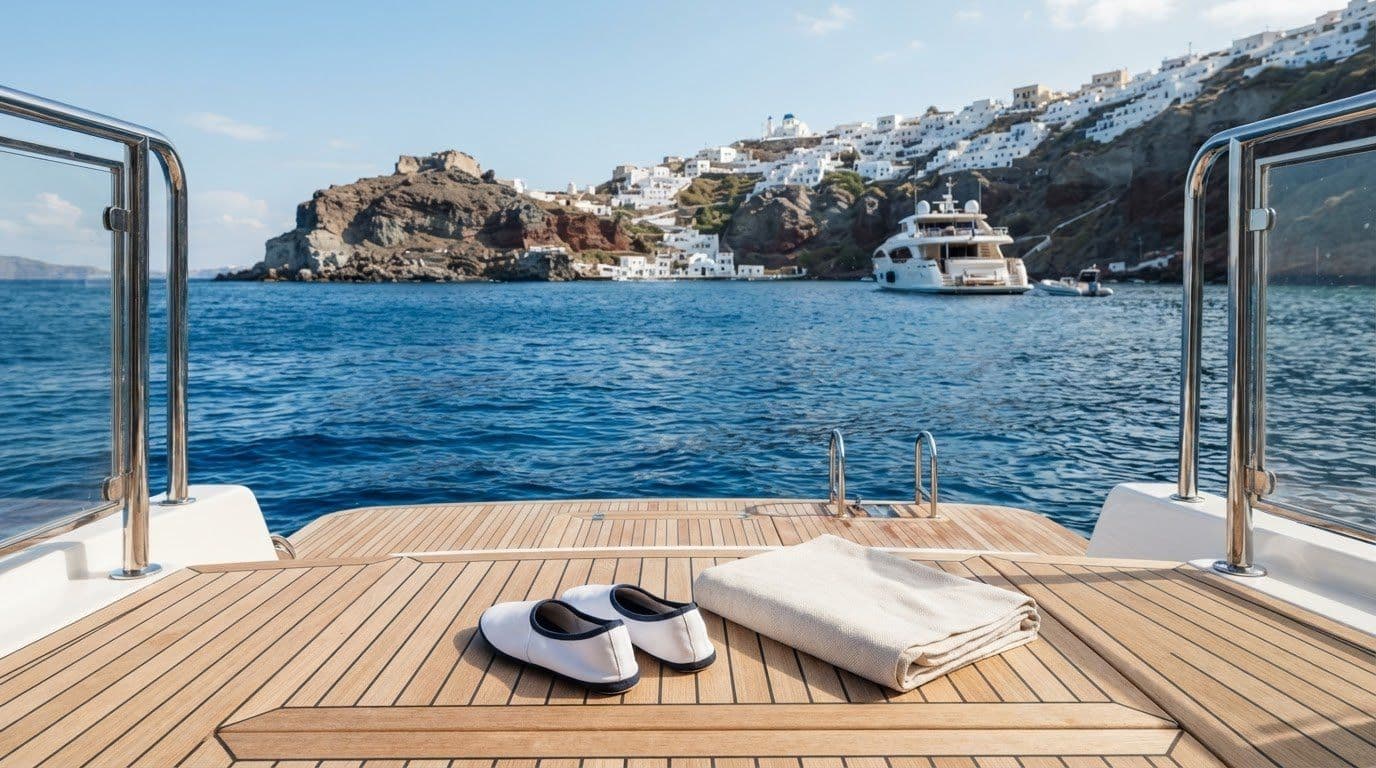
What if the shoes you choose for a luxury yacht matter as much for safety as for style? The proper footwear guidelines aboard teak deck luxury yachts help protect delicate wood, reduce the risk of scuffs and marks, and support steady footing when the deck is wet. It’s natural to wonder whether to arrive in shoes or go barefoot, especially when comfort and good onboard etiquette both matter.
On many yachts, guests are asked to go barefoot, while clean, soft-soled, non-marking deck shoes may be suitable when footwear is permitted. The yacht’s crew sets the rule for that vessel and trip, so follow its instructions rather than relying on general etiquette. A little preparation helps you settle into a private yacht experience around the Greek islands without second-guessing every step.
This guide explains what to wear, which shoes to leave ashore, why sole choice matters on teak, and how to follow onboard instructions with confidence. You’ll be ready to step aboard comfortably and help keep the deck in good condition.
Key Takeaways
- Follow the crew’s vessel-specific footwear instructions, even if they differ from general yachting etiquette.
- Use the proper footwear guidelines aboard teak deck luxury yachts to choose between barefoot walking and clean deck shoes when shoes are allowed.
- Compare barefoot walking, clean deck shoes, and ordinary street shoes by considering the onboard rule, sole condition, and your comfort.
- A quick pre-boarding routine can help you spot dirty soles and avoid bringing loose grit aboard.
- Thoughtful preparation helps you settle into a more relaxed private yacht experience around the Greek islands.
Proper Footwear Guidelines Aboard Teak-Deck Luxury Yachts: Start with the Onboard Rule
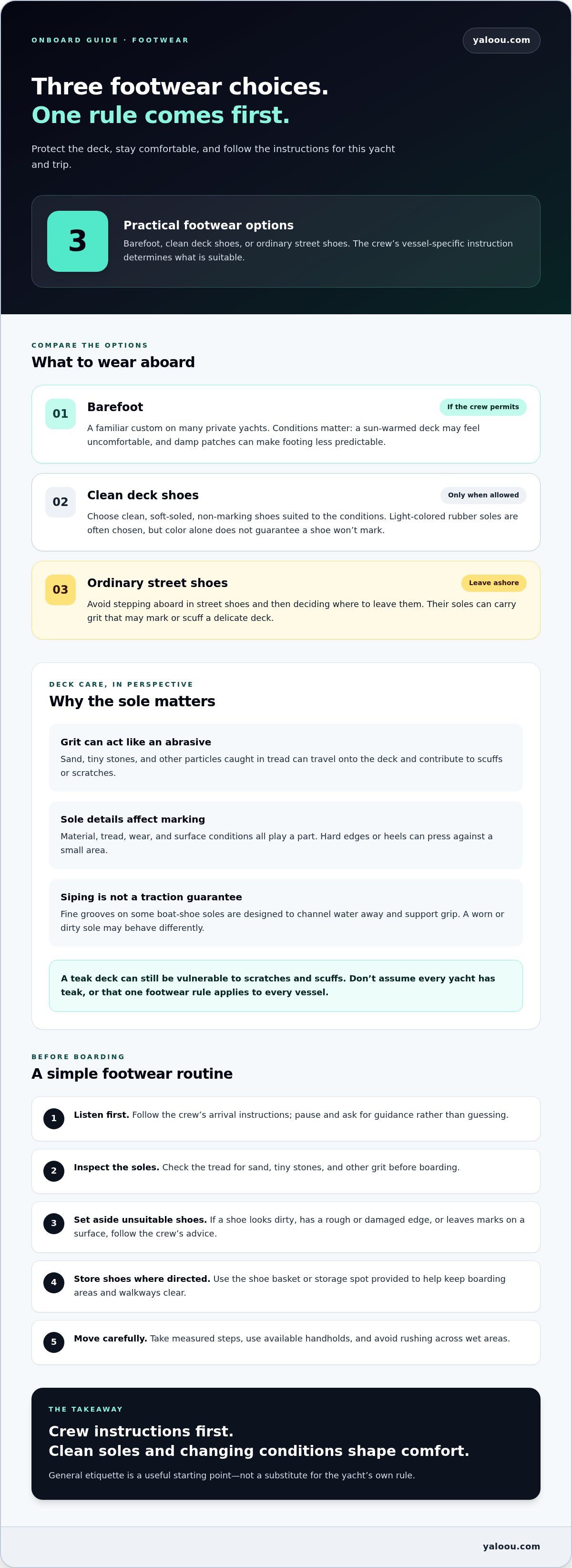
Follow the crew’s instructions first. On some yachts, guests are asked to remove their shoes; on others, clean, non-marking deck shoes may be acceptable. Deck-friendly footwear generally means shoes that are clean, have soft soles that won’t leave marks, and feel suitable for the conditions. Barefoot may also be appropriate if the crew permits it. There isn’t one rule for every vessel, so don’t assume that a guideline you’ve followed before applies to this charter.
The practical priorities are to keep scuffs, stains, and grit off the deck while helping guests move comfortably. If the surface is wet, footing deserves extra attention. On a delicate finish, clean soles and careful movement can help prevent marks and damage. The best choice balances deck care and comfort, then follows the crew’s direction.
Why yacht footwear etiquette is not one-size-fits-all
Vessels differ in their footwear policies, deck materials, and onboard conditions. A shoe that’s suitable on one boat may be unwelcome on another, and weather or a damp surface can affect how secure it feels. General yachting etiquette can help you prepare, but it doesn’t replace an instruction given aboard. General etiquette is a useful starting point; the yacht’s own rule is the one guests should follow.
Barefoot is a familiar custom on many private yachts, while some crews may allow dedicated deck shoes. Neither option applies everywhere. The phrase “teak-deck yacht” describes the subject of this guide, not a feature to assume about every vessel. Even if a yacht has teak, its crew sets the footwear guidance for that boat and trip.
What guests should learn before stepping aboard
Listen for the crew’s arrival instructions before boarding. If you’re unsure whether to remove your shoes, pause and follow the guidance you receive rather than guessing. When footwear needs to come off, keep it together and place it where directed. If a shoe basket or another storage spot is provided, use it; neatly stored shoes help keep the boarding area and walkways clear.
For general preparation, pack with the possibility of going barefoot in mind, and bring clean deck shoes if you may want the option of wearing footwear. Avoid stepping aboard in street shoes and then deciding where to leave them. A calm arrival makes it easier to hear instructions and get settled. The same thoughtful approach supports broader luxury yacht charter etiquette, from respecting shared spaces to following the crew’s lead.
Footwear is just one small part of preparing for a charter. If you’re exploring YAL’OOU’s private yacht options, arrive ready to adapt to the vessel rather than assuming every boat follows the same routine. That leaves more room to relax and enjoy the experience.
A Boat shoe is designed with boating use in mind; the overview describes features such as siping and non-marking soles. Still, a shoe’s design doesn’t automatically make it acceptable aboard a particular yacht. Check that it’s clean, then follow the crew’s instruction.
How Teak Decks, Soles, and Conditions Affect Footwear Choices
Footwear affects more than appearance. On a teak deck, the tread that helps you walk can also collect grit, transfer marks, or rub against the surface. Teak is durable, but it can still be vulnerable to scratches and scuffs. Small particles caught in a sole may act like abrasives as you move, while hard edges or heels can press against a small area. These are practical deck-care considerations, not a reason to assume every shoe will cause damage.
The deck material and the crew’s guidance matter. This article focuses on teak, but don’t assume a particular yacht has a teak deck or apply one shoe rule to every vessel. The Teak Deck Maintenance Guide explains care considerations for teak surfaces. For guests, the simple takeaway is to avoid bringing dirt or unsuitable soles onto a deck.
What makes a sole more suitable for yacht decks?
Where shoes are permitted, clean, non-marking soles are commonly preferred. Light-colored rubber soles are often chosen because they’re less likely to leave visible marks than some dark soles, but color alone can’t guarantee a shoe won’t mark. Material, tread, wear, and surface conditions all play a part.
Check the grooves before boarding. Sand, tiny stones, and other grit can lodge in the tread and travel with you onto the deck. A quick visual inspection can help you spot debris, but don’t scrape a sole against the deck to clean it. If a shoe looks dirty, has a rough or damaged edge, or leaves marks on a surface, set it aside and follow the crew’s advice.
Siping, the fine grooves used on some boat-shoe soles, is designed to help channel water away and support grip on wet surfaces. It can be a useful feature, not a guarantee of traction. A worn or dirty sole may behave differently, and no shoe is right for every surface or condition.
How weather and deck conditions change comfort
Conditions can shift during a trip. A sun-warmed deck may feel uncomfortable under bare feet, while damp patches can make footing less predictable. Wind, water, and movement underfoot may also affect balance. Don’t assume a familiar shoe will grip equally well everywhere, or that going barefoot will always be the most comfortable choice.
Take measured steps, use available handholds, and avoid rushing across wet areas. If the deck feels hot or slippery, pause and follow the crew’s instructions about where to walk and what to wear. The proper footwear guidelines aboard teak deck luxury yachts come down to this: clean soles and changing conditions shape comfort, but the crew’s guidance determines what’s appropriate aboard.
Thoughtful preparation helps make the whole day easier, from boarding to time on deck. As you plan a private Greek island outing, explore YAL’OOU’s private yacht experiences and keep the crew’s vessel-specific direction at the center of your footwear choice.
Barefoot, Deck Shoes, or Street Shoes? Compare the Practical Options
There isn’t one footwear choice that suits every guest or yacht. The right option depends on the crew’s instructions, deck conditions, and what feels comfortable for you. Use this comparison as a general guide, not as a substitute for the onboard rule.
- Bare feet: May suit a shoes-off instruction and avoid bringing dirt in on soles. However, walking barefoot may not feel comfortable or protective for every guest.
- Clean deck shoes: May be suitable when shoes are allowed. They can protect your feet, but should be clean, non-marking, comfortable, and appropriate for the conditions.
- Ordinary street shoes: Convenient for the journey to the yacht, but less suitable for walking aboard because their soles may carry grit or leave marks.
When barefoot walking may suit the onboard rule
If the crew instructs guests to remove their shoes, barefoot walking is the straightforward response. It avoids tracking in debris caught in outdoor tread, but it isn’t automatically comfortable for everyone. Some guests may prefer protection from heat, roughness, or sensitivity underfoot. If that’s you, bring clean deck-friendly footwear as an alternative, then wear it only if the crew permits it. Don’t assume socks or another substitute are acceptable without direction.
Think about your own comfort before departure. A guest who’s used to walking barefoot may find it easy, while another may prefer a shoe’s coverage. Neither preference changes the onboard rule. If the crew asks for shoes off, follow that direction and store your footwear where indicated, rather than leaving it where people need to pass.
When clean deck shoes are the practical choice
When shoes are allowed, choose a pair set aside for onboard use. Look for soft, non-marking soles and a secure fit. Before boarding, inspect the tread for sand, small stones, or other debris, and check the sole for dark scuffs or damage. A shoe marketed for boating isn’t automatically suitable in every situation; its condition and the crew’s instructions still matter.
Outdoor shoes serve a different purpose. Walking between transport, a marina, or a shore-side path can leave grit in their grooves, even if the uppers look clean. Keep them separate from any pair you plan to wear on deck. Don’t treat ordinary sneakers, sandals, or dress shoes as deck shoes based on appearance alone. A clean sole is a sensible starting point, but it doesn’t override a request to go barefoot.
These proper footwear guidelines aboard teak deck luxury yachts offer a decision framework, not a universal verdict. Follow the crew first, then choose between bare feet and clean deck shoes according to the onboard rule and your comfort. Leave ordinary street shoes for the journey unless the crew directs otherwise.
A Simple Footwear Routine Before Boarding and During the Trip
A little preparation can make boarding smoother and help you respond calmly to changing deck conditions. The aim isn’t to predict every onboard rule. Arrive with practical options, keep outdoor dirt under control, and let the crew guide your footwear choice throughout the trip.
What to prepare before reaching the yacht
Think about the journey to the yacht as well as the time aboard. Shoes worn on a beach, marina path, or street can pick up grit that isn’t obvious at a glance. Keep any clean deck footwear separate, and choose a pair that feels comfortable for standing and moving around.
- Pack with flexibility. Bring clean footwear that can stay separate from street or beach shoes. If you prefer foot protection, a dedicated pair gives you an option if the crew allows shoes.
- Choose comfort over appearance alone. Select footwear that fits securely and feels comfortable while standing or walking. A stylish shoe isn’t automatically suitable for a deck, and no particular shoe guarantees grip in every condition.
- Inspect the soles before you leave. Check the tread for sand, small stones, and other debris. Look for dark scuffs, worn areas, or rough edges that could mark or rub against a surface. Clean shoes away from the yacht, not by scraping them on the deck.
- Keep outdoor and onboard pairs apart. Use a separate bag or compartment so dirt from your journey doesn’t transfer to the shoes you intend to wear aboard. You don’t need a complicated kit, just a clear way to keep the pairs distinct.
What to do when boarding and moving around
Once you reach the yacht, pause before stepping aboard. The crew’s instructions are the practical rule for that vessel, and they may reflect its layout, surface, or conditions at the time.
- Listen before choosing. Follow the crew’s direction about removing shoes or wearing deck footwear. If anything is unclear, wait for guidance rather than assuming your usual approach applies.
- Store shoes neatly if asked to remove them. Use the place the crew indicates and keep footwear out of walkways. An orderly boarding area makes it easier for guests and crew to move through.
- Adjust your pace to the surface. Move carefully around damp areas, changes in level, and busy passageways. Footwear alone can’t remove the need for attention, so avoid rushing and follow any location-specific instructions.
- Recheck after time ashore. If you return from a beach or shore-side stop, don’t bring sand or grit back onto the yacht in your shoe tread. Follow the crew’s directions again when reboarding.
These proper footwear guidelines aboard teak deck luxury yachts are useful on Greek island itineraries, where a day may include time aboard and stops ashore in places such as Mykonos, Paros, Santorini, or Sifnos. Keep your footwear options organized, then let the crew’s instructions shape each transition. For a thoughtfully planned day on the water, explore YAL’OOU’s private yacht experiences.
Enjoy a More Considered Greek Yacht Experience with YAL’OOU
A relaxed charter begins before you step aboard. Choosing footwear thoughtfully, keeping it ready for the journey, and listening to the crew’s directions can help you settle in without making deck etiquette a distraction. Small preparations leave more attention for the Greek islands, the company around you, and the pace of the day.
YAL’OOU curates private yacht experiences across the Greek islands with an emphasis on privacy, personal service, and authentic Greek hospitality. That personal approach works best when guests feel comfortable asking for guidance and the crew can give directions suited to the vessel and conditions. General advice about shoes is useful preparation, but it can’t tell you the rule for a particular yacht.
Keep vessel details and guest guidance specific
Yacht features and onboard routines can differ. YAL’OOU’s yacht fleet includes Tesoro 40 Inboard, Baglietto 100, and 83 Tecnomar Velvet. Don’t infer a deck material or footwear policy from a vessel’s name or appearance. Treat the crew’s onboard direction as the practical guide for your journey. Their instructions help you respond to the actual deck and conditions, rather than relying on assumptions carried over from another boat.
This is the useful balance behind the proper footwear guidelines aboard teak deck luxury yachts: prepare with clean, comfortable options, then adapt to the yacht’s guidance. If the crew asks you to remove shoes, do so and store them where directed. If shoes are allowed, follow any direction about suitable footwear. This simple exchange supports comfort and deck care without turning the start of a charter into a checklist.
Choose a private journey that fits your plans
Thoughtful preparation also makes transitions easier during a Greek island outing. If your day includes time ashore, keep outdoor shoes separate from any clean pair you’ve set aside for possible onboard use. On returning, pause and follow the crew’s instructions again. This habit is practical around Mykonos, Paros, Santorini, or Sifnos, without assuming every stop or vessel follows the same routine.
One example from YAL’OOU’s listed experiences is Mykonos Southern Coast - Private 5‑hour yacht experience. Use the listed itinerary to plan your time, and make footwear one small part of getting ready, alongside considering what will feel comfortable as you move between the yacht and any planned stops. No special shoe can replace careful movement or vessel-specific directions, but arriving prepared can help you feel more at ease from the first moments aboard.
Luxury that truly feels personal is found in the experience, not in excess. Give yourself room to listen, adjust, and enjoy the journey at an unhurried pace. Explore YAL’OOU’s private yacht experiences and find an island journey that suits your plans.
Set Your Sights on a Relaxed Island Escape
Good preparation gives you one less detail to think about and more space to enjoy the moments that make a yacht journey personal. As you plan, consider the kind of day you want: a leisurely stretch on the water, time to take in the coastline, or a blend of both. Keep the proper footwear guidelines aboard teak deck luxury yachts in mind as one part of that preparation, then let the experience unfold at its own pace.
YAL’OOU brings a considered approach to private yacht experiences across the Greek islands, with privacy, ease, and authentic Greek hospitality at its heart. Start exploring and find an experience that feels right for your plans: Explore YAL’OOU’s private yacht experiences. A little planning now can make room for a more effortless day on the water. Enjoy every moment.
Frequently Asked Questions
Is barefoot walking allowed aboard a teak-deck luxury yacht?
It may be allowed, but the rule depends on the vessel and trip, so follow the crew’s instruction. Barefoot may be requested as a way to help care for the deck, but it isn’t a universal policy or a comfortable choice for everyone. If you have sensitive feet, a minor injury, or simply prefer more protection, tell the crew and follow their direction on suitable alternatives.
Can I wear regular sneakers on a luxury yacht?
Clean, non-marking sneakers may be acceptable if the crew permits shoes, but ordinary street sneakers aren’t automatically suitable. Their soles can pick up grit on the way to the marina or leave marks on a deck. Before boarding, look closely at the tread and sole edges. The proper footwear guidelines aboard teak deck luxury yachts depend on the vessel’s instructions, not just a shoe’s style or label.
What shoes are best for walking on a yacht deck?
If shoes are allowed, choose a clean pair with non-marking soles and a comfortable, secure fit. A shoe that stays on your foot without pinching can make short trips across the deck more comfortable than loose slides. Still, no shoe guarantees traction in every condition, especially if the surface is damp. Follow the crew’s instructions about footwear and move attentively wherever you walk.
Are black-soled shoes suitable for teak yacht decks?
Not necessarily. Some dark soles can leave visible marks, but color alone doesn’t determine whether a shoe is suitable; the sole material, condition, and deck surface also matter. Check for dark scuffs, dirt, or worn patches before boarding, and avoid testing the sole by rubbing it on the yacht. If the crew gives a specific instruction, follow it regardless of the sole’s color.
What happens if I bring unsuitable shoes aboard a yacht?
The crew may ask you to remove or change footwear to help care for the deck or follow the yacht’s etiquette. Treat this as a simple onboard adjustment, not a reason for concern. Respond calmly, take off the shoes if requested, and place them where directed so they don’t obstruct a passage. Keeping a clean alternative accessible can make it easier to adapt.
Should I pack separate shoes for a Greek yacht trip?
It’s practical to bring clean footwear that you can keep separate from shoes worn on beaches, streets, or marina paths. That gives you an option if shoes are permitted, without assuming you’ll wear them onboard. For a private outing around Mykonos or Paros, choose something comfortable for moving between shore and vessel. The crew’s instructions determine what you may wear once aboard.
Do teak yacht decks become slippery when wet?
Wetness can affect footing, but how slippery a surface feels depends on the deck and circumstances. Don’t assume that a particular yacht has a certain grip or safety feature, or that your usual shoes will perform the same way on every surface. Walk carefully around damp areas, use footwear only as the crew permits, and follow any directions about where to move or pause.
Disclaimer
The YAL’OOU Travel Guide is curated with care to inspire and inform discerning travelers. While every effort is made to ensure the accuracy and relevance of the information provided, all content is offered for general guidance only and may evolve over time.
Details such as local regulations, availability, pricing, and services are subject to change without prior notice. We encourage guests to seek personalized advice and confirm arrangements directly when planning their journeys.
YAL’OOU accepts no liability for any inaccuracies, omissions, or outcomes arising from the use of this information. The Travel Guide may feature recommendations, insights, and selected third-party experiences, presented solely as a source of inspiration and not as formal endorsements.
By accessing this section of our website, you acknowledge and accept this disclaimer as part of your experience with YAL’OOU.