
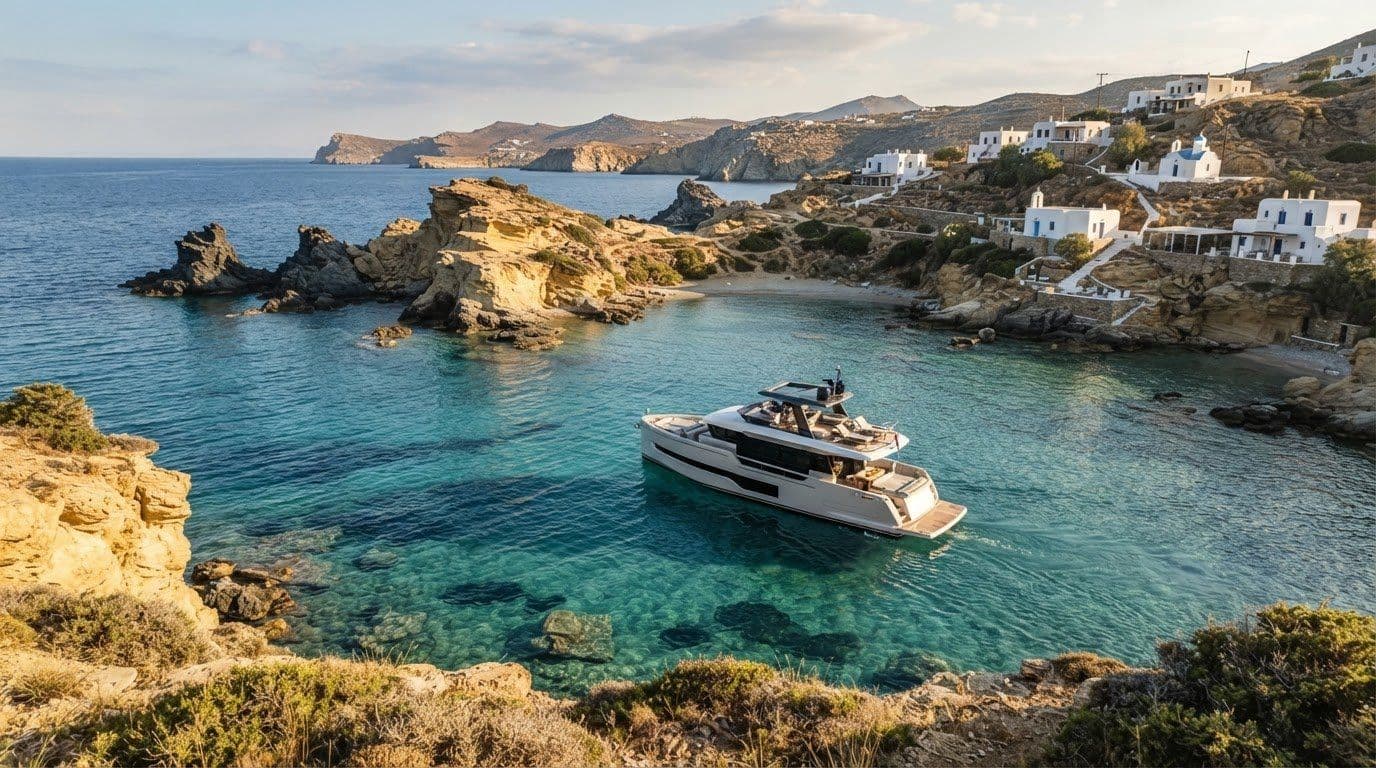
Choosing shallow draft yachts for secluded Cyclades coves means weighing more than one specification. Draft can affect how close a yacht can approach shallow water, but vessel design, onboard comfort, your route, and conditions on the day matter too.
Quiet anchorages and easy access to the water can be appealing, especially when you don’t want to compromise on space or comfort. A published draft figure is a starting point, not a promise of access. Loading, underwater fittings, seabed depth, wind, and swell all affect what’s practical.
This guide explains how to compare draft specifications, weigh yacht design against your group’s priorities, and plan a flexible Cyclades itinerary. Use the checklist to focus on vessel-specific details, then keep alternative stops in mind. Yacht and route selection work best together, with crew coordination and local knowledge helping shape a comfortable day at sea.
Key Takeaways
- Learn what yacht draft measures and why the listed figure alone can’t determine whether a cove is suitable.
- Use a practical checklist to compare shallow draft yachts for secluded Cyclades coves, including loading and underwater design.
- Compare yacht categories by draft, onboard comfort, outdoor space, and the flexibility they offer for your route.
- Build a cove-focused itinerary with alternative stops, using places such as Milos, Kimolos, Poliegos, and Antiparos as planning examples.
- See how YAL’OOU brings vessel choice, tailored routes, crew coordination, and local partners together for a flexible charter.
Why shallow-draft yachts matter for secluded Cyclades coves
A yacht’s draft can influence how close it can approach shallow water, but it doesn’t guarantee access to a particular cove. Draft is the vertical distance from the waterline to the vessel’s lowest underwater point; it is not the yacht’s length or width. Knowing the difference helps you compare vessels against your planned route.
The Cyclades span a wide area of the Aegean, with varied islands and coastlines to explore. For background on the region, see The Cyclades archipelago. Around Milos and Poliegos, for example, a secluded stop may appeal for its scenery and swimming opportunities. Whether a yacht can approach or anchor nearby depends on its dimensions, local depth, seabed, and conditions. Plan for the whole setting, not a single specification.
What does yacht draft mean in practical terms?
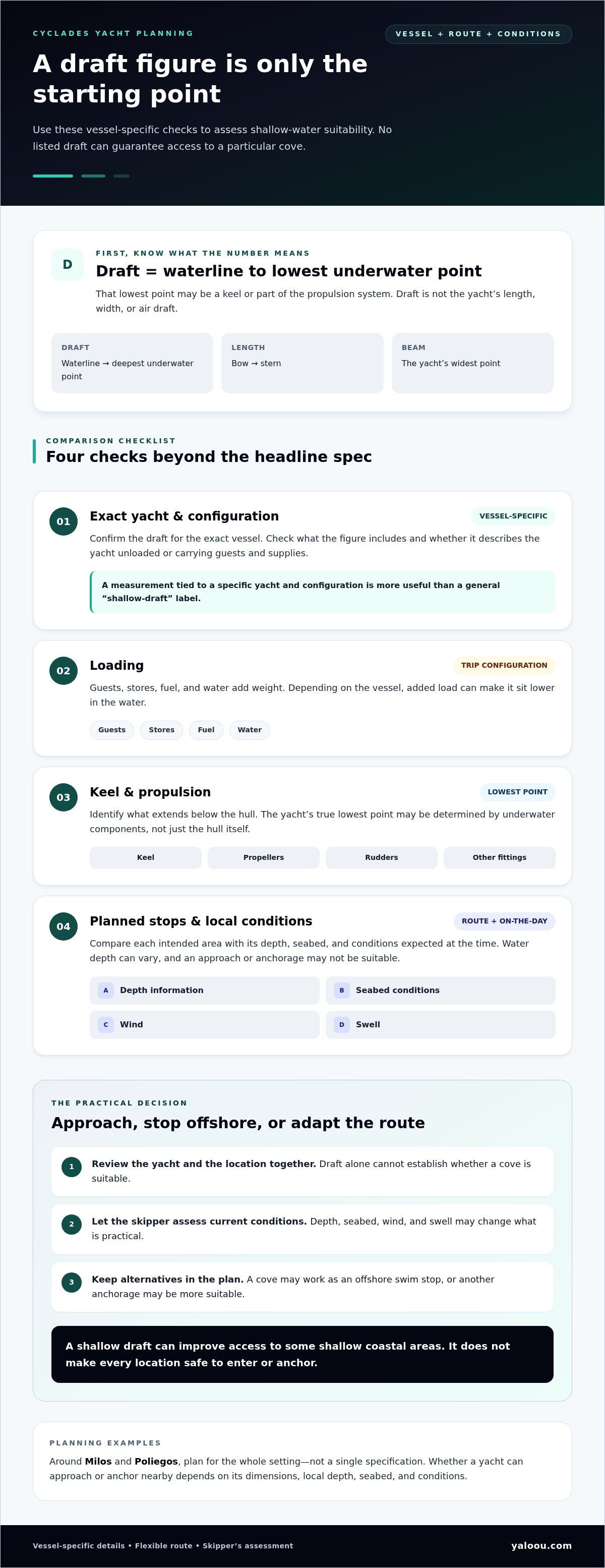
Imagine a yacht floating in the water, viewed from the side. Draft is the vertical distance from the waterline to its deepest underwater point, such as a keel or part of its propulsion system. Length measures the vessel from bow to stern, while beam is its widest point. Air draft is different: it measures from the waterline to the highest point above it.
A published draft figure applies to a specific vessel and configuration. Check what the measurement includes and whether it reflects the yacht unloaded or carrying guests and supplies. The most useful comparison connects the figure to the yacht’s design and intended stops. It is not a promise that the vessel can enter a particular cove.
Why secluded Cyclades coves call for realistic expectations
A shallower draft can improve access to some shallow coastal areas, but water depth and conditions vary. A narrow approach, uneven seabed, swell, or wind may make a close-in stop unsuitable even when the listed draft looks promising. The captain’s assessment and current local information are just as important as the specification.
For a charter around Milos or Poliegos, keep the plan flexible. If entering a cove isn’t appropriate, the yacht may be able to stop at a suitable distance for swimming or enjoying the coastline. The best shallow draft yachts for secluded Cyclades coves are those with specifications suited to the route and onboard comfort that works for your group. Explore YAL’OOU yacht options as you consider the experience you want.
How to assess shallow-draft yachts beyond the listed specification
A draft figure is a useful starting point, not a cove-access guarantee. To compare shallow draft yachts for secluded Cyclades coves, look beyond a listing’s headline description. Consider how the yacht will be configured for your trip, where you plan to go, and the conditions the skipper encounters.
Which yacht measurements and conditions should you compare?
Use this checklist to compare options consistently:
- Vessel-specific draft: Find the figure for the exact yacht and establish whether it describes the vessel unloaded or carrying guests and supplies.
- Loading: Guests, stores, fuel, and water add weight. Depending on the vessel, the added load can make it sit lower in the water.
- Keel and propulsion: Identify what extends below the hull. The keel, propellers, rudders, or other underwater components may determine the yacht’s true lowest point.
- Planned stops: Compare each intended area with depth information, seabed conditions, and the conditions expected at the time.
Be specific about what the figures describe. A measurement for a particular vessel and configuration is more useful than a general label such as “shallow-draft,” which says little about a particular approach or anchorage. Professional charter-broker resources, including the Charter Yacht Brokers Association standards, can provide broader context on the charter industry, but they don’t replace vessel-specific measurements or an assessment of local conditions.
When should a cove be a swim stop rather than an entry point?
Even a yacht with relatively little draft may not be suitable for entering every cove. Water depth can change, the seabed may be uneven or unsuitable for anchoring, and wind or swell can affect the approach. The skipper assesses the conditions and adapts the plan, which may mean choosing another anchorage or enjoying the cove from offshore.
An offshore stop can still make for a rewarding cove-focused day: swim in clear water, take in the coastline, and keep the yacht in a suitable position. The location must still be appropriate for stopping or anchoring, given its depth, seabed, and conditions. Shallow draft does not make every location safe to reach, and no named cove should be treated as guaranteed access.
Build alternatives into the route instead of making the day depend on a single landing point. Explore YAL’OOU charter experiences as you consider how vessel choice, planned stops, and flexibility can shape your time on the water.
Compare yacht types for Cyclades coves without overlooking comfort
Choosing among shallow draft yachts for secluded Cyclades coves means balancing access priorities with the experience you want onboard. Category labels can help narrow the field, but they can’t tell you whether a particular vessel fits your route. Hull shape, underwater equipment, layout, and loading all matter. Compare individual yachts using the same criteria, then weigh the trade-offs for your group.
Yacht categoryDraft comparisonComfort and outdoor spaceRoute flexibility
Catamaran
A 2026 comparison by George Yachts Brokerage gives a typical range of 1.2-1.5 m. Treat it as a category-level reference, not a figure for a specific yacht.
Compare the actual guest layout, shaded areas, and places to relax between stops.
Assess the vessel’s verified draft alongside intended routes and local conditions.
Monohull sailing yacht
The same comparison gives a typical range of 2.4-3 m. Individual designs and configurations vary.
Review usable indoor and outdoor areas against your group’s needs and time onboard.
Match vessel-specific measurements with the route; don’t assume every shallow approach will suit.
Motor yacht
Draft depends on the specific hull and propulsion setup; compare the published figure for each vessel.
Check guest capacity, shaded space, and how the layout supports your day on the water.
Consider draft, cruising plans, and possible alternatives together.
Motor yachts and catamarans: compare the vessel, not just the category
Two yachts in the same category can differ in hull form, propulsion, draft, and onboard arrangement. Use the same comparison points for each: published draft and its stated loading condition, lowest underwater components, guest capacity, shaded outdoor space, and suitability for your intended route. A general “shallow-draft” label can’t replace those details.
How to balance cove access with onboard comfort
Think about how your group will spend the day. Prioritising closer access may narrow the vessel choices, while more room, shade, or a particular layout may matter more on a longer charter. The best fit depends on your guests and route. No category is suitable for every cove or condition.
Use available yacht options as a starting point for comparing vessels against these criteria. Focus on verified specifications and the onboard experience you want, rather than relying on category assumptions.
Plan a flexible cove-focused route across the Cyclades
A memorable cove-focused charter starts with a route that suits your group and the yacht, with room to adjust. Milos, Kimolos, Poliegos, and Antiparos can help frame the possibilities, but they are planning examples, not guaranteed stops. Wind, sea state, depth, and the skipper’s judgment may all affect where it makes sense to cruise or stop.
How to shortlist coves and coastal stops
Begin with the island area you’d most like to explore. Then consider your preferred pace: a relaxed day with time to swim, or a longer cruise with several coastal views. Use the Cyclades destination guide to explore areas of interest, then assess each possible stop against the vessel and conditions rather than treating it as a fixed promise.
A good Cyclades route includes alternatives, because changing wind, sea state, or local depth can make a planned stop unsuitable.
Use this sequence to shape a practical shortlist:
- Choose a base: Focus on an island area that suits your charter length and the kind of day you want.
- Shortlist stops: Pick possible coves, swim areas, and coastline to explore. Milos, Kimolos, Poliegos, or Antiparos may inspire your options.
- Compare vessel details: Consider the yacht’s relevant specifications alongside the intended route, not in isolation.
- Preserve alternatives: Keep other stops or a coastal cruise in mind if conditions or the skipper’s assessment call for a change.
For broader trip-planning context, read this Greek Islands yacht charter guide. YAL’OOU’s Greek island planning also spans Mykonos, Paros, Antiparos, Athens, Aegina, Poros, Spetses, Syros, Tinos, Sifnos, Serifos, Milos, Poliaigos, Kimolos, Santorini, Ios, Koufonisia, Amorgos, Crete, Corfu, and Zakinthos.
Build flexibility into a private yacht itinerary
A tailored day can shift between cove visits, swimming stops, and scenic coastal cruising as conditions and guest preferences evolve. The crew coordinates the day around those preferences, while the skipper assesses where the yacht can operate appropriately. This flexibility leaves room for a swim or time enjoying the coastline even when the original plan changes.
For more on the onboard experience and crewed charters, explore this crewed yacht charter guide. To consider possible stops and onboard priorities, explore tailored yacht experiences.
Choose a YAL’OOU charter for a cove-focused Cyclades experience
A cove-focused charter works best when yacht choice and route planning are considered together. YAL’OOU coordinates yacht selection, tailored routes, crews, and local partners to shape a plan around the experience you want while leaving room for conditions to guide the day. The aim isn’t to promise entry to a particular cove. It’s to make informed choices that balance your preferred stops, the vessel, and onboard comfort.
Match the charter plan to your group and priorities
Start by ranking what matters most to your group. Is it secluded stops, more time underway, swimming opportunities, or a comfortable setting between destinations? Consider how many people are travelling and how you’d like to spend time onboard. Those preferences help focus the vessel comparison and give the route direction.
YAL’OOU brings these priorities together with vessel details and local conditions when coordinating a tailored route and crew. The plan can include preferred coastal areas while remaining adaptable if wind, sea state, depth, or the skipper’s judgment calls for a different stop. If you’re browsing vessels, the Baglietto 100 yacht page is one example to consider. Treat it as a vessel reference, not as a claim about draft or access to a specific cove.
For guests comparing shallow draft yachts for secluded Cyclades coves, a useful planning conversation brings four things together:
- Route priorities: Which island areas and types of stops appeal most?
- Group needs: How do guest numbers and preferred activities shape the day?
- Onboard comfort: What layout and spaces would make time underway enjoyable?
- Flexibility: Which alternative stops would still make the charter rewarding?
Take the next step toward a tailored Cyclades charter
Compare the yacht’s verified draft and configuration with the route, likely conditions, and experience your guests want. No single measurement can guarantee a cove stop, but a considered plan helps you weigh access goals against comfort and cruising time. YAL’OOU arranges daily and weekly crewed yacht charters, coordinating routes and crews around the charter experience.
Keep your priorities clear and your itinerary flexible. Explore YAL’OOU charter experiences to start shaping a Cyclades day or week on the water.
Plan Your Cyclades Charter with Confidence
The right yacht choice depends on more than a draft figure. Compare vessel-specific measurements and configuration, consider how your group wants to spend time onboard, and keep the route flexible around local conditions. That’s a practical way to approach shallow draft yachts for secluded Cyclades coves without assuming a particular yacht can enter a particular anchorage.
YAL’OOU coordinates daily and weekly crewed yacht charters, bringing yacht selection together with tailored routes, crew coordination, and local supplier partnerships. The charter plan takes shape around your preferred stops and onboard experience, with room to adapt as the day unfolds.
Ready to turn your ideas into a considered charter plan? Explore tailored yacht charter experiences and start planning your time on the Cyclades.
Frequently Asked Questions
What does shallow draft mean on a yacht?
A shallow draft means the yacht’s underwater depth, measured vertically from the waterline to its lowest point, is relatively small. It can help the vessel approach some shallower areas, but it doesn’t guarantee access to a cove. Draft is different from length and beam, which describe the yacht’s size above the water. For a charter around Mykonos or Paros, compare the specific vessel’s draft with the route and conditions.
Can a shallow-draft yacht reach every secluded cove in the Cyclades?
No. A shallow draft doesn’t make every cove safe or suitable to enter. Water depth, seabed, underwater obstacles, wind, and swell all matter, as do the yacht’s full dimensions and configuration. The phrase “shallow draft yachts for secluded Cyclades coves” describes a useful comparison, not a promise of access. A cove may be better enjoyed from offshore or replaced with another stop if conditions call for it.
How do I compare the draft of two charter yachts?
Compare the published draft for each specific vessel, and check whether each figure refers to a loaded or unloaded yacht. Look at what extends below the hull, including the keel or propulsion components, since the lowest point determines practical clearance. Then consider guest and supply loads, intended stops, and local conditions. Don’t rely on category labels or a “shallow-draft” description alone; consistent vessel-specific information makes comparisons more useful.
Does a yacht’s draft change when it is fully loaded?
It can. Guests, provisions, fuel, and water add weight, which can make a yacht sit lower in the water and increase its operating draft. The amount of change depends on the individual vessel and its load. When comparing charter options, distinguish the published measurement from the yacht’s expected condition on the trip. This helps set realistic expectations, but the skipper still assesses depth and conditions at each stop.
Are catamarans always better for shallow Cyclades coves?
No yacht category is automatically the best choice for every cove or itinerary. Catamarans and monohulls differ in hull form and layout, while draft and underwater configuration vary between individual vessels. Compare verified draft alongside guest comfort, shaded outdoor areas, and the route you have in mind. For a charter around Paros or Antiparos, the right fit depends on the vessel, your group’s priorities, and the conditions on the day.
Can a yacht stop offshore if it cannot enter a cove?
Yes, an offshore swim stop may be an alternative when entering a cove isn’t appropriate. The yacht must still stop or anchor in a suitable location, considering depth, seabed, wind, and sea state. The skipper decides what’s appropriate for the vessel and conditions. Guests can still enjoy the coastline and swim where suitable, without the itinerary depending on taking the yacht into a particular cove.
Which Cyclades destinations are known for secluded coastal stops?
Milos, Kimolos, Poliegos, and Antiparos are useful island-area examples to consider when planning a cove-focused charter. They can inspire a shortlist, but naming a destination doesn’t guarantee access to any particular cove or anchorage. Conditions, route, and vessel details shape the plan. Mykonos and Paros can also be relevant to Cyclades charter planning, with the right itinerary depending on your starting point and desired pace.
How does the crew adapt a cove-focused yacht itinerary to sea conditions?
The skipper assesses conditions such as wind, swell, and depth, then adjusts the route when needed. A planned cove might become a swim stop from offshore, a different coastal visit, or a cruising leg instead. Crew coordination helps the day reflect guest preferences while remaining flexible. YAL’OOU arranges daily and weekly crewed charters, coordinating tailored routes, crews, and local partners for Greek island experiences.
Disclaimer
The YAL’OOU Travel Guide is curated with care to inspire and inform discerning travelers. While every effort is made to ensure the accuracy and relevance of the information provided, all content is offered for general guidance only and may evolve over time.
Details such as local regulations, availability, pricing, and services are subject to change without prior notice. We encourage guests to seek personalized advice and confirm arrangements directly when planning their journeys.
YAL’OOU accepts no liability for any inaccuracies, omissions, or outcomes arising from the use of this information. The Travel Guide may feature recommendations, insights, and selected third-party experiences, presented solely as a source of inspiration and not as formal endorsements.
By accessing this section of our website, you acknowledge and accept this disclaimer as part of your experience with YAL’OOU.