
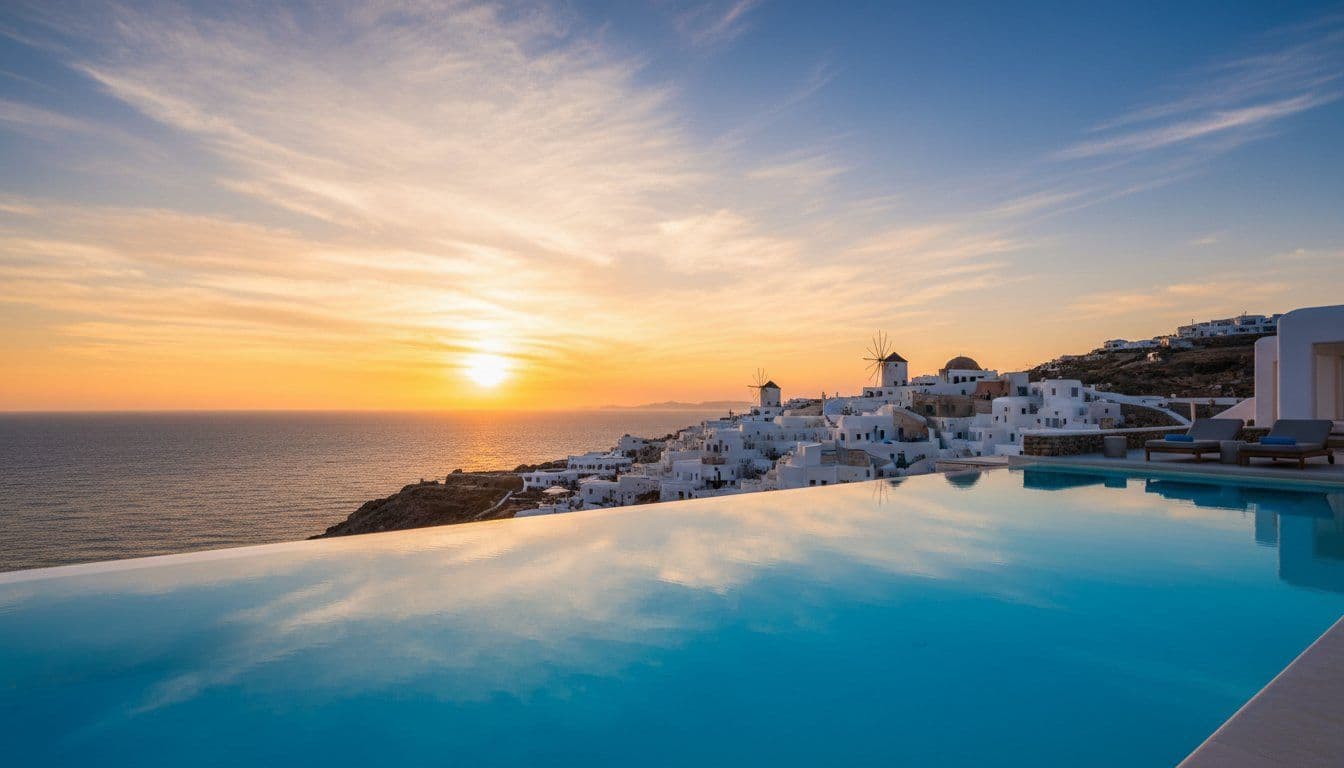
Mykonos is more than a destination; it’s a legend reborn. Before the first DJ dropped a beat or the first luxury villa claimed its cliffside view, this island was the mythical battlefield where Hercules himself defeated the giants. You’ve seen the iconic windmills and the sun-drenched beaches, and you know it as Europe's premier playground. Yet, when you search for the real mykonos meaning, you’re often left with a simple definition that fails to capture its magnetic pull or a dense history lesson disconnected from the island's vibrant, modern pulse.
Forget the generic guides. This is where we bridge that gap, connecting the ancient past to the present-day vibe. We promise to uncover the deep etymological roots and powerful legends that make Mykonos the true 'Island of Light'. Get ready to discover how a name born from myth has come to define a world-class lifestyle, shaping the unforgettable luxury experience it offers today.
Key Takeaways
- Uncover the ancient myths that shaped the island's identity, from its heroic namesake to the legendary battles of the gods.
- Learn why Mykonos is called the 'Island of Light' by understanding its sacred, ancient connection to the neighboring island of Delos.
- Grasp the modern mykonos meaning by exploring how it became a global symbol of 'Barefoot Chic' and cosmopolitan freedom.
- Find actionable ways to experience the island’s authentic soul, moving beyond the crowds to connect with its timeless spirit.
The Etymology and Mythological Roots of the Name Mykonos
Beyond the vibrant nightlife and sun-drenched beaches lies a story etched in stone and myth. The very name 'Mykonos' is a key that unlocks a legendary past, a narrative far older than the iconic windmills. To understand the island is to first understand its name. The true mykonos meaning isn't a single definition; it's a powerful blend of heroic legacy and divine warfare that shaped the very ground beneath your feet.
The name whispers of gods, heroes, and an epic battle that gave the island its rugged, unforgettable character. It’s a story in two powerful parts: one of a founding hero with divine blood, and another of a cataclysmic conflict that left its scars on the landscape for eternity.
Mykons: The Hero Behind the Name
The island's name is a direct tribute to its first mythical ruler, Mykons. He wasn't just a local chieftain; he was a figure of noble descent, believed to be the son of Anios, the king of Delos, and the grandson of the Olympian god Apollo. This divine lineage is crucial. Apollo was the god of light, music, and prophecy, and by extension, Mykonos was forever linked to these concepts of brilliance and artistry. This connection wasn't just folklore; it was civic identity. Coins minted on the island as early as the 3rd century BCE feature the head of Mykons, cementing his status as the island’s progenitor and connecting its identity directly to a divine legacy.
The Battle of the Giants: A Landscape Defined by Myth
The second layer of the mykonos meaning comes from its dramatic, rocky terrain. Greek mythology tells of the Gigantomachy, a colossal war between the Olympian gods and the Giants. Legend holds that the mighty hero Hercules, an ally of Zeus, played a pivotal role. He lured the fearsome Giants from the protection of Mount Olympus to this very island. Here, stripped of their power, they were defeated. This foundational tale, a key part of Mykonos mythology, explains not only the island's name but its very terrain. The massive granite boulders scattered across the landscape are said to be the petrified corpses of the slain Giants, forever frozen in their final moments.
This origin story gives the island a primal, untamed energy. The etymological link to words meaning a 'heap of stones' or a 'stony place' is no coincidence. It’s a literal description of a mythological battlefield. The rugged hills and rocky outcrops you see today aren't just geological features; they are monuments to an ancient war, contributing to the island's raw and captivating beauty. The island's very foundation is a story of divine conflict, a stony beginning that continues to define its wild, windswept soul.
Why Mykonos is Known as the 'Island of Light'
While the winds give Mykonos its energy, it's the light that gives the island its soul. This isn't just about sunny days; it’s an intense, almost spiritual luminosity that you feel as much as you see. The nickname 'Island of Light' stems from a unique combination of ancient history, divine mythology, and brilliant architecture. The light here isn't just a physical property; it’s a direct link to the island's sacred past, illuminating the deeper mykonos meaning of clarity and vibrant energy.
The Delos Connection: A Sacred Neighbor
You can't understand Mykonos without looking just a few kilometers southwest. The island’s story is inseparable from its legendary neighbor, Delos. In antiquity, Mykonos was the humble support system-the gateway and pantry-for the magnificent religious center of Delos. Ancient pilgrims would stay and provision on Mykonos before making the short crossing. According to Greek mythology, the sacred island of Delos is the birthplace of the twin gods Apollo, the god of light and the sun, and Artemis, the goddess of the hunt. Delos was once the most important religious site in the Mediterranean. Legend says that the 'Light of Apollo' shines with a unique intensity in this specific corner of the Aegean, and Mykonos bathes in its divine reflection.
Architecture as a Canvas for Light
The island's architecture is a masterclass in amplifying this natural gift. The iconic, sugar-cube houses of the Chora weren't painted white just for aesthetics. A 1938 decree by then-leader Ioannis Metaxas mandated the whitewashing of Cycladic buildings for uniformity and hygiene, but the practice had a powerful side effect: the brilliant white surfaces act as giant reflectors, bouncing sunlight into every narrow alleyway and hidden courtyard. This creates an environment of unparalleled brightness.
This effect is magnified by the island’s other famous feature: the Meltemi winds. These strong, dry northern winds, blowing consistently from May through September, sweep the atmosphere clean of dust and haze. The result is a crystalline visibility that makes colors pop and the horizon seem razor-sharp. The famous blue of the church domes and window shutters isn’t random; it’s a deliberate echo of the Aegean Sea and the cloudless sky, creating a perfect harmony of white and blue that captures and celebrates the island’s light. This visual dialogue between the man-made and the natural is central to the island experience. To truly appreciate this interplay, exploring the island’s backroads at your own pace reveals stunning new vistas where light and landscape merge.
Ultimately, the light of Mykonos is more than just a beautiful phenomenon. It’s a feeling. It represents the clarity, the high-voltage energy, and the enduring spiritual legacy passed down from its sacred neighbor. It’s a light that doesn't just illuminate; it invigorates.
The Modern Meaning: A Global Symbol of Hedonism and Luxury
While its name is rooted in ancient myth, the modern mykonos meaning is a global brand. It’s a shorthand for 'Barefoot Chic,' an ethos where unrestrained luxury meets a relaxed, sun-drenched spirit. The island has masterfully evolved from a humble, wind-battered fishing community into the undisputed 'Ibiza of the East,' yet it retains a distinctly Hellenic soul. Today, Mykonos signifies a unique paradox: a place where the world's elite come to both disappear into anonymity and be seen in the most exclusive settings on Earth. It represents a potent definition of freedom, where the ancient Greek concept of hospitality, Philoxenia, fuses seamlessly with a vibrant, cosmopolitan flair.
From Bohemian Hideaway to VIP Destination
The island’s global ascent began in the 1960s. Visits from cultural icons like Jackie Kennedy Onassis and Princess Grace Kelly of Monaco transformed Mykonos from an artist's hideaway into a non-negotiable stop for the international jet set. Their presence didn't just bring photographers; it redefined the very meaning of a Mykonos holiday, branding it as effortlessly glamorous. This legacy evolved into the world-class beach club culture that defines the island today. Establishments like Nammos, which opened in 2003, and Scorpios, launched in 2015, are more than just venues. They are modern-day rituals set against the Aegean Sea, often in view of Delos, the sacred mythological birthplace of Apollo. This juxtaposition of ancient energy and contemporary luxury is how Mykonos maintains its 'cool' factor, expertly balancing tradition with trend-setting opulence.
The 'Mykonos Vibe': What It Means Today
So, what is the 'Mykonos Vibe'? It’s best defined as 'Barefoot Luxury.' This isn't about formal opulence; it's about experiencing the highest standards of service and design in a completely relaxed environment. Think of it this way:
- Unrivaled Privacy: Renting a minimalist Cycladic villa with a private infinity pool for upwards of €30,000 per week.
- Effortless Freedom: Chartering a state-of-the-art superyacht to explore secluded coves inaccessible by land.
- Understated Style: Shopping at seasonal pop-up boutiques from global brands like Dior and Louis Vuitton, then wearing those finds to a casual seaside dinner.
The island's social meaning has become a crossroads of global culture. It’s where fashion moguls, tech billionaires, and celebrated artists converge. The summer season, from June to August, sees the island become a networking hub where billion-dollar deals are discussed over lunch at Spilia Seaside Restaurant and creative collaborations are born during sunset cocktails at Cavo Tagoo. The enduring appeal for ultra-high-net-worth individuals lies in this unique blend of absolute privacy and hyper-social visibility. For them, the modern mykonos meaning is a place that offers the ultimate luxury: choice. The choice to be seen, the choice to be invisible, and the freedom to switch between the two in an instant.
How to Experience the Authentic Spirit of the Island
To truly understand Mykonos, you must venture beyond the vibrant, labyrinthine streets of Chora. The island's soul isn't found in a cocktail bar; it's discovered in the whisper of the wind across a deserted beach, the timeless perspective from the sea, and the taste of the very earth itself. The authentic mykonos meaning isn't a spectacle to be seen, but an essence to be felt.
This journey requires a shift in perspective. It’s about seeking out the quiet corners, the hidden histories, and the enduring traditions that anchor Mykonos to its powerful past.
Sea-Based Exploration: The Yachting Perspective
The Aegean Sea is the lifeblood of Mykonos. To see the island from the water is to see it as sailors, gods, and giants have for millennia. This is where the myth of the Gigantomachy comes alive. From a yacht, the scattered, sun-bleached rocks aren't just islets; they are the petrified bodies of giants slain by Hercules, a raw and powerful landscape that confirms the island’s ancient name: a ‘stony place’. Viewing this from the sea offers a perspective unchanged since antiquity.
A private day cruise through the narrow channel separating Mykonos from the sacred islands of Delos and Rhenia is a passage through history itself. You are sailing in the wake of ancient pilgrims and Venetian merchants. This isn't just a boat trip; it's a connection to the island's core identity. For the ultimate freedom to explore these secluded coves and historical waterways, a luxury yacht charter Mykonos provides unparalleled access and a truly premium experience.
The Quiet Side of Mykonos
Venture inland to Ano Mera, the island’s rural heart, and you'll find a different rhythm. Here, life moves with the seasons, not the tourist calendar. The spiritual center is the monastery of Panagia Tourliani, founded in 1542. Its serene courtyard and magnificent baroque iconostasis offer a profound sense of peace, a quiet anchor in a swirling sea of activity.
The island's famous windmills, the Kato Mili, are more than just iconic photo opportunities. These 16th-century structures were the industrial engines of their time, harnessing the power of the Meltemi wind to mill grain from across the Cyclades. They stand as proud symbols of the island’s agricultural and maritime prowess. Similarly, Little Venice reveals its true story not as a row of bars, but as the strategic 18th-century homes of wealthy sea captains, built directly over the water for quick access and defense.
Engaging with the island's authentic flavors is the final step in understanding its heritage. This is where you taste the sun, the salt, and the soil.
- Kopanisti: A spicy, intensely aromatic cheese with a Protected Designation of Origin (PDO) status since 1994. Its peppery flavor is a direct result of the island's unique microclimate and hardy pastoral traditions.
- Louza: A cured pork tenderloin, seasoned with local herbs like savory and thyme. Each family has its own recipe, a delicious secret passed down through generations.
To find the real Mykonos, you must look deeper. It’s in the silent gaze of a monastery, the powerful silhouette of a windmill against the sunset, and the deck of a yacht cutting through ancient waters. Discover the hidden Mykonos with us.
Redefining Your Mykonos Story with YAL’OOU
Understanding Mykonos is one thing. Experiencing it is another. Beyond the ancient myths and the whitewashed facades lies a personal journey, an unwritten story waiting for you to become its author. At YAL’OOU, we exist to curate the very essence of your Greek summer, transforming a simple vacation into a deeply personal narrative. We bridge the timeless allure of the Cyclades with your modern desire for impeccable luxury, absolute privacy, and seamless execution. The true Mykonos meaning isn't found in a guidebook; it's crafted moment by moment, and we provide the tools to build your masterpiece.
Our philosophy is simple: you don't just visit Mykonos, you inhabit it. This is only possible through our deep, authentic connection to the island. Our team, composed of locals and seasoned residents with over 15 years of on-island experience, has cultivated relationships that unlock the island’s most exclusive layers. We take you beyond the velvet ropes and crowded beaches to a Mykonos reserved for those in the know. Forget the queues and the noise. Your story unfolds in serene private coves, on the deck of a sleek yacht gliding towards Delos, and within the walls of a secluded villa where the Aegean Sea is your private backdrop.
Tailored Yachting and Villa Experiences
Our weekly crewed yacht rentals, featuring vessels like the Lagoon 52 catamaran, offer an unparalleled deep-dive into the Cycladic lifestyle, allowing you to island-hop at your own pace. For land-based luxury, our portfolio of over 100 handpicked villas provides the sanctuary and privacy often missing in the island's bustling center. YAL’OOU manages every detail, from professional crew coordination to exclusive local partnerships, ensuring your experience is seamless.
We believe your focus should be on the experience, not the logistics. Our role is to meticulously handle the complexities so you can immerse yourself in the 'Island of Light.' We orchestrate a flawless journey from the moment you land. This commitment to effortless perfection includes:
- Seamless Transfers: Private airport coordination with premium vehicles ready upon your arrival.
- Pre-Arrival Provisioning: Your villa or yacht is pre-stocked with your preferred local delicacies, from fresh-caught fish to Cycladic wines.
- In-House Services: We arrange for private chefs, certified yoga instructors, and wellness therapists to come directly to you.
- Custom Itineraries: Every day is planned to perfection, from dinner reservations to private archaeological tours, all managed by your dedicated concierge.
VIP Concierge: Accessing the Inaccessible
In a world of abundance, the ultimate luxuries are time and access. Our dedicated VIP concierge service delivers both. We leverage our extensive network to secure what others can't: the last-minute reservation at the coveted Spilia Seaside Restaurant, a prime sunbed at Scorpios, or a private shopping experience at Nammos Village. We turn 'impossible' into your reality. This is how the modern Mykonos meaning is defined: by having the freedom to experience the best, on your own terms. Discover the YAL’OOU experience and start your Mykonos journey today.
Your Mykonos Story Awaits
Mykonos is more than just a destination; it's a legend reborn with every sunrise. From its mythological origins as the petrified bodies of giants to its modern-day reign as the 'Island of Light', its identity is a vibrant tapestry of ancient power and contemporary indulgence. The true mykonos meaning isn't found in a history book or a travel guide. It's discovered in the sun-drenched moments and unforgettable nights that you make your own.
It’s time to write your own chapter. As a boutique luxury agency specializing in the Cyclades, YAL’OOU crafts experiences that transcend the ordinary. We provide exclusive access to a curated fleet of high-end yachts and private villas, all seamlessly managed by our expert local VIP concierge support. We don't just plan your trip; we design your story. Your only task is to live it.
Plan your exclusive Mykonos escape with YAL’OOU and discover an island that’s truly yours. The adventure begins now.
Frequently Asked Questions About the Meaning of Mykonos
What does the word Mykonos mean in Greek?
The name Mykonos doesn't have a direct translation in Greek; it's named after its first mythological ruler, a local hero named Mykons. Legend holds that Mykons was a direct descendant of the gods, specifically the grandson of Apollo. The island's name is rooted in ancient mythology, connecting its identity directly to a heroic, divine lineage rather than a geographical feature or common term. This personal origin story sets it apart from many other Greek islands.
Why is Mykonos called the Island of the Winds?
Mykonos earned its title "The Island of the Winds" because of the powerful Meltemi winds that sweep across the island. These strong, dry northern winds are a defining feature of the Aegean summer, typically blowing from May through September. They aren't just a gentle breeze; the Meltemi can reach speeds of 50 to 74 km/h, which is a force 7-8 on the Beaufort scale. This constant wind shaped the island's landscape and even its architecture, like the iconic windmills.
What is the mythological origin of Mykonos?
The mythological origin of Mykonos is tied to a legendary battle between Hercules and the Giants. According to the myth, Hercules fought the Giants during the Gigantomachy, a great war against the Olympian gods. He lured them from Mount Olympus and defeated them on the island. The large rocks scattered across the Mykonian landscape are said to be the petrified bodies of these defeated Giants, forever part of the island's foundation.
Is Mykonos named after a person?
Yes, Mykonos is named after a person from Greek mythology. The island takes its name from its very first ruler, a local hero called Mykons. He wasn't just any leader; his lineage was considered divine as he was the grandson of the god Apollo. This connection to a heroic, semi-divine figure gives the island a powerful and ancient identity, linking it directly to the epic tales of the Greek gods and heroes.
What is the cultural significance of Mykonos today?
Today, the cultural significance of Mykonos is multifaceted. It's a world-renowned sanctuary for the LGBTQ+ community, a status it has held since the 1970s, celebrated with major events like the annual Xlsior festival. The island is also a vibrant hub for contemporary art, featuring more than 30 galleries like the Rarity Gallery. The modern mykonos meaning has evolved to represent a unique blend of personal freedom, high-end luxury, and iconic Cycladic architectural style that inspires designers globally.
How did Mykonos become a luxury destination?
Mykonos's journey to a luxury destination started in the 1950s, attracting the global elite. While the discovery of nearby Delos in 1873 brought early travelers, it was the arrival of celebrities like Aristotle Onassis, Maria Callas, and Grace Kelly that put it on the map. Jacqueline Kennedy Onassis’s frequent visits in the 1960s cemented its status as a glamorous playground. This influx of high-profile visitors spurred the development of upscale hotels, boutiques, and restaurants, creating the exclusive atmosphere it's known for today.
What is the best way to see the 'real' Mykonos?
To see the 'real' Mykonos, you need to step away from the summer crowds of Chora. The best approach is to explore the island's quieter corners, especially during the shoulder seasons of April-May or September-October. Visit the inland village of Ano Mera, the island's only other major settlement, for a taste of traditional life. Swap the packed southern beaches for the raw beauty of northern spots like Agios Sostis and Fokos. This is where you'll find the authentic, tranquil spirit of the island.
Why are the buildings in Mykonos painted white?
The iconic white buildings of Mykonos have two key origins: one practical, one political. The whitewash, or 'asvestis' in Greek, was a simple and cheap way to reflect the intense summer sun, which helped keep homes cool before air conditioning existed. On a national level, a 1938 decree issued by leader Ioannis Metaxas mandated that all Cycladic houses be painted white and blue. This was a political move to create a uniform, patriotic image that mirrored the colors of the Greek flag.