
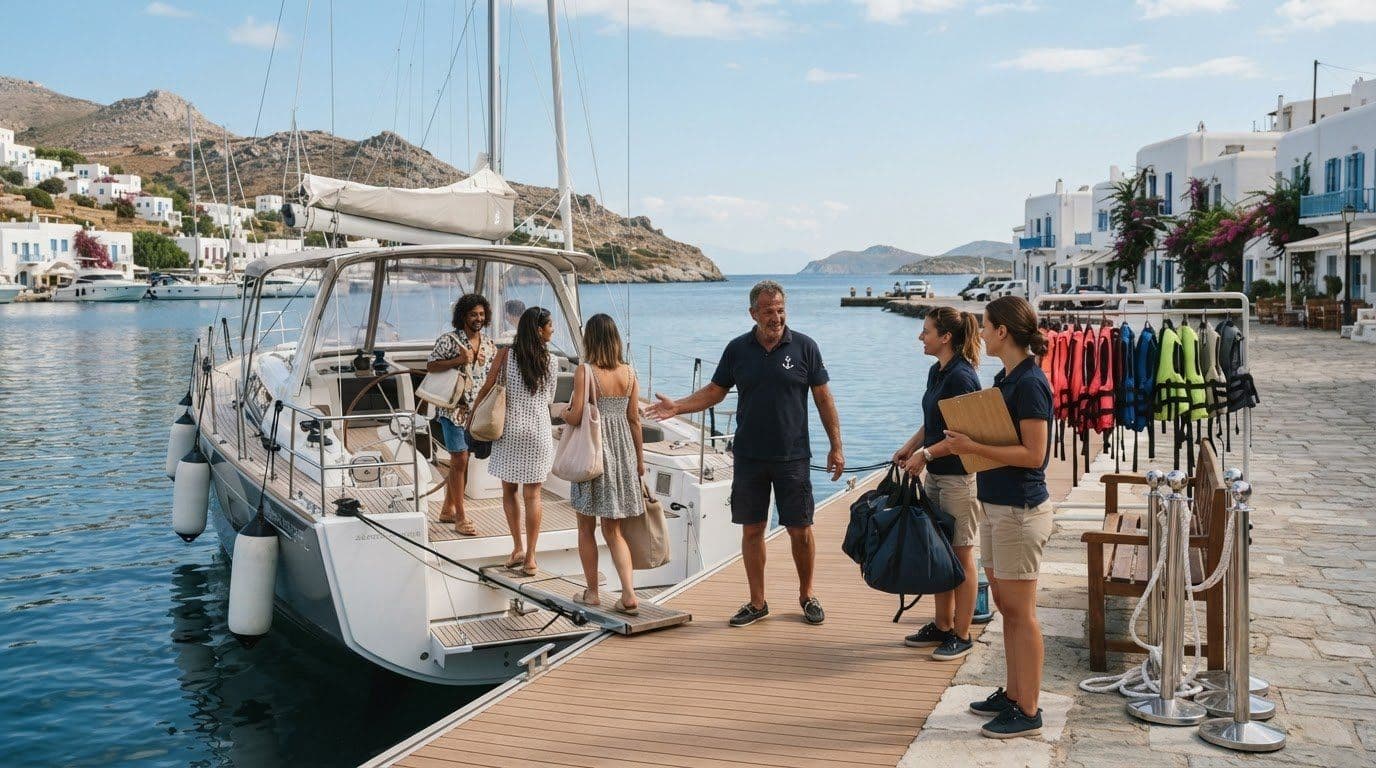
A smooth Greek yacht charter begins with a few clear questions: where to meet, when to arrive, and what the crew will cover before departure. Boarding can feel unfamiliar when you’re managing luggage, meeting the crew, and listening to safety instructions. This guide to yacht embarkation day protocol and guest safety orientation Greece explains what to expect, with a focus on the yacht you’re actually aboard rather than a one-size-fits-all routine.
Before travel, confirm your meeting point and day-of contact. On arrival, follow the crew’s directions with your luggage and speak up if an instruction isn’t clear. The captain’s safety guidance should reflect the specific vessel, so ask where to find key equipment and what guests should do in an emergency.
Use the checklist below to prepare, follow the orientation, and ask about route updates. Greek wind and port conditions can affect departure plans, so the captain may adjust the itinerary to respond to conditions and safety considerations.
Key Takeaways
- Expect a simple sequence: confirm your meeting details, arrive at the port or marina, board with the crew’s guidance, settle in, and attend the orientation.
- Use this guide to yacht embarkation day protocol and guest safety orientation Greece to prepare questions about your specific vessel, its routines, and how to get help.
- Details can vary with the yacht, charter format, port, and conditions. The captain may revise departure plans or the route.
- Follow the checklist and leave equipment checks and operation to the captain and crew unless they instruct you otherwise.
- Advance coordination with YAL’OOU can help clarify charter, route, and guest arrangements before embarkation.
What to Expect on Yacht Embarkation Day in Greece
First time boarding a charter yacht? You don’t need to know every routine in advance. The captain and crew can explain how things work on that specific vessel, including where to place your bags and what to expect before departure. A typical guest sequence is straightforward: confirm the meeting details, arrive at the port or marina, board with the crew’s guidance, settle in, and attend the safety orientation.
Details vary between yachts and ports. Confirming arrangements before travel gives you a clear plan, while leaving room for departure timing or other plans to change because of operational needs or weather. For a broader overview of Greek island locations, explore these Greek yacht destinations. Planning across destinations such as Mykonos, Paros, Antiparos, Athens, Aegina, Poros, Spetses, Syros, Tinos, Sifnos, Serifos, Milos, Poliaigos, Kimolos, Santorini, Ios, Koufonisia, Amorgos, Crete, Corfu, and Zakinthos? Confirm the specific embarkation point and arrival guidance for your charter.
For a practical look at what guests may want to check before a charter, watch this checklist overview:
Before leaving for the Greek port or marina
Ask your charter contact to confirm the exact meeting point, requested arrival time, and whom to contact on the day. Check how luggage should be handled, whether transfer arrangements have been made, and whether there are specific instructions for children in your party. Port access and arrival procedures differ, so confirm the details instead of assuming the same routine applies everywhere.
From first welcome to settling aboard
When you arrive, follow the crew’s directions as you step aboard and place bags in the designated area. Discreetly share any mobility needs or relevant medical concerns with the appropriate crew member so they understand what may affect your comfort or assistance. Then get settled and take part in the vessel-specific orientation. Background on the wider international maritime safety framework is available in the International Convention for the Safety of Life at Sea (SOLAS).
Don’t assume the yacht can leave as soon as everyone is aboard. The captain may need to complete checks or address operational considerations first, and weather can affect the planned departure or route. Stay attentive to updates and ask if anything is unclear. This is the practical heart of the yacht embarkation day protocol and guest safety orientation Greece: understand the sequence, follow crew guidance, and let the captain lead departure decisions.
What a Yacht Guest Safety Orientation Should Cover
A guest safety orientation explains the specific yacht’s equipment, everyday routines, and response procedures. It helps you understand what to do and whom to contact, but it isn’t professional crew training or a technical lesson on operating the vessel. Since details differ by yacht, treat the briefing as guidance for the boat you’re aboard, not as a generic checklist.
Safety instructions are most useful when they point to the equipment and routes on your yacht, rather than relying on assumptions from another boat. If a term or direction is unfamiliar, ask the crew to clarify it or demonstrate what guests need to know. The International Maritime Organization provides background on International maritime safety standards; your onboard orientation should focus on the vessel’s actual setup and the instructions relevant to guests.
Safety equipment and movement around the yacht
Ask the crew to identify the life jackets and explain how guests should use them on this yacht. Find out where to go and whom to alert if an alarm sounds. Ask which routes are appropriate for guests, and what to watch for on stairs, wet surfaces, or near lines. Don’t handle unfamiliar equipment or lines unless the crew asks you to.
Pay attention to the yacht’s layout. A route that feels straightforward at the dock may be less so when the boat is moving. If you’re unsure how to move between areas safely, ask before setting off on your own.
Emergencies, communication, and individual needs
Before departure, confirm how to reach the crew from different parts of the yacht and which instructions to follow in an emergency. If an instruction isn’t clear, ask for it to be repeated. Children need active supervision around decks, water, and safety equipment; ask the crew which areas or routines need special attention for your group.
Share relevant allergies, mobility needs, or medical concerns directly and discreetly with the crew. This gives them useful context without asking them to make assumptions about your needs. The yacht embarkation day protocol and guest safety orientation Greece should leave you knowing where to go, who to contact, and what the crew expects guests to do. You aren’t responsible for technical checks or operating safety equipment.
For help coordinating a Greek yacht experience and clarifying guest arrangements ahead of time, explore YAL’OOU’s yacht experiences.
What Changes Between Greek Yachts, Ports, and Weather Conditions?
There isn’t one embarkation routine for every Greek charter. The yacht’s layout, charter arrangement, port, and conditions on the day shape what guests should expect. Boarding at a busy marina may differ from boarding at another harbour, and a daily charter may have different timing and guest arrangements from a weekly trip. Treat the plan as a guide, not a promise that every step will look the same.
How yacht layout and charter arrangements affect orientation
Access points, deck layouts, stairs, and routes between guest areas vary from yacht to yacht. These differences affect how you move around and where you should go if the crew gives an instruction. During the orientation, focus on the safety features and guest routes of the yacht you’re aboard, rather than relying on what you remember from another boat.
Charter format matters, too. The duration and guest arrangements can affect the schedule and what needs to be clarified before departure. If you’re comparing vessels, review the available yacht options and ask which details about access, layout, and embarkation apply to your chosen yacht.
How Greek port and weather conditions can change the plan
Greek island ports aren’t interchangeable. Access, mooring arrangements, and the practical steps for boarding or leaving can vary by location and conditions. Confirm the meeting point and any port-specific arrival guidance in advance, then follow the captain and crew’s directions on the day.
In parts of the Aegean, the Meltemi is a relevant seasonal wind factor. It isn’t a fixed daily forecast, and its effects depend on actual conditions and the yacht’s plans. If the weather or port situation changes, ask what that means for your departure time, route, or immediate plans. The captain may adjust the itinerary based on conditions and safety considerations.
The captain’s current assessment, not a generic itinerary, guides safe decisions. Flexibility is part of a well-planned charter: a delay, route adjustment, or change in departure arrangements can reflect local conditions rather than a failure of the plan. The yacht embarkation day protocol and guest safety orientation Greece should help you understand what applies to your specific yacht and port, and whom to ask when conditions shift.
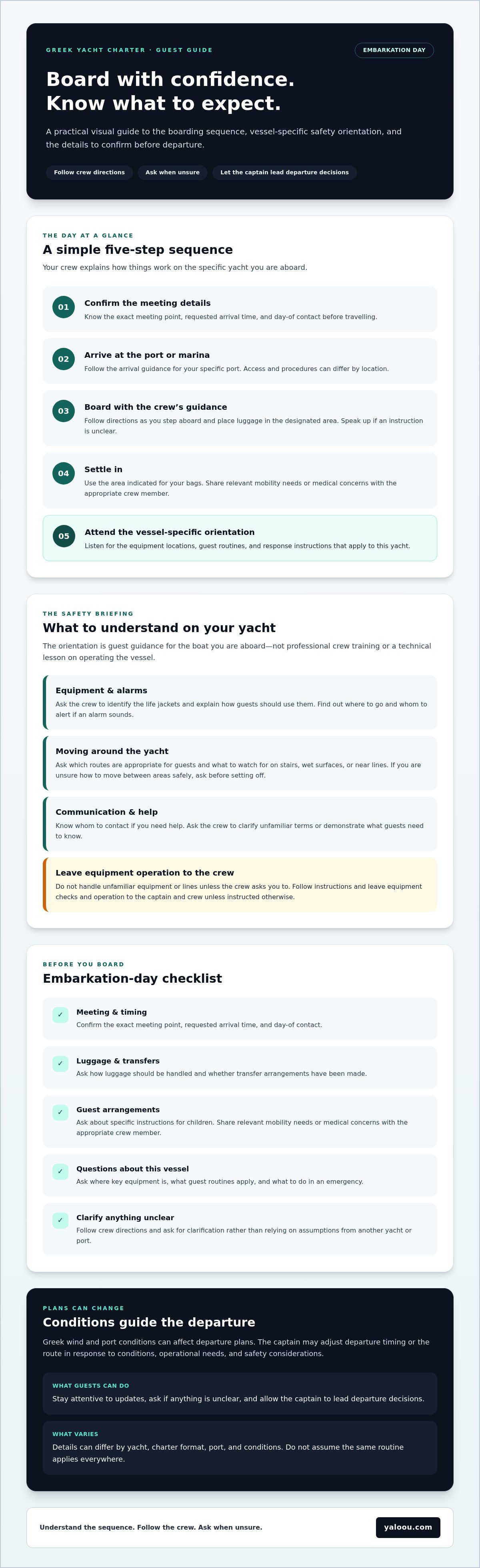
Embarkation-Day Checklist: What to Confirm, Ask, and Do
Use this sequence to keep the day clear and calm. Your role is to share relevant information, listen, and follow crew directions. The captain and crew handle vessel checks, safety equipment, and decisions about whether and when to depart. Don’t operate equipment unless a crew member specifically instructs you.
Before arrival: confirm the essentials
Check these details with your charter contact before setting out:
- Meeting: Confirm the exact meeting point, arrival time, and day-of contact.
- Getting there: Reconfirm your transfer plan and ask about any vessel-specific luggage or boarding instructions.
- Your group: Share relevant mobility, medical, allergy, dietary, or child-related needs in advance, so the appropriate arrangements can be discussed.
At boarding: follow the crew’s lead
Keep your group together and follow directions as you step aboard and place luggage. Ask where bags should go, and tell the crew if anyone needs assistance moving around. Don’t assume the yacht is ready to depart as soon as you board; the captain may need to complete checks or consider operational conditions first.
During orientation: listen and clarify
Make sure everyone in your party can hear the crew’s safety orientation. Ask where guests can find the crew, what to do if an alarm sounds, and which instructions to follow in an emergency. If you don’t understand a direction, ask the crew to explain it again. Children should remain supervised, and the adults responsible for them should follow any yacht-specific guidance from the crew.
Before departure: check for updates
Ask how the captain or crew will communicate a change to the departure time or itinerary if weather or port conditions affect the plan. The captain assesses conditions and decides whether the yacht can depart as planned. Your part is to stay with the group, listen for updates, and follow the crew’s directions.
Quick day-of recap
- Meeting point, arrival time, and contact confirmed
- Transfer, luggage, and personal needs discussed
- Everyone knows how to reach the crew and follow instructions
- Weather or itinerary updates understood
This sequence keeps guest actions clear and separate from crew responsibilities. To explore Greek yacht experiences and discuss guest arrangements, explore YAL’OOU’s yacht experiences.
Plan a Confident Greek Yacht Embarkation with YAL’OOU
A calmer first day starts with clear questions before you travel. YAL’OOU coordinates crewed yacht charters, routes, and guest services in Greece, including destinations such as Mykonos and Paros. Advance coordination can help clarify arrangements, but it can’t guarantee a particular embarkation time, route, or departure. Those details depend on the selected yacht, port, and conditions on the day.
As you compare options, share your preferred destination, group needs, and any questions that could affect boarding or comfort. This context makes the planning conversation more useful. You can also explore Greek yacht destinations while considering where your charter might begin.
What to discuss when planning a Greek yacht charter
Before settling on a plan, ask about the proposed embarkation location and timing, guest transfer arrangements, and how updates will be communicated. Share your party size and relevant accessibility, medical, or child-safety considerations. Ask which details are confirmed and which may depend on operational or weather conditions. Clear answers help you prepare without assuming every port or yacht follows the same routine.
- Where should the group meet, and when should guests arrive?
- What transfer or luggage arrangements should guests know about?
- Who should you contact if plans change before boarding?
- Which personal needs should be discussed with the crew?
Turn preparation into a more relaxed first day
Use advance planning to get familiar with the guest arrangements, then rely on the captain and crew for instructions aboard the selected yacht. They’re the source for vessel-specific safety guidance, equipment locations, and changes to the departure plan. Your preparation helps you arrive ready to listen and ask questions; it doesn’t replace the onboard orientation or the captain’s assessment of conditions.
This is the practical value of the yacht embarkation day protocol and guest safety orientation Greece: know what to clarify ahead of time, while leaving yacht-specific decisions to the people responsible on board. Review the experience options, then confirm the vessel, meeting arrangements, and guest details with the charter team before travel.
Explore Greek yacht charter experiences.
Set Sail with a Clear Plan
A confident embarkation starts before you reach the port. Confirm where and when to meet, share any needs that may affect your group, and arrive ready to follow the crew’s guidance. Once aboard, focus on the yacht-specific orientation. Know how to reach the crew, listen carefully, and ask for clarification instead of relying on assumptions from another vessel.
Greek ports, yacht layouts, and weather conditions can all shape the day. The captain’s current assessment guides departure and route decisions, so leave room for plans to change. That’s the heart of the yacht embarkation day protocol and guest safety orientation Greece: prepare what you can, understand the instructions for your yacht, and let the crew lead onboard.
YAL’OOU coordinates daily and weekly crewed yacht charters, along with routes, crew, and guest services across Greek destinations. To discuss your charter, guest arrangements, and embarkation plans, explore Greek yacht charter experiences.
Frequently Asked Questions
What happens on embarkation day for a yacht charter in Greece?
Embarkation day usually begins with meeting the crew at the agreed port or marina, followed by boarding, settling in, and a yacht-specific safety orientation. The exact sequence and timing depend on the vessel and location. Whether you’re departing from Mykonos, Paros, or Athens, confirm the meeting point, arrival time, luggage guidance, and day-of contact in advance. The yacht embarkation day protocol and guest safety orientation Greece may vary, so follow the crew’s directions.
What is covered in a yacht safety briefing?
A yacht safety briefing explains the equipment, routines, and emergency instructions relevant to that vessel. Ask the crew to show you where life jackets are and explain how guests should use them, where to go if an alarm sounds, and how to contact the crew. The briefing may also cover safe movement around decks, stairs, and wet areas. It’s a guest orientation, not training to operate the yacht or its equipment.
Do yacht charter guests have to attend the safety orientation?
Plan to attend, and ask the charter contact or crew about the arrangements for your specific yacht. Hearing the instructions directly helps every guest understand how to find the crew, what to do in an emergency, and which routines apply aboard. Don’t assume another guest can pass on all the details. If someone in your party can’t attend at the scheduled time, let the crew know and ask how they should receive the relevant guidance.
What should I bring or confirm before boarding a yacht in Greece?
Before leaving, confirm the meeting point, arrival time, transfer plan, day-of contact, and any luggage or boarding instructions. Ask the charter contact what documents or other items your party should bring, rather than assuming the same requirements apply to every charter. Share relevant medical, mobility, dietary, or child-related needs in advance. For departures from places such as Paros or Mykonos, check for location-specific access guidance and leave flexibility for local arrangements.
Can bad weather change a yacht charter itinerary in Greece?
Yes. Weather and local port conditions can lead the captain to adjust the departure time, route, or itinerary. Seasonal winds such as the Meltemi can be a factor in parts of the Aegean, but conditions vary and shouldn’t be assumed from a general forecast or a previous trip. Ask the captain what any change means for your immediate plans. The captain’s assessment on the day guides decisions for the yacht.
How should families prepare children for yacht safety orientation?
Tell the charter contact and crew in advance that children will be aboard, and ask what vessel-specific guidance families should follow. During the orientation, keep children with a responsible adult and make sure the adults understand the instructions about decks, water, and safety equipment. Ask the crew to explain rules in child-friendly terms if helpful. Supervision remains essential, and families should follow the captain and crew’s directions throughout the trip.
What should I do if I do not understand a safety instruction onboard?
Ask the crew to repeat or clarify it before acting. You can ask them to point out the relevant area or demonstrate what guests need to know, while leaving equipment operation to the crew unless they specifically instruct you otherwise. If you’re still unsure, say so directly. Clear communication matters more than pretending to understand, especially if the instruction concerns an alarm, safe movement, or how to get help.
Disclaimer
The YAL’OOU Travel Guide is curated with care to inspire and inform discerning travelers. While every effort is made to ensure the accuracy and relevance of the information provided, all content is offered for general guidance only and may evolve over time.
Details such as local regulations, availability, pricing, and services are subject to change without prior notice. We encourage guests to seek personalized advice and confirm arrangements directly when planning their journeys.
YAL’OOU accepts no liability for any inaccuracies, omissions, or outcomes arising from the use of this information. The Travel Guide may feature recommendations, insights, and selected third-party experiences, presented solely as a source of inspiration and not as formal endorsements.
By accessing this section of our website, you acknowledge and accept this disclaimer as part of your experience with YAL’OOU.