

October can be a rewarding time to visit the Aegean, but don’t count on glassy seas every day. If you’re wondering what sea conditions are like in the Aegean in October, expect water around 22°C, winds that generally ease from their summer strength, and the possibility of occasional gusts or storms. Rain is still limited on average, at about 41 mm across four rainy days.
October can suit a quieter island escape, but the weather still shapes plans on the water. Here’s what to expect from sea and air temperatures, how the Meltemi changes as autumn advances, and why conditions vary between islands and from day to day. Understanding the wind, rain, and seasonal trade-offs can help you decide whether October is right for an Aegean getaway.
Key Takeaways
- October is a shoulder-season month, not the heart of the Aegean’s winter wet period; expect changeable weather rather than a reliable summer pattern.
- The Meltemi can still blow through the end of October, but it generally eases in autumn after reaching its strongest levels in July and August.
- Sea temperatures average about 22°C in October, while occasional rain and regional differences can shape your plans on land and on the water.
- When planning a yacht outing, keep your route flexible and factor in the day’s wind, since calm conditions aren’t something to count on.
Is October part of the wet season in Aegean Sea?
October is a shoulder-season month in the Aegean, between the hot, dry summer and the colder, wetter winter. The summer dry period runs from June to August, while the cold, rainy period generally lasts from November to March. September and October are transitional months, so conditions can vary considerably from year to year.
Rainfall increases from summer levels, but October is not yet part of the Aegean’s main winter wet period. The monthly average is 41 mm, spread across about four rainy days. For travelers asking what sea conditions are like in the Aegean in October, this means planning for occasional showers alongside plenty of usable days, rather than expecting uninterrupted summer weather.
Temperatures remain mild enough for exploring islands and coastal towns. Average daytime air temperature is 23°C, while nights average 17°C. Sea temperatures typically fall from 23°C at the start of October to 20°C near the end, so earlier dates tend to offer warmer swimming. The Aegean is not warmer in October than in September.
Conditions differ between the northern and southern Aegean. Southern islands, including Crete, Rhodes, and Kos, usually stay warmer for longer, with October temperatures commonly ranging from 18°C to 24°C. Northern islands generally feel cooler by comparison, so location matters when choosing a base or planning outdoor routes.
Ferries and island-hopping routes are within Greece’s typical sailing season, which runs from April to October. But that seasonal window doesn’t mean every crossing is unaffected by weather: winds and storms can disrupt sea travel. Keep your route plans flexible, especially when an island connection depends on a specific crossing.
October brings fewer sailing crowds than peak summer, creating a quieter pace for exploring. It suits trips that leave room for both time at sea and land-based plans. Southern islands tend to stay milder, but account for changing weather when planning routes between destinations such as Mykonos, Paros, Antiparos, and Sifnos.
Meltemi winds in the Aegean
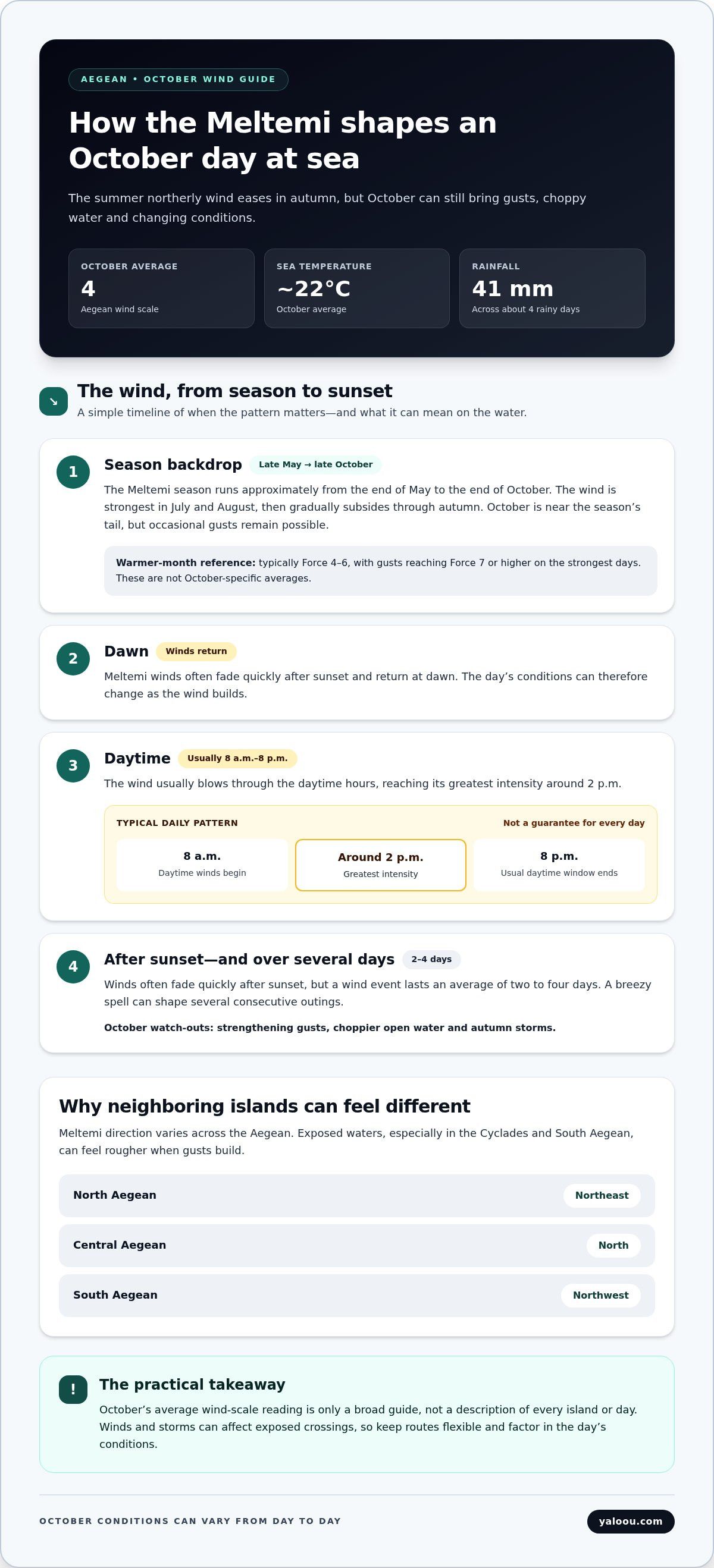
The Meltemi is a dry northerly wind that shapes summer sailing across the Aegean. Its season runs approximately from the end of May to the end of October, so October can still bring Meltemi conditions. The winds gradually subside in autumn, but occasional gusts remain part of the pattern across this eastern Mediterranean region.
In warmer months, the Meltemi typically blows at Force 4 to 6 and can gust to Force 7 or higher on the strongest days. It is strongest in July and August, rather than October. In the Cyclades and South Aegean, exposed waters can feel rougher when gusts build, affecting comfort and the pace of a sailing day.
Timing matters, too. Meltemi winds usually blow from 8 a.m. to 8 p.m., reaching greatest intensity around 2 p.m. They often fade quickly after sunset and return at dawn. A wind event lasts an average of two to four days, so a breezy spell can shape several consecutive outings.
Wind direction varies across the Aegean: it comes from the northeast in the North Aegean, north in the Central Aegean, and northwest in the South Aegean. This helps explain why neighboring islands can experience different conditions. The Dodecanese and other southern islands may still see occasional gusts as the wider summer pattern eases.
In October, watch for strengthening gusts, choppier open water, and autumn storms. Aegean currents vary in speed and direction, with winds chiefly influencing them. These factors matter when planning time at sea, especially on exposed crossings.
For a trip shaped around island culture as well as changing sea conditions, explore Greek island experiences and plan with flexibility. October’s position at the tail end of the Meltemi season offers a different rhythm from peak summer sailing across Europe’s Aegean waters.
October weather in Greece
October brings Greece a shift from summer heat to milder Mediterranean weather. Temperatures usually range from 20°C to 26°C, making sightseeing and hiking more comfortable than midsummer. The national average is around 23°C, though local conditions vary between coastal areas, inland towns, and islands.
Expect a mix of clear days and occasional rain, especially toward late October. Across the Aegean, average sunshine reaches 8 hours daily, with about 11 hours of daylight. That leaves useful time for visiting archaeological sites, walking through villages, or enjoying a relaxed lunch outdoors.
Sea temperatures around Greece average about 22°C in October. The water can still feel inviting for a swim, particularly on sunny afternoons, but changing air temperatures make beach days less predictable than during summer. Pack a light layer for the evening, when coastal breezes can make the air feel cooler.
Humidity averages 68% across the Aegean, adding a mild, sometimes damp feel to cloudy days. Rain is more likely as the month progresses, so an outdoor itinerary benefits from indoor alternatives. For example, pair a morning walk around an island harbor with a museum or long lunch option nearby.
October weather can support varied plans across the Greek islands. Choose walking routes and cultural visits during cooler or unsettled periods, then make the most of bright spells along the coast. Southern destinations often retain warmth later into autumn, while northern locations may feel cooler. Local geography affects how quickly conditions change.
Compared with June, July, and August, October brings less intense heat and shorter days. It can be a pleasant season for travelers who prefer milder conditions to reliable beach weather. The trade-off is variability: sunshine, clouds, and passing rain can all feature in one trip. Flexible plans make it easier to enjoy Greece’s coastline and inland sights.
October wind conditions
October sits between the Aegean’s peak summer winds and the more changeable winter pattern. Meltemi winds gradually ease during autumn, but October can still bring gusty spells. The average wind scale in the Aegean is 4 for the month, a useful broad guide rather than a description of every island or day.
Sea conditions are often calmer in autumn than in summer, but waves can build when winds strengthen. October does not guarantee flat water: exposed crossings can feel choppy, while sheltered bays may offer a quieter alternative. The experience depends on wind direction, local shelter, and the stretch of water you’re crossing.
North winds prevail across the Aegean, while southwesterlies alternate with them from the end of September to the end of May. This seasonal shift can make conditions less uniform than the steady summer pattern. In the Cyclades, island position and exposure matter: a route between open-water destinations can feel different from a short passage near a sheltered coastline.
August brings the Meltemi’s strongest summer conditions, while these winds generally subside in October. Remaining gusts can still affect comfort and plans at sea. Watch for changes in wind direction and choppier water, especially on routes across open stretches. A breezy day may also feel cooler on deck than in nearby villages.
For a practical takeaway, build flexibility into October plans. Keep land-based options in mind if wind makes a crossing less comfortable, and avoid scheduling every activity around a single sea outing. A High-End Villa Rental can provide a land-based stay between days on the water. Explore Aegean island experiences to shape a trip around both coastal and inland destinations.
YAL’OOU Exclusive Yachting & More: Daily Yacht Charters
YAL’OOU Exclusive Yachting & More offers Daily Yacht Charters for travelers who want to explore the Aegean from the water. With October’s changing winds, planning an outing around your island itinerary is especially useful. For a longer escape, Weekly Crewed Yacht Rentals offer time at sea and a stay aboard; High-End Villa Rentals provide a land-based alternative between coastal outings.
Pairing a villa stay with VIP Ground Transfers can also help connect your accommodation with island activities. Choose the arrangement that fits your trip: a day on the water, a longer sailing holiday, or a comfortable base for exploring ashore. Contact YAL’OOU Exclusive Yachting & More to discuss your Aegean plans.
Shape an October Escape Around Your Own Pace
Let the kind of trip you want guide your choice. Are you looking for a day exploring from the water, a longer stay at sea, or a comfortable base for discovering island life ashore? Knowing what sea conditions are like in the Aegean in October can help you choose a flexible plan instead of building every day around one fixed activity.
YAL’OOU Exclusive Yachting & More offers Daily Yacht Charters, Weekly Crewed Yacht Rentals, and High-End Villa Rentals. These options let you shape your stay in different ways, from a single sea outing to a longer escape or a land-based retreat. Choose the experience that suits your travel style, with room to enjoy the islands at your own pace.
Explore YAL’OOU’s Aegean experiences and start planning a trip that feels like yours. A thoughtful plan can turn an autumn getaway into a refreshing change of pace.
Frequently Asked Questions
Are there good conditions to visit in Aegean Sea in October?
Yes, October suits visitors who prefer milder temperatures and fewer sailing crowds over peak-summer heat. The Greek sailing season typically runs through October, and the sea remains around 22°C on average. Plan for both outdoor exploring and downtime ashore, since occasional rain and changing winds can affect sea-focused plans. Southern islands such as Crete and Rhodes usually stay warmer than northern destinations.
How many rainy days can I expect in October in Aegean Sea?
The Aegean averages about four rainy days in October, with monthly rainfall around 41 mm. Rain can arrive as the month progresses, so a short shower may affect an outdoor plan without dominating the whole visit. For a practical itinerary, keep a museum, village visit, or long lunch in mind as an alternative to a beach day.
Is Aegean Sea rainier in October than in November?
No. November is generally a little wetter than October in the Aegean, and it also brings cooler conditions. October falls between the dry summer and the colder, rainier winter period. For travelers choosing between these months, October tends to be milder, while November moves further into the winter pattern.
Is the sea in Aegean Sea warmer in October than in September?
No, the Aegean Sea is not warmer in October than in September. October water temperatures tend to decline as the month advances, from about 23°C at the beginning to around 20°C near its end. For example, Rhodes averages 23°C, while Lesbos averages 20°C. Earlier October dates are generally the better fit for travelers prioritizing warmer swims.
What is the Meltemi?
The Meltemi is a dry northerly wind that affects the Aegean, especially in summer. It typically blows from the northeast in the North Aegean, north in the Central Aegean, and northwest in the South Aegean. The wind season extends approximately from late May to late October. Its strength and direction can affect comfort at sea and exposed crossings around the islands.
What is the night temperature in Aegean Sea in October?
The average nighttime air temperature in the Aegean Sea in October is 17°C, or 62°F. That’s cooler than the average daytime temperature, so evenings by the water can feel noticeably different from sunny afternoons. Pack a light layer for outdoor dining or harbor walks, especially if your plans keep you outside after sunset.
Disclaimer
The YAL’OOU Travel Guide is curated with care to inspire and inform discerning travelers. While every effort is made to ensure the accuracy and relevance of the information provided, all content is offered for general guidance only and may evolve over time.
Details such as local regulations, availability, pricing, and services are subject to change without prior notice. We encourage guests to seek personalized advice and confirm arrangements directly when planning their journeys.
YAL’OOU accepts no liability for any inaccuracies, omissions, or outcomes arising from the use of this information. The Travel Guide may feature recommendations, insights, and selected third-party experiences, presented solely as a source of inspiration and not as formal endorsements.
By accessing this section of our website, you acknowledge and accept this disclaimer as part of your experience with YAL’OOU.