
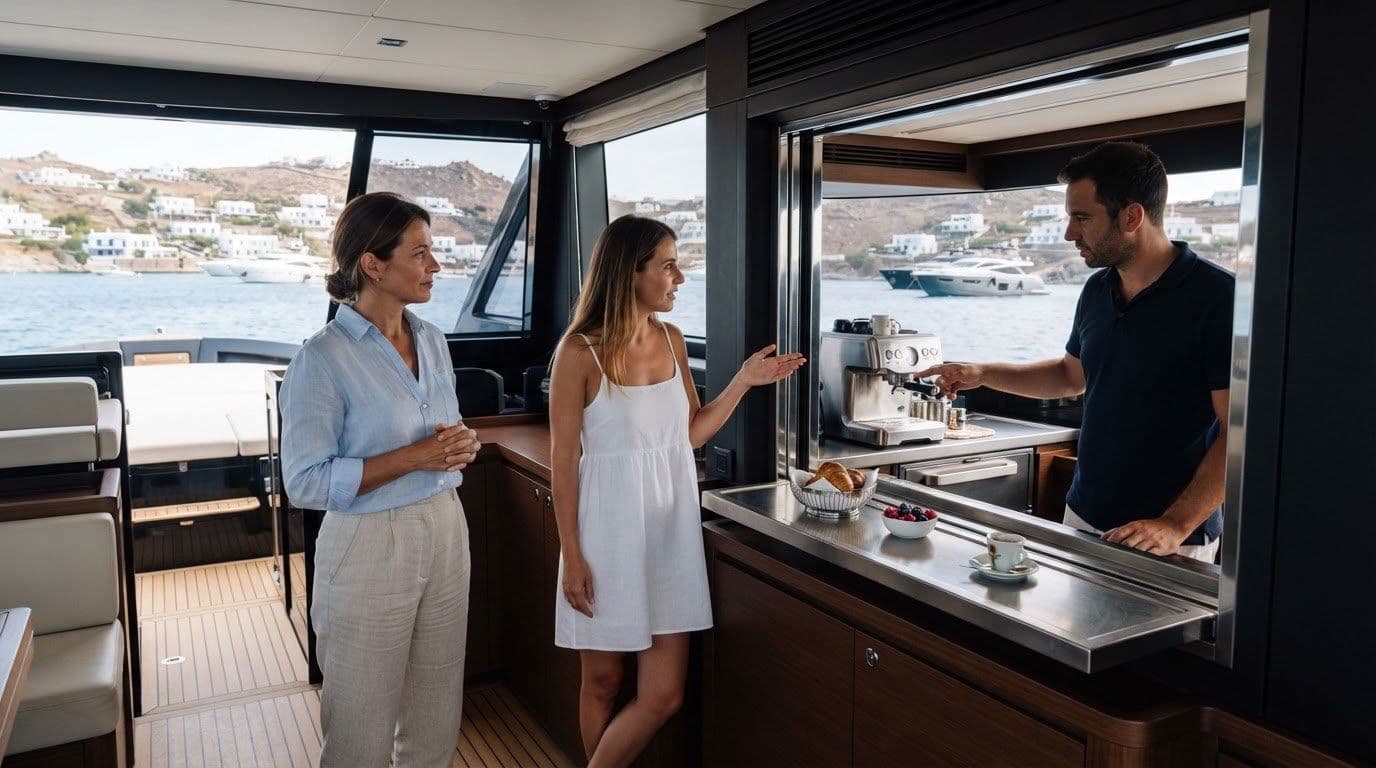
A yacht broker’s direct relationships with crew can help turn a promising charter into a well-informed choice. The benefits of a broker with direct crew relationships include clearer insight into onboard service, communication, and the practical details that shape your time at sea. This knowledge helps connect your priorities with the people who bring the experience to life.
Choosing a yacht is only part of planning a charter. You also want to know how the crew works, what matters to them, and how your preferences can be communicated before you step aboard. A broker who knows crew members directly can help make those conversations more personal and useful, while setting expectations without promising that every detail will unfold exactly as planned.
Direct crew relationships can support a more informed yacht choice, smoother planning, and clearer communication with your broker. Share your priorities early, ask focused questions about the onboard experience, and keep those priorities in view from the first conversation through departure.
Key Takeaways
- Learn how a broker’s direct crew connections can offer useful insight into onboard service and help match a yacht to your priorities.
- Share your preferences, timing, and expectations clearly so your broker can focus the search and communicate details with the crew.
- Understand how established relationships may support smoother coordination and faster decisions, while availability still depends on the yacht and your dates.
- See why personal connections don’t automatically mean lower charter costs, and which details to clarify when discussing the overall arrangement.
1. Broker value propositions
A broker who speaks directly with a yacht’s crew can add context that a booking platform may not provide. While a platform organizes listings and booking details, a broker can share crew insights about the onboard routine, guest preferences, and practical fit. If you’re planning a quiet family day, for example, you can explain that priority and discuss whether the crew’s approach suits it. Direct ties support planning, but they don’t replace clear terms or a suitable vessel.
Relationships alone don’t verify a vessel’s condition, crew qualifications, or safety records. A responsible broker distinguishes personal familiarity from evidence and discusses relevant vessel documents, qualifications, and safety information with the operator. Ask what has been reviewed and what the records show. A crew member’s firsthand comments can add useful detail, but they don’t replace documentation or an appropriate assessment of the yacht.
During a voyage, direct crew contact can give the broker a practical way to share your preferences and relay updates. Before departure, agree on the communication channel, who will pass on requests, and which decisions belong to the captain. For example, the agreed contact can pass along a change to meal timing, while the captain handles operational decisions. This division supports coordination without blurring responsibilities.
If weather or another disruption affects the itinerary, the broker can share the crew’s update and help communicate available options. The captain provides the onboard assessment, while the broker keeps you informed and helps coordinate planning changes. Share your priorities early, such as a preferred destination or flexibility around the schedule. Direct relationships can make communication more familiar, but they can’t control conditions or guarantee a particular itinerary.
A strategic employee benefits broker can recommend plan designs that balance value, cost, and competitiveness. Regularly working with a core group of trusted carriers can build rapport and improve operational consistency. Brokers ask carriers about their preferred routes and the types of loads they can haul, avoid last-minute rate changes and excessive payment deductions, provide clear invoicing and payment terms, and let carriers track payment status. Clear broker-carrier communication can help prevent problems from growing and allow quicker adjustments when conditions change.
2. Building direct broker relationships
Build a useful relationship before choosing a yacht, not only when a problem arises. Start by describing your preferred pace, privacy needs, mobility considerations, and must-have experiences. A broker can discuss those priorities with the crew and explain how the vessel’s onboard routine may fit. If you’re planning a relaxed day, for example, ask how flexible the schedule can be. Clear expectations make crew conversations more valuable than a vague request for a “perfect” trip.
Maritime requirements may apply to charter operations, but the relevant rules depend on the vessel, location, and arrangement. A broker’s personal relationship with the crew doesn’t replace applicable requirements or written charter terms. Ask how the broker’s role relates to the captain’s responsibilities and which documents describe the arrangement. This keeps personal familiarity separate from formal obligations.
Personal ties can also create risks. A broker might rely on outdated conversations, miss a change in crew, or present an informal impression as verified information. Trust should support clear communication, not replace it. Ask specific questions: When did the broker last speak with this crew? Who will be onboard? Which qualifications or vessel documents support safety-related claims? Clear answers help distinguish current information from assumptions.
Keep the conversation focused with a few practical questions:
- How do you know this crew, and how recently have you worked together?
- What can you document about the crew’s experience and the vessel’s onboard arrangements?
- Who will communicate updates before departure and during the charter?
- How are your role, the captain’s authority, and any relevant terms explained in writing?
Freight brokers use carrier relationships in a different industry, so that model shouldn’t be treated as proof of yacht-crew credentials. Focus instead on current, vessel-specific details and clear accountability. Reviewing yacht charter experiences can also help you name the atmosphere and activities you want to discuss with a broker.
3. How do direct crew relationships improve vessel availability and booking speed?
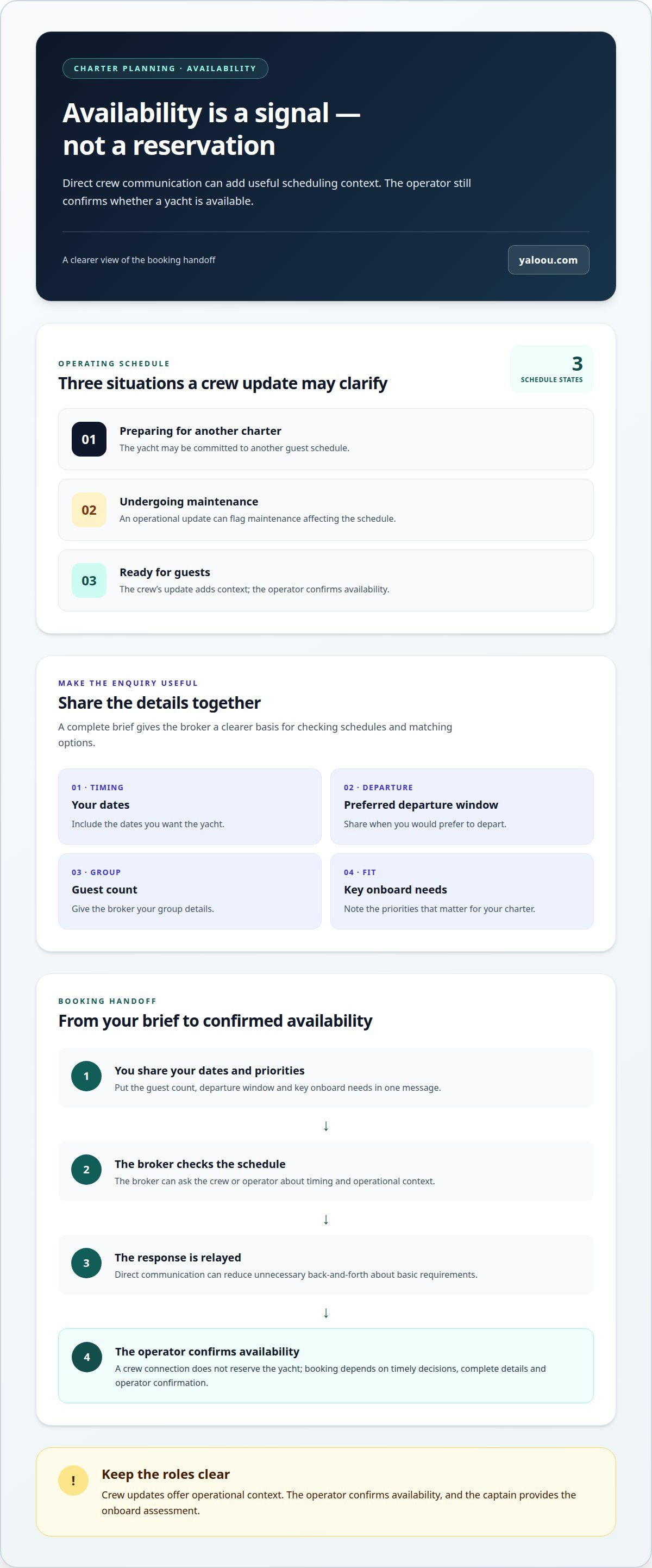
A direct crew connection gives a broker a way to ask about a yacht’s operating schedule. That can clarify whether the vessel is preparing for another charter, undergoing maintenance, or ready for guests. The crew’s update adds operational context, while the operator remains responsible for confirming availability. The broker can then focus the search on yachts that fit your dates and plans.
Direct communication can also reduce unnecessary back-and-forth. If you’re considering a yacht for a particular departure date, the broker can ask the crew or operator about scheduling and relay the response. Share your guest count, preferred departure window, and key onboard needs together. This gives the broker a clearer basis for matching options and avoids repeated questions about basic requirements.
Relationships may make coordination more familiar, but they don’t reserve a yacht. Booking still depends on timely decisions, complete details, and the operator’s confirmation. A clear process helps keep each step moving:
- Share your dates, group details, and priorities in one message.
- Ask the broker to distinguish preliminary schedule information from confirmed availability.
- Review the proposed yacht and charter terms promptly.
- Follow the operator’s booking process to secure the arrangement.
If your first-choice yacht is scheduled for maintenance, for example, a broker with crew contacts can ask about its operational timeline and discuss suitable alternatives. That insight may help redirect the search sooner than an outdated calendar would. The broker can also relay updates if the schedule changes while you’re deciding. The advantage is more informed coordination, not guaranteed access or an automatic booking. The benefits of a broker with direct crew relationships are strongest when your priorities and decision process are clear.
4. Can direct crew relationships reduce charter costs or broker fees?
A broker’s direct relationship with a crew doesn’t automatically lower charter costs or broker fees. Crew members can explain how a yacht operates and what an itinerary involves, but the relationship alone doesn’t change the agreed terms. Treat personal access as a source of practical information, not a promise of a discount.
Charter pricing depends on the yacht, dates, itinerary, and included services, and is provided after a quote request. Ask for a written breakdown that separates the charter amount, broker compensation, and any additional charges. That makes it easier to understand what you’re paying for and compare options on a like-for-like basis.
Before committing, clarify the details that shape the arrangement. Ask whether the proposed itinerary changes the included services and how requested adjustments are handled. Have the broker explain the payment schedule, cancellation terms, and services covered by the agreement. The crew can describe onboard arrangements, while the broker can clarify the commercial terms.
- Which services are included in the quoted charter?
- How is broker compensation handled in the agreement?
- What terms apply if dates or itinerary plans change?
- Which extra services or requests affect the final amount?
Direct crew communication may help you choose an experience that fits your plans from the start. A crew’s explanation of onboard routines can reveal whether a particular yacht or itinerary suits your group. That insight may help avoid committing to an unsuitable arrangement, but it doesn’t guarantee lower costs. Focus on clear terms, relevant inclusions, and the overall fit. Explore daily yacht charter experiences to shape the kind of outing you want to discuss.
These dynamics are different from chartering: established broker-carrier relationships can provide more consistent access to freight capacity and help reduce last-minute bookings or emergency shipping scenarios. Brokers can support carriers by offering detention compensation or load-matching assistance to reduce empty miles. Established broker-carrier relationships can reduce clarification between parties and increase the likelihood that a carrier accepts a load.
Familiarity with shipment requirements can help trusted carriers follow instructions and reduce freight damage. Carrier quoting tools and enrollment platforms can help agents reduce errors and streamline processes. These freight practices do not establish a discount or fee reduction for yacht charters; assess charter terms on their own.
YAL’OOU Exclusive Yachting & More: Daily Yacht Charters
YAL’OOU Exclusive Yachting & More offers Daily Yacht Charters for guests planning a focused day on the water. Choose this option when a day charter suits your schedule better than a longer stay. Share your preferred date, group priorities, and the kind of day you have in mind. Those details create a useful starting point for discussing the charter experience, onboard atmosphere, and practical arrangements. Direct crew relationships can inform planning, while clear priorities and charter terms guide the decision. To discuss a day on the water, contact YAL’OOU Exclusive Yachting & More.
Shape your next charter conversation
Start with a clear picture of the experience you want, not simply a yacht name. Consider whether you’re planning a day on the water, a longer yacht stay, or time ashore in a private villa. YAL’OOU Exclusive Yachting & More offers Daily Yacht Charters, Weekly Crewed Yacht Rentals, and High-End Villa Rentals for different kinds of Greek-island escapes.
Before beginning the conversation, bring together your preferred dates, the atmosphere you’re after, and the details that matter most to your group. This gives the discussion a useful starting point and helps connect your plans with the right experience. The benefits of a broker with direct crew relationships are most meaningful when personal insight supports your priorities rather than replacing them.
Ready to explore the possibilities? Discuss your yacht plans and take the first step toward time well spent on the water.
Frequently Asked Questions
What are the benefits of a broker with direct relationships with vessel crews?
Direct crew relationships can offer more tailored insight into the onboard experience and help identify useful details before you choose. The benefits of a broker with direct crew relationships can be especially practical for a Greek-island charter: for example, ask about onboard arrangements that matter to your group while planning around Mykonos or Paros. This helps you decide which details to clarify in the written booking terms.
Disclaimer
The YAL’OOU Travel Guide is curated with care to inspire and inform discerning travelers. While every effort is made to ensure the accuracy and relevance of the information provided, all content is offered for general guidance only and may evolve over time.
Details such as local regulations, availability, pricing, and services are subject to change without prior notice. We encourage guests to seek personalized advice and confirm arrangements directly when planning their journeys.
YAL’OOU accepts no liability for any inaccuracies, omissions, or outcomes arising from the use of this information. The Travel Guide may feature recommendations, insights, and selected third-party experiences, presented solely as a source of inspiration and not as formal endorsements.
By accessing this section of our website, you acknowledge and accept this disclaimer as part of your experience with YAL’OOU.