
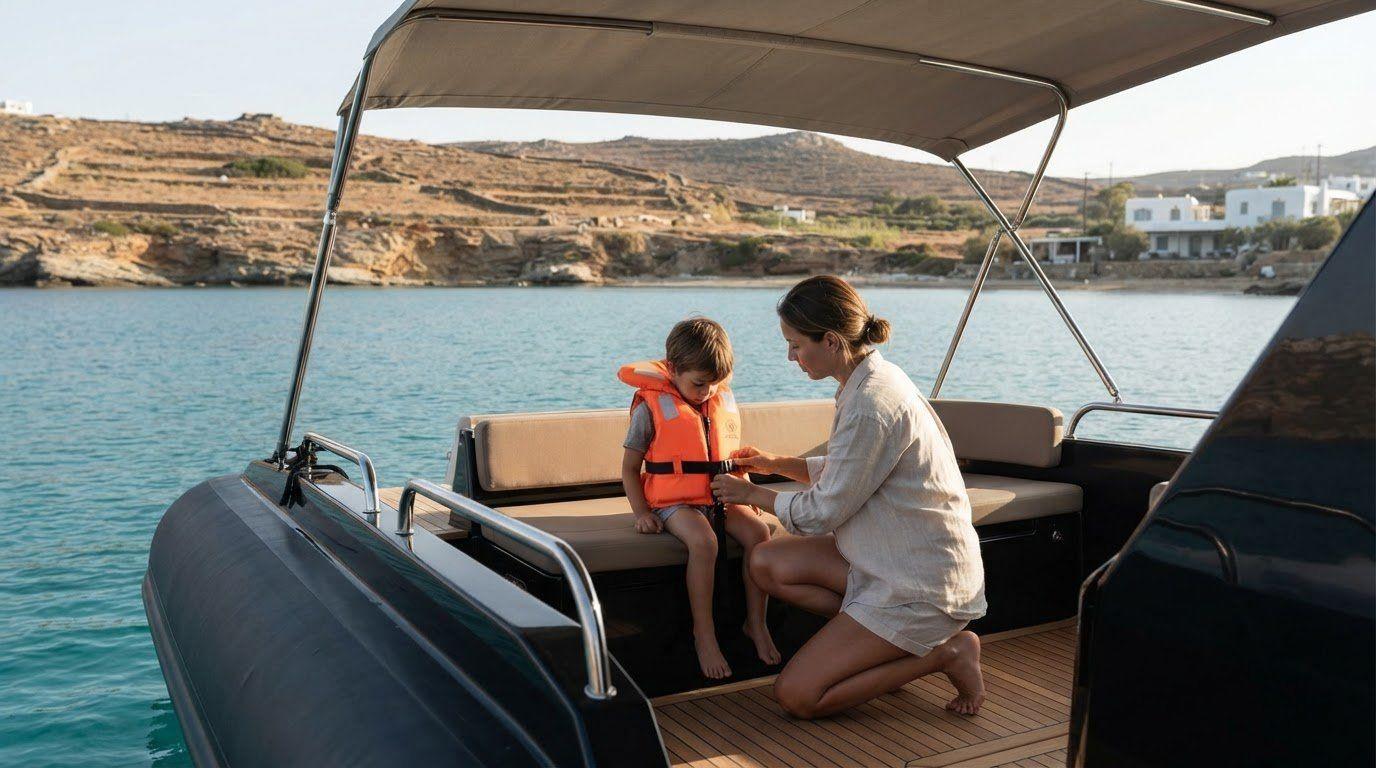
A child-ready yacht is safer by design, not just by checklist. Child safety precautions on a private yacht start with a properly fitted, U.S. Coast Guard-approved life jacket and close adult supervision whenever children are on deck. In California, children under 13 must wear an approved life jacket on a moving recreational vessel, with an exception for children in an enclosed cabin, according to the California Legislature.
It’s natural to focus on flotation gear first, but a safe family outing also depends on the yacht’s layout, clear boundaries, and a plan for sun, rest, and changing conditions. This guide explains how to prepare child-sized flotation gear, protect children from the sun, schedule breaks, and assess the yacht before setting off. You’ll also learn what to discuss with the crew and how simple onboard routines can help children enjoy the trip while adults stay focused on safety.
Key Takeaways
- Match flotation gear to each child’s size and fit, then make sure it stays on during time on deck.
- Plan shade, familiar sun protection, water, and downtime so children can recharge during the outing.
- Set age-appropriate boundaries: keep toddlers within reach, and make sure older children know which areas and activities are off-limits.
- Walk through the yacht’s layout with safety in mind, clear trip hazards, and discuss onboard routines with the crew before departure.
1. Child-sized life jackets and personal flotation devices
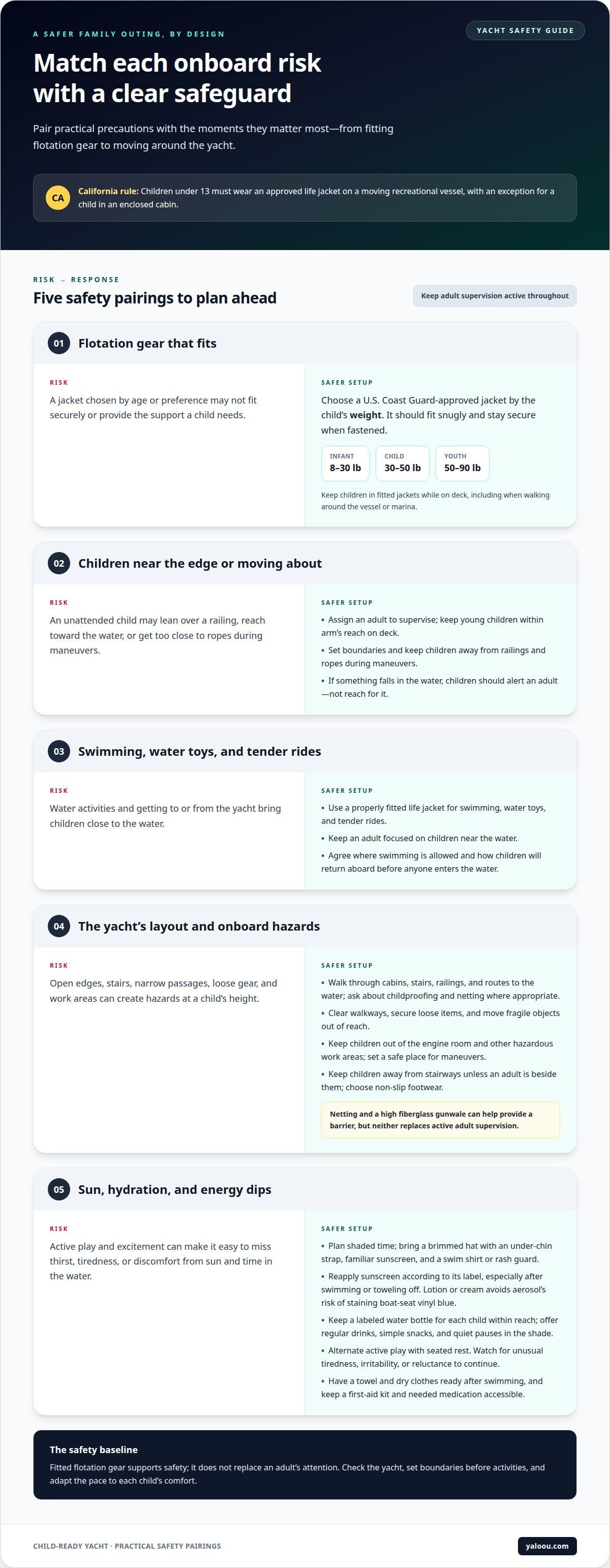
Choose a U.S. Coast Guard-approved life jacket made for each child’s size and weight. A jacket should fit snugly, stay secure when fastened, and provide enough support for the child wearing it. Common size ranges are 8 to 30 pounds for infants, 30 to 50 pounds for children, and 50 to 90 pounds for youth. Use the weight range on the jacket to guide your choice, not a child’s age or favorite color.
In California, children under 13 years old must wear a U.S. Coast Guard-approved life jacket on a moving recreational vessel, with exceptions including when a child is in an enclosed cabin, according to California Legislature. On a yacht, keep children in fitted life jackets while they are on deck, including when walking around the vessel or marina. Adult supervision remains essential: a flotation device supports safety, but it doesn’t replace an adult’s attention.
There’s no single typical cost for child-safety equipment. What you need depends on the number and sizes of the children, as well as whether suitable life jackets are already available for the outing.
To reduce the risk of a child going overboard, assign an adult to supervise and keep young children within arm’s reach on deck. Set clear boundaries before moving around the yacht. Tell children to alert an adult if something falls into the water rather than reaching for it, and keep them away from ropes during maneuvers and from railings where they could lean over.
For swimming or water toys, have children wear properly fitted life jackets and ensure an adult is focused on them near the water. Before anyone enters the water, agree on where swimming is allowed and how children will return aboard. Confirm that each child has a suitable life jacket for any tender ride, too.
2. Sun protection, hydration, and rest breaks
Plan for shade before choosing the day’s activities. A motor yacht with shaded outdoor areas or awnings gives everyone a place out of direct sun. Bring each child a hat with a floppy brim and under-chin strap, familiar sunscreen, and a swim shirt or rash guard. Reapply sunscreen according to its label, especially after swimming or toweling off. Choose lotion or cream rather than aerosol sunscreen, which can stain boat-seat vinyl blue.
Keep water within easy reach. Pack a labeled bottle for each child and offer regular drinks during active play, particularly after swimming or time in the sun. Don’t wait for a child to ask: excitement can distract them from thirst. Pair drinks with simple snacks and a quiet pause in the shade. The captain can help shape the day around conditions, but adults should keep an eye on each child’s energy and comfort.
Schedule rest instead of treating it as an afterthought. Alternate energetic activities, such as swimming, with seated time in a shaded area. Watch for signs that a child needs a break, including unusual tiredness, irritability, or reluctance to continue. Offer dry clothes and a towel after swimming, since children may feel cold once out of the water. Keep a first-aid kit accessible, and pack a child’s usual allergy medication or other needed supplies.
For a more comfortable outing, plan a flexible pace with shade, water, and downtime between activities. A thoughtfully paced private yacht experience leaves room to adapt the day to children’s needs. Keep sunscreen, hats, water bottles, towels, and first-aid supplies together, so adults can reach them without crossing the yacht during a busy moment.
3. But what about childproofing your yacht?
Start by matching the yacht and its setup to the youngest child aboard. A sailing yacht may not suit families with babies or toddlers, so consider a yacht with childproofing options. Before departure, agree which areas are off-limits, such as the engine room and cockpit. Keep young children within arm’s reach, with one adult actively supervising rather than assuming someone else is watching.
For babies, secure an infant car seat only while the yacht is stationary. Use a baby carrier only when the adult is seated. Keep toddlers closely supervised on deck. Keep fragile objects out of reach, stow loose items securely, and put them back after use. Choose non-slip footwear, not floating shoes that could interfere with a life jacket in the water.
Walk through cabins, stairs, and railings with safety in mind. Ask about available childproofing measures, keep children away from stairways unless an adult is beside them, and use netting along exposed sides where appropriate. Netting can also help create a contained swimming area. A child should never lean over a railing or sit with legs outside the yacht, even while it’s tied up. Keep the deck clear of objects that could cause trips.
Keep children out of the engine room and other hazardous work areas. During maneuvers, keep them clear of ropes and have them move to a designated safe area before the yacht sets off, moors, or enters a lock. Older children and teens can learn the yacht’s boundaries and how to alert an adult if they spot a hazard. Explain the rules before each activity, then reinforce them calmly throughout the trip.
4. Child-ready yacht safety assessment
Assess the yacht as a connected space, not just a deck with life jackets. Before a family charter, walk through the layout and note open edges, steps, narrow passageways, and routes to the water. Perimeter safety netting can help reduce overboard risks. A high fiberglass gunwale can also provide a barrier for smaller children, but neither replaces active adult supervision. A child-ready assessment turns child safety precautions on a private yacht into practical checks of the spaces children will use.
Then check for hazards at a child’s height. Clear walkways of bags, toys, and loose gear that could cause trips or slips. Make sure items are stowed securely and remove fragile objects from places a toddler can reach. Identify a safe place for children to sit during docking or other maneuvers, away from the yacht’s edge. Ask the crew to explain onboard safety procedures before departure.
Match the plan to the children aboard. A toddler needs close adult attention near the perimeter, while older children can learn where to sit and which areas are restricted. Make sure everyone knows who is supervising and what to do if a child spots a hazard. Organize sunscreen, towels, and water toys to keep the deck uncluttered. For excursions with younger children, consider a shorter route with calm-water stops. These child safety precautions on a private yacht should also account for how children move between the deck, cabin, and swimming area.
Passenger capacity matters, too: every person aboard, including babies and toddlers, counts toward the boat’s passenger limit. A float plan should tell someone on land where the yacht is going, when it will return, and who is aboard. Before setting off, discuss the route, weather response, and child-specific needs with the crew. A family yacht experience is easier to plan when the yacht’s layout, supervision, and itinerary all suit the youngest guests.
YAL’OOU Exclusive Yachting & More: Private Chef Services
YAL’OOU offers Private Chef Services for families who want onboard dining to be part of their yacht experience. Once you’ve planned supervision, flotation gear, and rest breaks, having meals prepared onboard can leave more time to focus on the children and enjoy the outing together.
For a family day on the water, Daily Yacht Charters let you plan an outing around your group. For a longer escape, consider Weekly Crewed Yacht Rentals. Private Chef Services can make dining part of the experience, alongside time aboard the yacht.
Contact YAL’OOU Exclusive Yachting & More to discuss your plans.
Make the Next Step a Family-Fit Plan
A yacht outing works best when the plan reflects your children’s ages, energy, and comfort on the water. Before settling on an itinerary, consider how long they enjoy being active, when they need quiet time, and what kind of onboard meal suits the day. For a longer escape, one of YAL’OOU’s High-End Villa Rentals can extend the experience beyond the yacht.
Use child safety precautions on a private yacht as a starting point for a family conversation. Decide which adult will supervise, agree on simple onboard rules, and share children’s needs as you plan. This preparation helps everyone understand their role and gives the day a clear rhythm without taking the spontaneity out of time together.
Ready to shape a family yacht experience around your plans? Contact YAL’OOU Exclusive Yachting & More to discuss the next step, and look forward to making new memories on the water.
Plan Child Safety Precautions with YAL’OOU Exclusive Yachting & More
YAL’OOU Exclusive Yachting & More offers Daily Yacht Charters and Weekly Crewed Yacht Rentals. Once you have considered the child safety precautions you need on board, contact the team to discuss your yacht rental plans.
You can also arrange High-End Villa Rentals, VIP Ground Transfers, Private Chef Services, and Exclusive Event Planning as part of your plans.
Frequently Asked Questions
But what about childproofing your yacht?
Childproofing combines physical barriers with clear routines. Before boarding, identify access points to stairs, machinery, and the water, then decide which adult will supervise each child during transitions. For toddlers, keep doors to restricted areas closed where possible and remove small, fragile items from reachable surfaces. Older children can help keep bags and toys out of walkways, but adults remain responsible for supervision.
What about first aid kits?
Bring a first-aid kit and child-specific supplies that may be difficult to find along the route. Pack familiar allergy medication and any personal items your child regularly needs, following their existing care instructions. Seasickness tablets, insect repellent, and sunscreen are useful trip supplies. Keep everything together in an accessible place, and tell the supervising adult where it is before departure.
What safety equipment should a private yacht have for children?
Start with a properly fitting, boating-approved life jacket for every child, plus a suitable jacket for tender rides. For younger children, perimeter netting can help reduce fall risks, while a netted sea pool can create a contained swimming area on some yachts. Keep a first-aid kit accessible, and make sure adults know where safety gear is stored before the yacht leaves the dock.
What type and size of life jacket is right for a child on a yacht?
Choose a U.S. Coast Guard-approved jacket labeled for boating and matched to the child’s current weight. Common ranges are 8 to 30 pounds for infants, 30 to 50 pounds for children, and 50 to 90 pounds for youth. Check the label and fit on the child, not over bulky clothing. The jacket should stay secure and provide appropriate buoyancy for their weight.
When should children wear life jackets aboard a private yacht?
Have children wear a suitable life jacket on deck, during tender transfers, and whenever they’re near the water. California law requires children under 13 years old to wear a U.S. Coast Guard-approved life jacket on a moving recreational vessel, with exceptions including when a child is in an enclosed cabin, according to the California Legislature. Adult supervision remains essential, even when a child wears a jacket.
What yacht safety rules should children follow on deck and near the water?
Set simple rules before departure: walk, stay in agreed areas, and keep clear of ropes during maneuvers. Children should sit in a designated safe spot while the yacht docks or moves near other vessels. If something drops overboard, tell an adult instead of reaching for it. Enter the water only when an adult is supervising, and follow the crew’s directions.
Disclaimer
The YAL’OOU Travel Guide is curated with care to inspire and inform discerning travelers. While every effort is made to ensure the accuracy and relevance of the information provided, all content is offered for general guidance only and may evolve over time.
Details such as local regulations, availability, pricing, and services are subject to change without prior notice. We encourage guests to seek personalized advice and confirm arrangements directly when planning their journeys.
YAL’OOU accepts no liability for any inaccuracies, omissions, or outcomes arising from the use of this information. The Travel Guide may feature recommendations, insights, and selected third-party experiences, presented solely as a source of inspiration and not as formal endorsements.
By accessing this section of our website, you acknowledge and accept this disclaimer as part of your experience with YAL’OOU.