
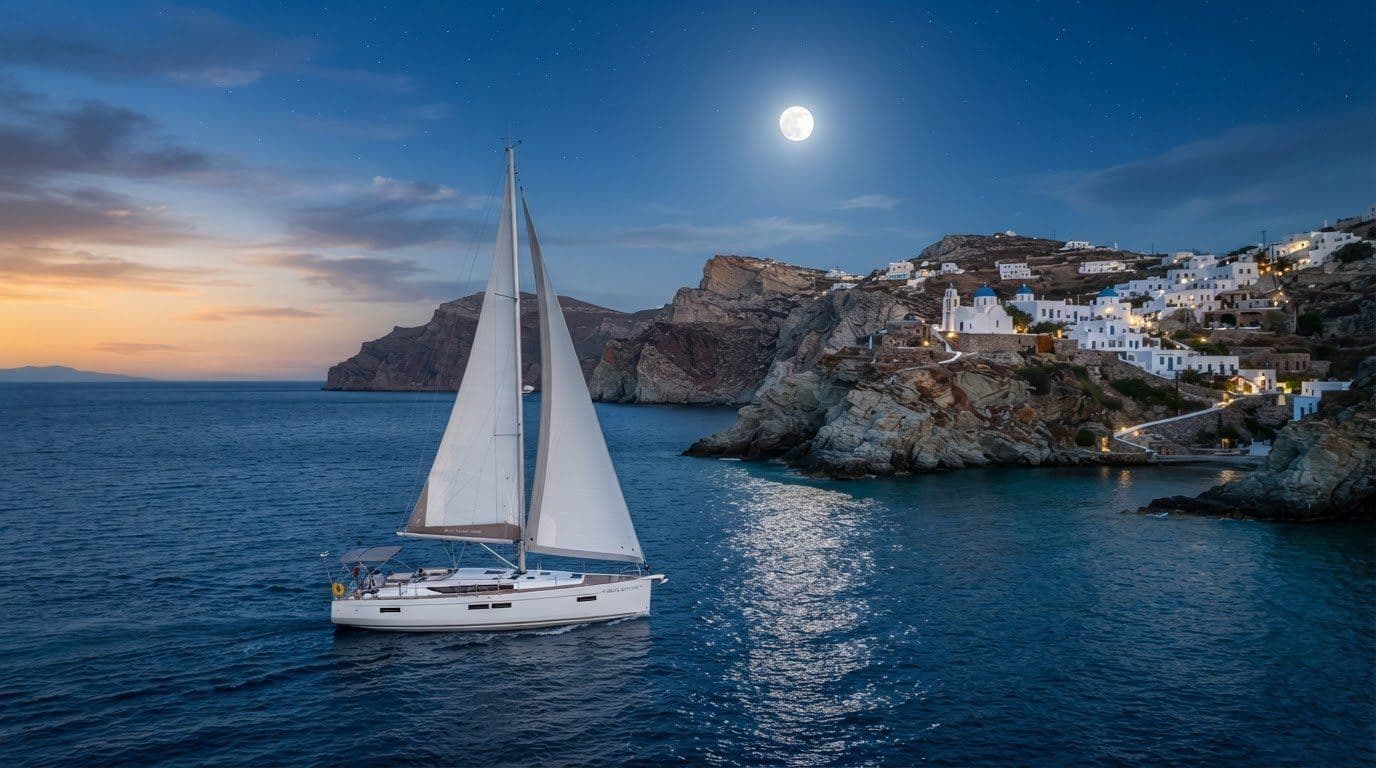
A full moon can add magic to a Greek sailing week, but the season shapes the conditions. The yacht charter season generally runs from April through October, with May and September typically bringing temperatures of 72°F to 84°F (22°C to 29°C). For planning a Greek yacht charter around the full moon, choose your lunar dates within that season and weigh comfort, wind and itinerary together.
It’s easy to focus on the moonlit nights; the best charter also fits the sea conditions and the pace you want onboard. This guide explains when to sail, how the Sporades and Dodecanese differ, and what weekly base rates may cover versus additional expenses.
You’ll also find ideas for seeking quieter swimming coves and learn how a crewed charter can bring the route, onboard experience and shore plans together. Make the moon part of the plan, then build the rest of your Greek island week around the sailing you’ll enjoy.
Key Takeaways
- Match your sailing dates to the weather and the kind of trip you want, not just the full moon; shoulder-season timing can change the feel of a week at sea.
- Compare the Sporades and Dodecanese by their seasonal wind patterns to shape a route that suits your preferred pace and comfort.
- Read a weekly base rate alongside its inclusions and potential extras so you can understand what contributes to the overall charter cost.
- Plan swimming stops around sheltered anchorages and a flexible route, or choose a daily or weekly crewed charter to make island-hopping easier.
What Is The Best Time Of Year To Charter A Yacht In Greece?
Greece’s yacht charter season runs from April through October. Wind, heat and the lunar calendar all affect which week may suit you best, so choose your preferred islands and sailing conditions before settling on full moon dates.
Seasonal Weather and Regional Conditions
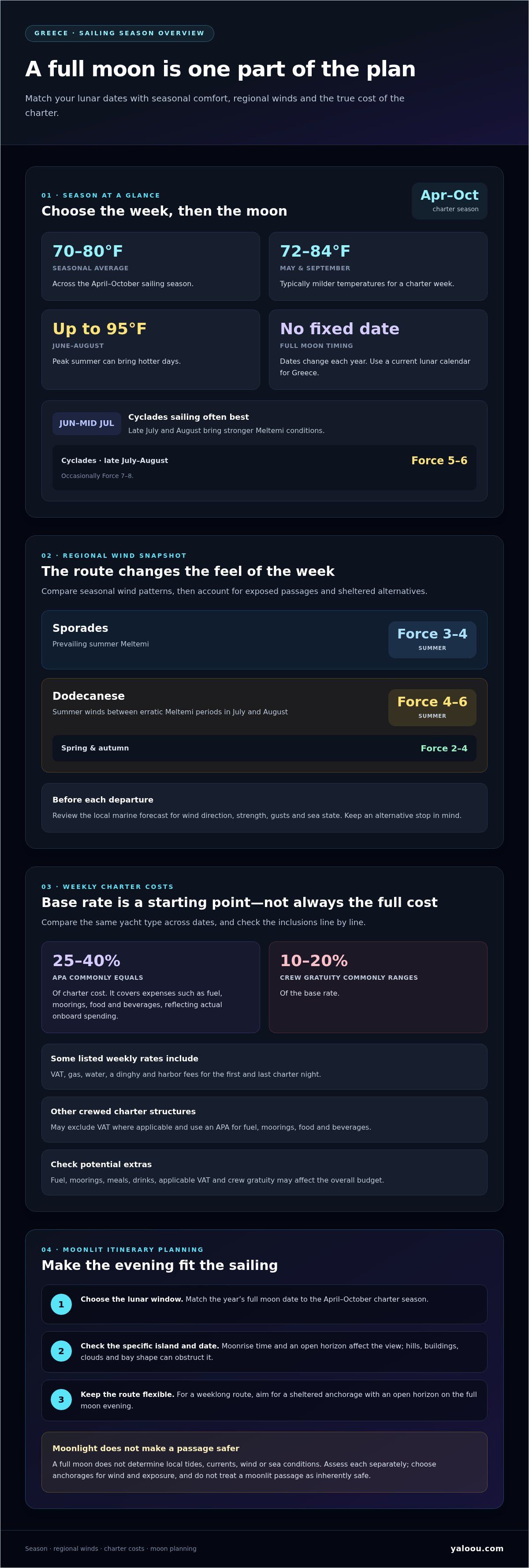
Seasonal temperatures average 70-80°F from April through October. May and September typically reach 72-84°F, while June through August can bring temperatures up to 95°F. Cyclades sailing is often best from June through mid-July; late July and August bring Meltemi winds of Force 5-6, occasionally Force 7-8.
For a bareboat charter, the skipper takes responsibility for navigation, and qualifications and required documents depend on the yacht and applicable Greek requirements. A crewed charter means guests can enjoy the waters without serving as skipper.
Seasonal Events and Charter Prices
Compare the event calendar for your chosen islands with the route: celebrations can affect the atmosphere and availability around popular destinations such as Mykonos. Dates, island and yacht type all matter. Bareboat, power and crewed charters have different pricing structures, and seasonal demand affects rates.
For a full moon vacation, balance your preferred beaches and events against the sailing conditions. Peak summer brings hotter days and stronger Cyclades winds; May and September offer milder temperatures. A quieter date may suit your priorities better than a well-known event weekend.
Full Moon Dates and Booking Timing
Full moon dates change each year, so there is no fixed date within the sailing season. Use a current lunar calendar for Greece to match your chosen year and travel week. The season runs from April through October.
There is no single booking lead time that suits every trip. Your dates, preferred island and experience shape the plan, so choose your lunar window first and then arrange a yacht experience that fits.
Moonrise Visibility and Weekly Itineraries
Check moonrise times for the specific island and date, then consider the direction of the horizon from your planned anchorage. Hills, buildings, clouds and the shape of a bay can affect the view, so an open outlook matters as much as the calendar.
For a weeklong route, plan to spend the full moon evening at a sheltered anchorage with an open horizon. Keep earlier stops flexible, letting sailing conditions and swimming plans shape the route rather than building long passages around one night.
Sporades and Dodecanese conditions
The Sporades and Dodecanese offer different summer sailing patterns, so route choice matters as much as the destination. Planning a Greek yacht charter around the full moon means balancing the desired evening view with conditions along each passage.
Regional Navigation and Wind Conditions
In the Sporades, the prevailing summer Meltemi is Force 3-4. In the Dodecanese, summer winds can reach Force 4-6 between erratic Meltemi periods in July and August. Spring and autumn winds in the Dodecanese are usually Force 2-4.
Before choosing a route, consider open-water passages, prevailing winds and sheltered alternatives. A short distance on a map can feel different when wind and sea meet an exposed coastline. These details help you decide whether to prioritize a more active route or a more relaxed experience.
Weather, Meltemi, and Sea Conditions
Before each departure, review the local marine forecast for wind direction, strength, gusts and sea state. In the Dodecanese, account for the Meltemi’s irregular timing during July and August. In the Sporades, include the typical summer Force 3-4 wind pattern in your passage planning.
Consider how exposed passages connect with protected bays, and keep an alternative stop in mind. Conditions can shape both the sailing experience and the comfort of an anchorage. Planning a Greek yacht charter around the full moon works best when the evening stop can adapt to the weather.
Full Moon Sailing and Anchoring Risks
A full moon doesn’t determine local tides, currents, wind or sea conditions. Assess each separately using current local navigation information and the marine forecast. Moonlight may brighten the water, but it doesn’t remove night-navigation challenges or make an anchorage automatically safe.
Shoreline features, traffic and changing conditions can be harder to judge after dark. Choose a suitable anchorage based on wind and exposure, and avoid treating a moonlit passage as inherently safer. For inspiration while shaping a Greek island plan, explore island experiences.
Charter costs and weekly base rates
A weekly base rate is the starting point for comparing a yacht in Greece, not always the full trip cost. Yacht type, season, itinerary and what the rate includes all affect your final budget.
Bareboat, power and crewed charters use different pricing structures. Rates also shift between low and high season, so compare the same yacht type across your travel dates. A Cyclades route in peak summer may price differently from an Ionian or Saronic itinerary in a quieter period. The full moon is a date preference, not a separate measure of what a charter includes.
Read the inclusions line by line. Some listed weekly rates include VAT, gas, water, a dinghy and harbor fees for the first and last charter night. Other crewed charter structures exclude VAT where applicable and use an Advance Provisioning Allowance for fuel, moorings, food and beverages. An APA commonly equals 25-40% of the charter cost, then reflects actual onboard spending.
- Base rate: compare yacht type, season, duration and included services.
- Operating expenses: account for fuel, moorings, meals and drinks when excluded.
- Other charges: review applicable VAT and crew gratuity, which commonly ranges from 10-20% of the base rate.
For an ultimate vacation with swimming stops, decide first whether crew, meals and flexible routing matter most. A crewed option may bundle crew service into its base rate, while a bareboat charter places more trip planning with the guests. Neither structure is automatically cheaper; the comparison depends on inclusions and how you plan to use the yacht.
When you charter in Greece, request a like-for-like breakdown for your dates and route. Compare the Cyclades, Ionian and Saronic options by season, yacht type, and included expenses, then judge the overall fit rather than the headline base rate alone.
Secluded anchorages and swimming coves
For a full moon view, choose an anchorage for its open horizon, shelter and fit with your route, rather than fame alone. Across the Greek islands, a quiet cove can make for a memorable evening, though the view depends on local terrain, clouds and where the yacht can settle comfortably.
There isn’t one island group that suits every itinerary. Consider the Ionian Islands for a route shaped around swimming stops, or compare the Sporades and Dodecanese with your preferred sailing conditions. In the Cyclades, weigh the desired island experience against seasonal wind exposure. Each choice changes passage planning and the kind of anchorage that makes sense for guests.
Before selecting a full moon stop, check the cove’s outlook toward the eastern horizon, where the moon rises. Consider whether nearby hills or headlands could block the view, and how exposed the anchorage is to the forecast wind. A clear view matters only if the location also suits the yacht and the conditions.
Build the itinerary around a flexible evening. Use the daytime for swimming and reaching the chosen area, then keep nearby sheltered alternatives in mind if wind or sea conditions shift. A catamaran can make time aboard part of the experience, but its suitability still depends on the route, anchorage and space guests need.
For a secluded feel, favor coves away from busy waterfronts and popular evening stops, while keeping the route practical. Check the local forecast, shoreline shape and moonrise time for the island before choosing a viewing spot. This is more useful than selecting an anchorage from a photograph alone.
Shape your Greek island route around quiet stops, swimming time and a moonlit evening. Explore Greek island experiences to start turning those priorities into a trip.
There is no single best island group: the Ionian suits routes focused on swimming, while the Sporades and Dodecanese can be compared against your sailing conditions; in the Cyclades, account for seasonal wind exposure. Choose a quiet, sheltered cove with a clear eastern horizon, no blocking hills or headlands, and practical access for the yacht.
YAL’OOU Exclusive Yachting & More: Daily Yacht Charters
YAL’OOU Exclusive Yachting & More helps turn your Greek island plans into time on the water. Choose Daily Yacht Charters for a focused outing, such as an evening timed around a full moon, or Weekly Crewed Yacht Rentals for a longer island-hopping itinerary. A crewed charter can simplify onboard logistics while you focus on the route, swimming stops and the night’s views.
If your trip includes time ashore, High-End Villa Rentals and VIP Ground Transfers can complement the yacht experience. The right combination depends on whether you’re planning a single day at sea or a broader Greek island vacation.
Contact YAL’OOU Exclusive Yachting & More or visit yaloou.com to discuss your charter plans.
Shape Your Greek Island Escape
Choose the feeling you want from the trip. Should the moonlit evening be the centerpiece, or one memorable moment within a wider island escape? Planning a Greek yacht charter around the full moon becomes more purposeful when you set that priority before shaping the days around it. Decide what you want to keep unhurried: a quiet dinner, a swim before sunset or time ashore after sailing.
A simple planning brief can capture your preferred islands, the evening you want to spend under the moon, and the balance you’d like between time aboard and ashore. YAL’OOU Exclusive Yachting & More offers Daily Yacht Charters, Weekly Crewed Yacht Rentals and High-End Villa Rentals, giving you different ways to shape the experience.
Explore Greek island experiences with YAL’OOU and take the next step toward a trip shaped around what matters to you. Your moonlit escape can start with one clear idea.
Frequently Asked Questions
What Is The Weather Like In Greece?
Greek sailing weather varies by region and month, so match the forecast to your route. From May to September, Ionian winds tend to blow northwest at Force 2-5; winds in the Saronic and Argolic areas average Force 3-4. For practical planning, compare wind direction and sea conditions at each planned stop, not just the departure port. Summer heat and sunshine also shape comfort ashore.
Where can I sail in Greece?
You can sail among the Cyclades, Ionian Islands, Sporades, Dodecanese and Saronic Islands, choosing routes for scenery, sheltered stops or time ashore. Local destinations include Mykonos, Paros, Antiparos, Athens, Aegina, Poros, Spetses, Syros, Tinos, Sifnos, Serifos, Milos, Poliaigos, Kimolos, Santorini, Ios, Koufonisia, Amorgos, Crete, Corfu and Zakinthos. Build your route around the islands you most want to experience.
What are typical Greek yacht charter prices by boat type, season, and duration?
There isn’t one typical rate: cost depends on boat type, season, charter length and what the base rate includes. Sailing yachts, motor yachts and crewed options have different cost structures, while peak-season dates and longer itineraries affect the total. Compare like-for-like quotes by checking inclusions and excluded expenses. For a specific charter, the price depends on the case and is given after a quote request.
What extra costs should I budget for, including skipper, fuel, marina fees, provisioning, and taxes?
Budget for possible skipper charges, fuel, mooring or marina fees, provisioning and applicable taxes. Fuel depends on the yacht and how much you cruise; marina costs vary with location and vessel, while provisioning reflects guest preferences and time aboard. Check whether the base rate includes any of these items. Also account for the charter’s tax treatment and any other listed operating expenses when comparing options.
Which Greek islands and anchorages are best for viewing the full moon from a yacht?
Choose a sheltered anchorage with an open eastern horizon, away from busy waterfronts and without nearby hills or headlands blocking the moonrise. Check the local forecast and keep a sheltered alternative in mind in case conditions change.
Disclaimer
The YAL’OOU Travel Guide is curated with care to inspire and inform discerning travelers. While every effort is made to ensure the accuracy and relevance of the information provided, all content is offered for general guidance only and may evolve over time.
Details such as local regulations, availability, pricing, and services are subject to change without prior notice. We encourage guests to seek personalized advice and confirm arrangements directly when planning their journeys.
YAL’OOU accepts no liability for any inaccuracies, omissions, or outcomes arising from the use of this information. The Travel Guide may feature recommendations, insights, and selected third-party experiences, presented solely as a source of inspiration and not as formal endorsements.
By accessing this section of our website, you acknowledge and accept this disclaimer as part of your experience with YAL’OOU.