

The listed charter rate is only the starting point for your full yacht budget. To understand how to calculate the total cost of a one-week yacht charter, add the base fee to applicable taxes, fees, onboard expenses, and crew gratuity, then account for any costs already covered by the charter package.
It’s easy to focus on the headline rate when planning a week at sea. The final total depends on how the charter is priced, what you plan to use onboard, and which charges are included or billed separately. This guide explains how those pieces fit together, what can change the overall cost, and how choices such as yacht type, itinerary, and season affect the calculation. You’ll get a clearer picture of the budget for a relaxed week on the water.
Key Takeaways
- Look beyond the headline rate: yacht type, destination, and season all shape the weekly charter budget.
- “All-inclusive” can still leave some expenses outside the package, so learn which onboard costs may be billed separately.
- A charter professional brings the base fee, expected usage, gratuity, and other applicable costs together for a clearer total.
- Taxes and local charges depend on the charter destination, making location an important part of the final estimate.
How much does it cost to charter a yacht?
A one-week yacht charter’s base rate depends on the vessel, destination, season, and itinerary. The total also depends on what the quoted fee includes and which expenses are billed separately.
Weekly Rates Across Regions and Destinations
Weekly base rates differ between destinations because demand, operating arrangements, and seasonal schedules vary. A charter around Mykonos may have different pricing from one based near Paros, Antiparos, or Athens. Destination choice matters because it shapes the route, stops, and expected onboard use. Comparing yacht destinations alongside travel dates gives a more useful starting point than comparing headline rates alone.
Price Differences by Yacht Type
Yacht type affects the base rate through size, onboard space, and operating needs. A sailing yacht, catamaran, and motor yacht each suit different cruising styles. Smaller vessels may fit a simpler itinerary, while larger crewed yachts offer a different level of space and service. A professional considers guest numbers, preferred comfort, and intended route together when estimating the rate.
Base Fees, Total Costs, and Budget Tiers
The base charter fee covers the yacht under the agreed terms. The total weekly cost may also include taxes, provisions, fuel, gratuity, or other separately billed expenses. Compare budget options by looking at the vessel and package, not just the base rate. A lower starting fee may not mean a lower final bill if more costs fall outside the package.
Contract Terms and Cost Impacts
Contract terms set out payment timing, cancellation conditions, and insurance requirements. Cancellation charges depend on the agreement and when a booking is cancelled; insurance costs depend on the selected coverage and trip details. These terms affect the overall financial commitment, so include them when reviewing an estimate. The contract explains how cancellation and insurance provisions may change the total.
What is excluded from an all-inclusive charter fee?
An all-inclusive quote groups specified charter costs into one rate, but the label doesn’t mean every trip expense is covered. On a crewed charter, the captain and crew are generally part of the arrangement. Their wages are reflected in the charter rate, while gratuity is typically separate and commonly ranges from 10% to 20% of the charter fee.
Read “all-inclusive” as a package description, not a promise of unlimited spending. The agreement defines what the fee covers, such as onboard provisions or cruising expenses, and what remains payable separately. Taxes, gratuity, transfers, special requests, or costs beyond the agreed package may affect the final bill. Similar labels can cover different services, so compare the package details.
A plus-expenses charter separates the base rate from variable spending. The guest usually pays an Advance Provisioning Allowance, or APA, toward items such as fuel, food, drinks, and other trip expenses. For these charters, APA is typically 25% to 40% of the weekly base rate. Actual spending depends on consumption and itinerary, so the allowance isn’t necessarily the final expense.
At the end of the charter, unused APA funds are returned to the guest. The allowance is not a fixed surcharge: it funds trip expenses, and final accounting reflects what was spent. All-inclusive yachts don’t carry APA, so comparing listed rates alone can mislead. Compare included items, separate charges, and how variable expenses are handled.
For example, a yacht charter around Mykonos may use an all-inclusive format, while another Greek island itinerary may be priced plus expenses. A professional can map each quote’s inclusions against planned cruising, provisions, and special requests. If you’re shaping a trip around the onboard experience, explore private yacht experiences as part of your planning.
How a charter professional calculates the total charter cost
A professional turns a charter quote into a trip-specific estimate by matching the vessel, dates, guest plans, and itinerary with costs beyond the base rate. To calculate the total cost of a one-week yacht charter, first distinguish fixed charges from expenses shaped by cruising and provisioning.
Start with the charter terms: the quoted period, included items, and separately billed costs. Then consider the season and destination. A sailing route around Mykonos may involve different stops and operating needs than a journey between Paros and Antiparos, changing projected expenses.
Next, account for how guests plan to use the vessel. Cruising distance and engine use affect fuel needs, while guest preferences shape food and drink provisioning. Identify which costs are already included to avoid counting an item twice. A detailed itinerary connects these assumptions to the group’s plans.
- Fixed amounts: the base charter fee and charges set by the agreement.
- Usage-based expenses: fuel, provisions, marina costs, and itinerary-related spending.
- Additional amounts: applicable taxes, gratuity, and other charges.
For a Plus-Expenses charter, estimate variable spending and record it against the APA allowance. The allowance supports trip expenses, while final accounting reflects actual spending. If the itinerary changes or guests choose different provisions, the forecast may change too.
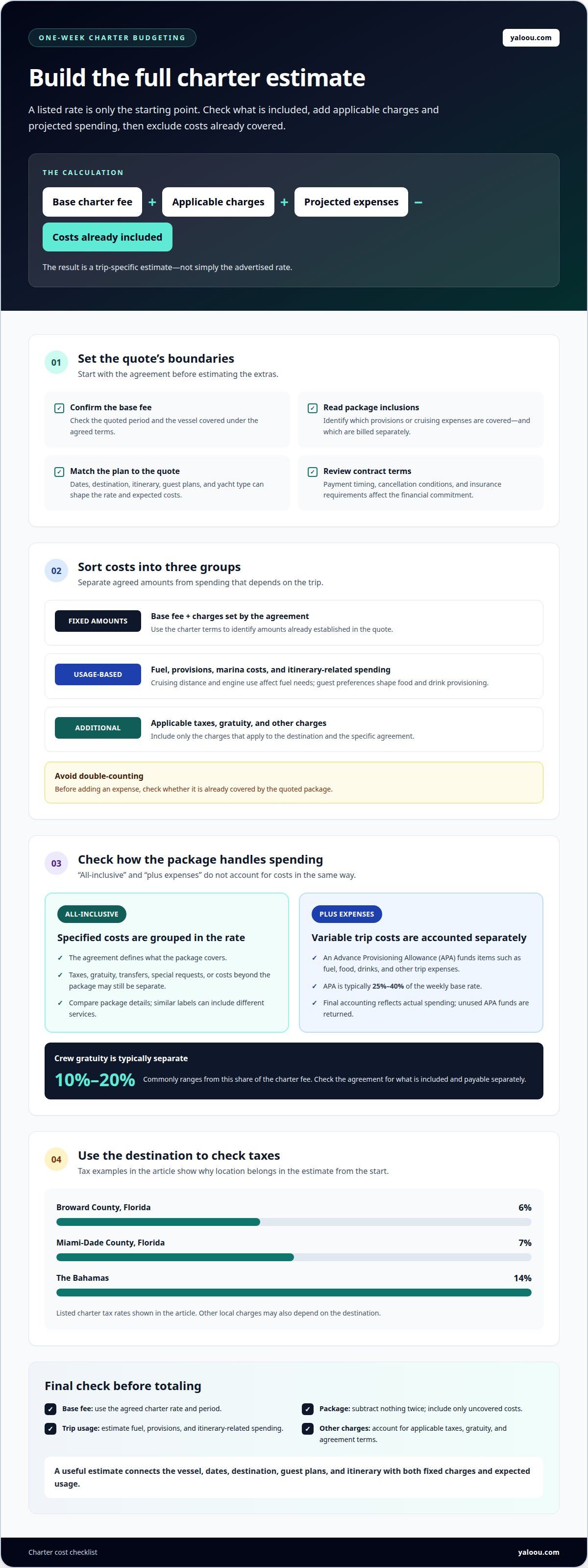
To calculate the total cost of a one-week yacht charter, combine the base fee, applicable charges, and projected expenses, excluding costs already covered. The result is an estimate tailored to the vessel and plans, not simply the advertised rate.
What fees and taxes are added to the base yacht charter price?
Taxes and local charges depend on the charter’s destination, so the same base rate can produce different totals. In Florida, the listed charter tax rate is 6% in Broward County and 7% in Miami-Dade County. The Bahamas lists a 14% charter tax. These examples show why location belongs in the estimate from the start.
Some destinations also add charges tied to guests, permits, or environmental programs. Caribbean environmental and tourism levies, including in the British Virgin Islands, can range from $6 to $16 per person per day. For a week-long itinerary, per-person daily charges accumulate across both guests and days.
A professional separates destination charges from other possible additions before comparing charter quotes:
- Charter tax: Apply the rate associated with the charter’s location, such as the listed Florida county rates or Bahamas rate.
- Guest-based levies: Multiply a per-person, per-day charge by the guest count and charter duration.
- Permits and cruising charges: Include applicable local costs, such as BVI park permits and cruising tax.
- Payment processing: Credit-card payments may incur a 3% to 5% processing fee.
These items don’t apply to every trip. Their relevance depends on the destination, payment method, and charter terms. An estimate should identify each applicable charge separately rather than burying it in a single total. This makes it easier to see which costs relate to the location and which arise from the payment method.
Planning a charter around a specific destination or onboard experience? Explore yacht experiences as you shape the trip.
YAL’OOU Exclusive Yachting & More: Daily Yacht Charters
YAL’OOU Exclusive Yachting & More offers Daily Yacht Charters for a day on the water and Weekly Crewed Yacht Rentals for a longer escape. Choose a daily charter for a shorter outing; a weekly crewed rental suits guests planning a vacation around time aboard. The right option depends on your schedule, group, and preferred experience.
For a wider trip plan, High-End Villa Rentals and VIP Ground Transfers can complement a yacht stay. Share your preferred dates, destination, group size, and itinerary to match the charter to your plans. Contact YAL’OOU Exclusive Yachting & More to discuss the experience you have in mind.
Shape Your Charter Around the Experience You Want
Knowing how to calculate the total cost of a one-week yacht charter gives you a useful starting point. Next, decide what you want the week to feel like. A quiet coastal escape, an active itinerary, or a special occasion each calls for different priorities. Set those priorities before comparing proposals, so the charter supports the experience you want as well as your budget.
Once you’ve settled on a destination, dates, guest preferences, and cruising style, those details can shape a tailored estimate. The price depends on the vessel, itinerary, season, and selected arrangements, and is provided after a quote request. A clear conversation about what matters most helps focus planning and align expectations before booking.
Ready to shape your plans? Contact YAL’OOU Exclusive Yachting & More to discuss the experience you’re considering. Start with your vision, and let the next step bring your time on the water into focus.
Frequently Asked Questions
How do Plus-Expenses charters and APA work?
A Plus-Expenses charter separates the yacht’s charter fee from variable trip spending. The APA is an advance allowance for expenses such as fuel and provisioning. Treat it as a working budget, not a guaranteed final charge: actual onboard spending determines the final accounting. Changes to the itinerary or guest preferences can affect how quickly the allowance is used.
How Much Should You Budget for APA?
A common planning range is 25% to 40% of the base charter rate, with the vessel and expected use shaping the estimate. Longer cruising, fuel-intensive routes, and higher provisioning needs can influence the allowance. A professional can tailor the forecast to the planned itinerary, then compare estimated spending with the final expense record after the charter.
What is the average price of a one-week yacht charter in the United States?
There isn’t one useful average for every yacht charter in the United States. A sailing yacht and a crewed motor yacht have different operating needs, while location, travel dates, guest count, and package inclusions also affect the quote. A meaningful estimate is based on a specific vessel and itinerary, with separately billed expenses distinguished from costs included in the charter rate.
How do yacht charter prices vary by yacht type, size, age, and season?
Type and size influence the base rate through capacity, onboard space, and operating requirements. Age can matter because of a yacht’s condition, layout, and available amenities, but it is not a simple price rule. Season and destination affect demand and availability. For example, a summer charter in Mykonos may differ from plans around Paros or Antiparos.
How much do fuel, provisioning, dockage, and mooring fees cost for a week?
Expenses depend on the boat and how the week is planned, so a single figure can mislead. Cruising distance and engine use affect fuel; guest numbers and meal preferences shape provisioning. Dockage depends on the yacht and stop, while mooring costs vary by location and itinerary. A detailed estimate should show these items separately.
How much should you budget for crew gratuity on a one-week yacht charter?
A typical crew gratuity is 10% to 20% of the charter fee. The appropriate amount can vary by destination and service, so treat it as a separate budget item rather than part of the APA. In Caribbean and Bahamas charters, published guidance gives a customary range of 15% to 20%. Check the charter’s stated gratuity basis.
Disclaimer
The YAL’OOU Travel Guide is curated with care to inspire and inform discerning travelers. While every effort is made to ensure the accuracy and relevance of the information provided, all content is offered for general guidance only and may evolve over time.
Details such as local regulations, availability, pricing, and services are subject to change without prior notice. We encourage guests to seek personalized advice and confirm arrangements directly when planning their journeys.
YAL’OOU accepts no liability for any inaccuracies, omissions, or outcomes arising from the use of this information. The Travel Guide may feature recommendations, insights, and selected third-party experiences, presented solely as a source of inspiration and not as formal endorsements.
By accessing this section of our website, you acknowledge and accept this disclaimer as part of your experience with YAL’OOU.