

A longer charter may create room to discuss the overall rate, but the lowest daily rate isn’t the only term worth negotiating. For two weeks or more, owners may consider an overall rate, while advertised charter rates are often based on a seven-night charter. Season, booking timing, and the yacht’s type and size all shape the discussion across Greek destinations like Mykonos, Paros, and Athens.
It makes sense to look for value when committing to more time aboard. A practical approach to negotiating terms on a long-term yacht charter also considers date flexibility, how the booking fits the yacht’s schedule, and what the vessel offers. The aim is a package that suits your plans, not a discount at any cost.
Here, you’ll learn how charter prices vary with season and booking timing, why yacht type and size matter, and which terms may be worth discussing for a longer stay. Use these factors to shape a clear, confident negotiation before you set sail with YAL’OOU Exclusive Yachting & More.
Key Takeaways
- Use charter duration and schedule flexibility to frame a discussion about the overall rate, not just the daily figure.
- Consider quieter periods for more negotiating room, while weighing the trade-off between potential savings and date flexibility.
- Be ready to move promptly when an offer suits your plans, since timing can affect whether a rate is held.
- Match the yacht’s type and size to the experience you want, then use those priorities to guide which terms matter most.
1. What Factors Affect Yacht Charter Prices in Miami?
Duration shapes the rate discussion. Most advertised yacht charter rates use a seven-night basis, and bookings commonly require at least 3 or 4 nights. For a stay of two weeks or more, owners may discuss an overall rate, rather than treating every week separately. Longer bookings can also reduce gaps between shorter reservations. Build your proposal around exact dates, duration, and the experience you want.
Timing matters, too. Booking 6 or more months ahead can help secure your preferred yacht and dates, especially during peak summer, when advance reservations require a week-long charter. Ask whether an early-booking promotion or rate lock is available, and get its terms in writing. A negotiated rate may be honored only if you book within a few days, so align your decision process with the offer deadline.
Compare chartering with ownership or leasing by weighing access against responsibility. A charter provides use for an agreed period; ownership means acquiring the vessel and carrying its ongoing costs. Leasing also provides use under contract, so compare duration, maintenance responsibilities, and access terms. A monthly charter total depends on the agreed vessel, dates, duration, and inclusions, not on one universal figure.
Taxes and cruising rules can affect the itinerary and total commitment. Put applicable taxes, permitted destinations, and route limits into the agreement. For payments, deposits, and cancellation, agree on specific amounts, due dates, refund conditions, and cancellation triggers before signing. Include the yacht, charter dates, crew arrangements, itinerary changes, and any process for resolving disagreements. These details make negotiating terms on a long-term yacht charter more precise.
Document the yacht’s condition before departure, then define who handles repairs and how downtime affects the booking. Review insurance coverage, deductibles, liability, and indemnity wording, including which parties bear responsibility for damage. Red flags include unclear payment or cancellation language, unwritten promises, and pressure to accept terms before reviewing them. Plan the itinerary early, then match the vessel and dates to that route; Miami yacht options can be explored through the yacht collection.
2. Off-season and last-minute discounts
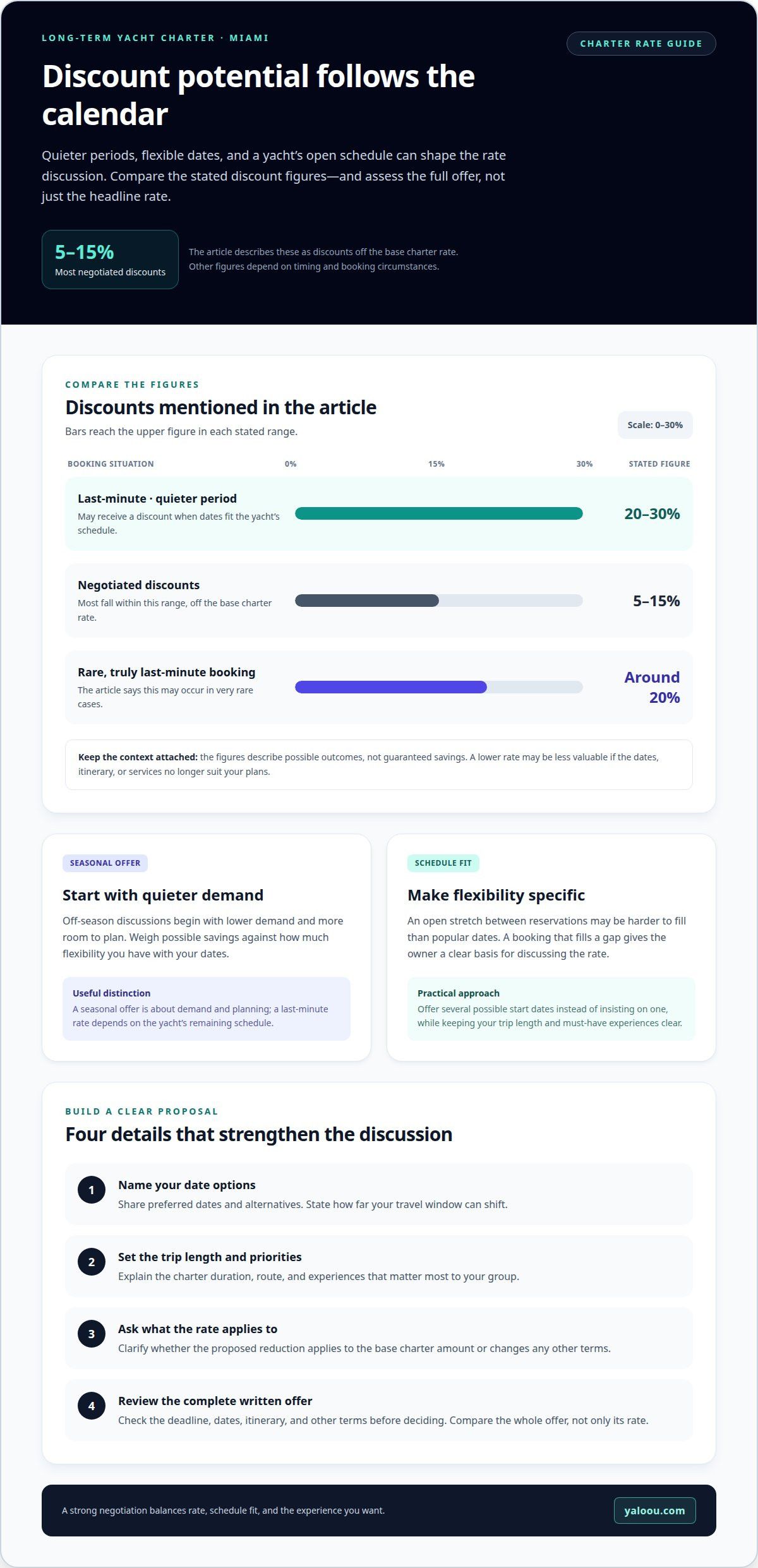
Flexible dates can strengthen your position during quieter periods in Miami. Last-minute yacht charter bookings in less busy periods may receive discounts of 20-30%. The opportunity often comes from schedule fit: an open stretch between reservations can be harder to fill than popular dates. If your travel window can shift, offer several possible start dates instead of insisting on one.
Separate a seasonal offer from a last-minute rate. Off-season negotiations begin with lower demand and room to plan; last-minute discussions depend on a yacht’s remaining schedule. A difficult gap can make an owner more open to a rate discussion. Most negotiated discounts fall between 5% and 15% off the base charter rate, while around 20% may occur on very rare, truly last-minute bookings.
Keep your proposal specific. State your preferred dates, trip length, and flexibility, then ask whether the rate applies to the base charter amount or changes other terms. A lower base rate may matter less if the dates, itinerary, or services no longer suit your plans. Compare the complete written offer, including its deadline, before deciding. If the yacht’s schedule has a gap, a booking that fills it can provide a clear basis for discussion.
For example, a traveler with a flexible Miami departure might offer two date windows and accept the one that best matches the yacht’s calendar. That approach can create more room to discuss a reduced base rate than requesting a discount without adjusting dates. Keep the route and must-have experiences clear, too. Explore Miami yacht experiences to shape an itinerary around the moments you value most, then negotiate from those priorities.
3. Offer deadlines and readiness to book
A negotiated rate may come with a short acceptance window. Before discussing the final figure, identify the offer’s expiry, the yacht and dates it covers, and what action secures the terms. Ask for the complete proposal in writing. A verbal rate without its conditions leaves room for different interpretations, especially if the itinerary or charter duration changes.
Set your decision essentials before negotiations begin: preferred dates, acceptable alternatives, charter length, and must-have features. Decide which terms you can adjust, such as departure timing or route flexibility, and which are essential. This helps you respond promptly without agreeing to a yacht or itinerary that doesn’t fit your plans.
For example, if a Miami offer expires before your group has settled every detail, separate essential decisions from preferences. Confirm who has authority to approve the booking, then align on the vessel, dates, and total charter terms. If one traveler needs a different route, resolve that point before accepting. Rushed changes after acceptance can complicate planning.
Read the offer as a package, not just a rate. Check the charter period, payment schedule, deposit conditions, cancellation terms, and any agreed itinerary limits. Ask which terms remain fixed upon acceptance and which require separate written approval. If the rate depends on prompt booking, clarify the acceptance deadline and required steps. Preparation helps you negotiate efficiently, protect your priorities, and decide confidently without letting urgency distract from the details.
4. Charter costs by yacht type and size
Size is a major pricing factor, but it doesn’t tell the whole story. Miami charter rates also vary with a vessel’s age, style, and amenities. Compare yachts against the same trip plan: a larger vessel may offer a different onboard experience, but extra space only adds value if it serves your group. Set priorities first, such as social areas, a particular design, or specific amenities.
Type matters because the yacht’s layout and character shape how you’ll use it. A sleek vessel designed for entertaining may suit a different itinerary from a yacht chosen for extended time aboard. Rather than compare headline rates alone, match each option to your planned activities, guest needs, and charter duration. Then identify which features you’re willing to trade. This gives the owner a clear basis for discussing the overall terms.
Longer-charter enquiries often target yachts measuring 60 metres or more. That scale may suit guests seeking extensive space and a distinctive onboard setting, but it isn’t automatically the best fit for every Miami itinerary. For a smaller group or a route centered on local cruising, a more compact yacht may align better with the experience. Focus negotiation on the vessel that meets your actual needs, not simply the largest available size.
Use a simple comparison before making an offer: record each yacht’s size, age, style, included amenities, and suitability for your route. Highlight the features you’ll genuinely use, then discuss the charter as a complete package. A specific model such as the Tesoro 40 Inboard can help anchor that conversation around a defined vessel, rather than a generic size category. The strongest comparison is about fit, not length alone.
YAL’OOU Exclusive Yachting & More: Daily Yacht Charters
YAL’OOU Exclusive Yachting & More offers Daily Yacht Charters and Weekly Crewed Yacht Rentals for guests shaping a Miami escape around their preferred yacht and itinerary. Choose a daily charter for a shorter outing, or explore a weekly crewed rental when you want more time aboard and a longer itinerary.
Bring your preferred dates, trip length, group needs, and priorities for yacht size or style into the conversation. These details help focus the options and clarify which terms suit your plans. Once you know what matters most, connect those priorities with a charter experience that fits your Greek-island itinerary.
Contact YAL’OOU Exclusive Yachting & More to discuss your yacht charter plans.
Make Your Miami Charter Plan Personal
A memorable charter is shaped by more than the terms on paper. Picture how you want each day aboard to feel: relaxed, social, exploratory, or a blend of all three. Use that vision to decide which details matter most and where you’re comfortable staying flexible. It gives your discussions a clear purpose and keeps the experience itself at the center.
Thoughtful negotiating terms on a long-term yacht charter means defining success in a way that fits your plans, not simply pursuing the lowest rate. Take a moment to align your group on priorities, then move forward with a charter plan that reflects them. A clear sense of what you value makes it easier to choose an experience that feels right for your time in Miami.
Ready to explore your options? Contact YAL’OOU Exclusive Yachting & More to start shaping your Miami escape.
Continue Planning with YAL’OOU Exclusive Yachting & More
YAL’OOU Exclusive Yachting & More offers Weekly Crewed Yacht Rentals for readers ready to discuss a long-term charter. Turn to the team as you compare the terms and consider which arrangements suit your plans.
For other parts of your stay, YAL’OOU also offers Daily Yacht Charters, Luxury Villa Rentals, VIP Ground Transfers, Private Chef Services, and Exclusive Event Planning.
Frequently Asked Questions
What Are Effective Strategies for Negotiating Yacht Charter Prices?
A strong approach to negotiating terms on a long-term yacht charter starts with a complete proposal, not an isolated discount. Identify your preferred vessel, dates, and essential onboard features. Then suggest a trade-off you can accept, such as itinerary flexibility or fewer optional requests. This keeps the discussion focused and helps you assess the final package against the experience you want.
Can booking a yacht early save money?
Booking early can give you more yacht and date options, but it doesn’t automatically mean a lower rate. Compare suitable vessels before your preferred travel period, then ask whether an early-booking offer applies to your chosen dates. Read the conditions carefully, including whether the rate changes if you adjust dates or trip details. A wider choice can help you prioritize value, even without a promotion.
How Can Travelers Negotiate Charter Duration and Amenities?
Choose your essential amenities first, then discuss duration and optional features as parts of one package. For example, a Miami traveler planning a relaxed itinerary might prioritize comfortable shared spaces over activities they won’t use. Ask how extending or adjusting the charter changes the proposed terms, and request any agreed inclusions in writing. This helps keep the onboard experience aligned with your plans and avoids paying attention to extras that don’t matter to your group.
How Do Yacht Size and Type Influence Charter Costs?
Size and type influence the rate because yachts differ in layout, style, age, and amenities. A spacious yacht may suit a group seeking room to socialize, while a more compact vessel may better match a smaller party’s itinerary. Compare options by how well each fits your plans, not by length alone. For a Greek-island trip, consider the vessel alongside the route and the experience you want, whether around Mykonos, Paros, or Antiparos.
What Amenities and Services Are Included in Charter Prices?
Inclusions depend on the specific yacht and charter agreement, so review the written details rather than assuming every rate covers the same things. Look for a clear description of the vessel, crew arrangements, onboard amenities, and any agreed itinerary services. If a feature matters to your group, have it named explicitly in the proposal. This makes it easier to distinguish included items from optional additions before accepting the terms.
What Happens If the Yacht Owner Accepts Your Offer?
Ask for the accepted offer’s full terms to appear in the charter agreement before treating the arrangement as final. Review the yacht, dates, itinerary, agreed inclusions, payment schedule, and cancellation wording together. If any detail differs from the offer, resolve it before signing or paying. Keep the agreement and related correspondence together so everyone can refer to the same terms during planning.
Disclaimer
The YAL’OOU Travel Guide is curated with care to inspire and inform discerning travelers. While every effort is made to ensure the accuracy and relevance of the information provided, all content is offered for general guidance only and may evolve over time.
Details such as local regulations, availability, pricing, and services are subject to change without prior notice. We encourage guests to seek personalized advice and confirm arrangements directly when planning their journeys.
YAL’OOU accepts no liability for any inaccuracies, omissions, or outcomes arising from the use of this information. The Travel Guide may feature recommendations, insights, and selected third-party experiences, presented solely as a source of inspiration and not as formal endorsements.
By accessing this section of our website, you acknowledge and accept this disclaimer as part of your experience with YAL’OOU.