
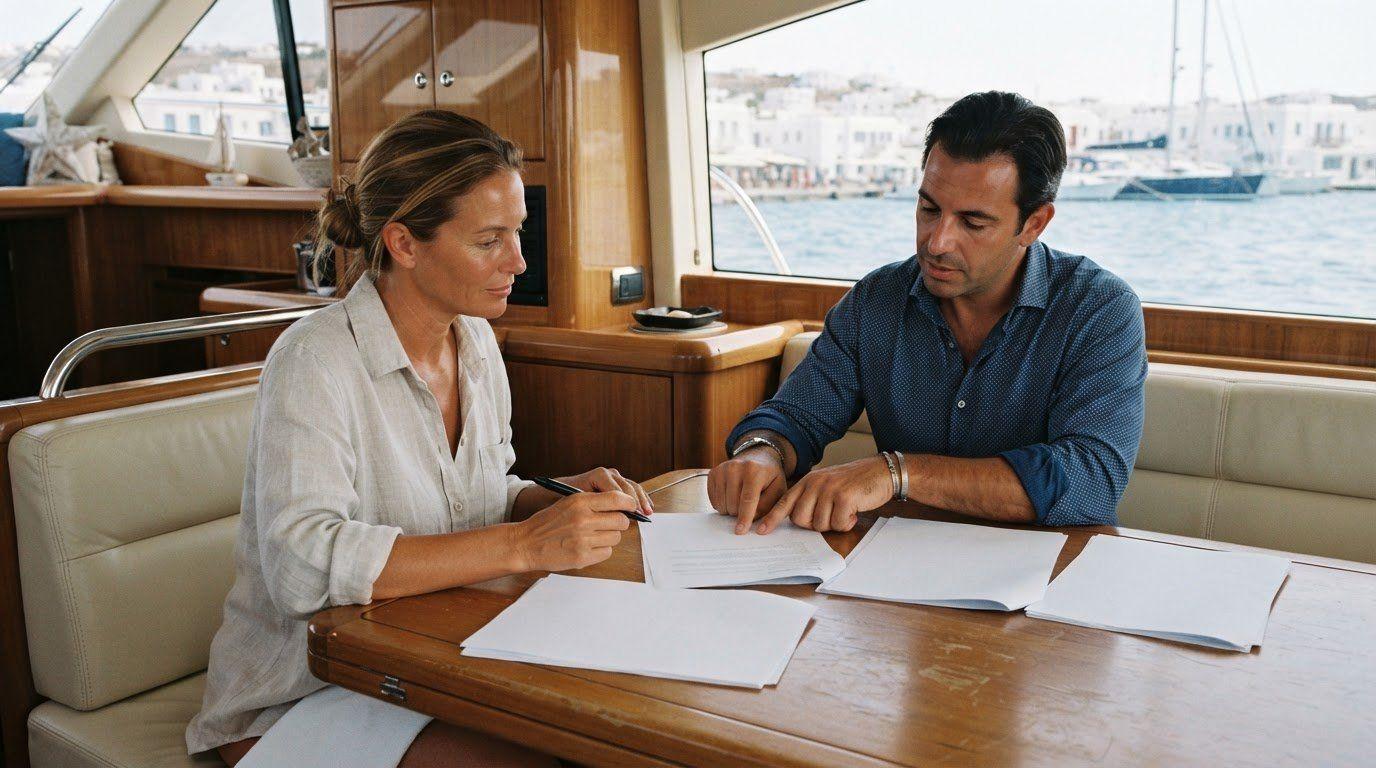
The yacht and dates are secured when you sign the charter agreement and pay the initial deposit. A clear payment milestones schedule for luxury yacht bookings in Europe shows how the deposit, later instalments and Advance Provisioning Allowance (APA) fit together.
Before committing to a week at sea, make sure you understand the payment amounts and deadlines. This guide explains how a provisional hold works, what the deposit secures, how the agreement sets later payments, and how APA, VAT and local taxes can affect the total. It also shows how to read the payment stages together, so you can plan with confidence and focus on the experience ahead.
Key Takeaways
- Understand what the Advance Provisioning Allowance is intended to cover, and how unused funds are handled after the charter.
- See how signing the charter agreement and paying the initial deposit secures your selected yacht and dates.
- Learn how to use the charter terms to map remaining payments and prepare for final arrangements.
- Know why VAT and local taxes belong in your booking-cost plan alongside the charter fee and operating expenses.
Advance Provisioning Allowance (APA)
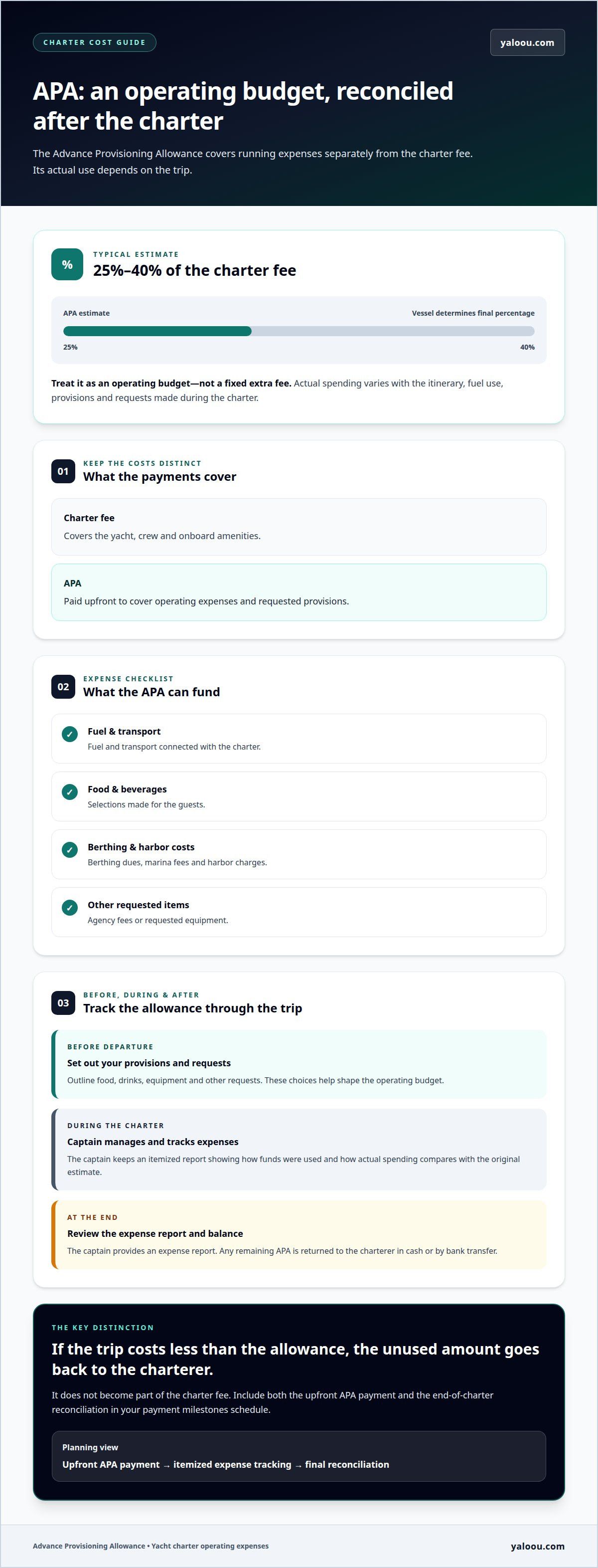
The Advance Provisioning Allowance, or APA, is paid upfront to cover a yacht charter’s operating expenses. It can fund items such as fuel, food, drinks, marina fees and other requested provisions. The charter fee covers the yacht, crew and onboard amenities, while the APA covers running expenses separately. Keeping the amounts distinct makes the booking’s cost structure easier to understand.
For a yacht charter, the APA is usually estimated at 25%-40% of the charter fee. The vessel determines the final percentage, so the estimate can vary between yachts. Treat it as an operating budget, not a fixed extra fee: actual spending depends on the itinerary, fuel use, provisions, and requests made during the charter. A broker can help explain how the allowance fits the payment schedule and charter terms.
Typical APA expenses include:
- Fuel and transport connected with the charter
- Food and beverages selected for the guests
- Berthing dues, marina fees, and harbor charges
- Agency fees or requested equipment
Before departure, use the provisioning process to outline food, drinks, equipment and other requests. These choices help shape the operating budget. During the trip, the captain manages the APA and tracks expenses in an itemized report, showing how the funds were used and how actual spending compares with the original estimate.
At the end of the charter, the captain provides an expense report and returns any remaining APA funds in cash or by bank transfer. If the trip costs less than the allowance, the unused amount goes back to the charterer rather than becoming part of the charter fee. Include both the upfront APA payment and its end-of-charter reconciliation in your payment milestones schedule for luxury yacht bookings in Europe, so the amount paid and final balance are clear.
Initial deposits and booking confirmation
A provisional hold can reserve your requested yacht dates while you agree on the charter terms, but it is not final booking confirmation. The yacht and dates are secured when you sign the charter agreement and pay the initial deposit. Keep that sequence in mind when planning the payment milestones schedule for luxury yacht bookings in Europe.
Before paying, review the agreement’s key details, including dates, location and conditions. Pay particular attention to cancellation terms, how the deposit is treated, payment deadlines and what happens if the itinerary changes. These clauses shape your financial exposure if plans shift. The agreed terms set the deposit amount and due date, so use the signed agreement as your reference.
What risks should clients check before paying a yacht charter deposit? Review the cancellation and refund terms, payment deadlines, and the dates, location and conditions stated in the agreement. Remember that a provisional hold reserves requested dates only while terms are being agreed. Final confirmation follows the signed agreement and deposit.
Booking confirmation can also involve identity checks. International yacht-charter procedures may require identification and relevant details before a booking is finalized. Provide the requested information promptly, as incomplete checks may delay confirmation. Keep the agreement, payment confirmation and itinerary together so the dates and payment record are easy to reference.
Use this practical sequence:
- Agree on the yacht, dates, location, and itinerary details.
- Review the charter agreement, including cancellation and payment conditions.
- Complete the required identification steps.
- Sign the agreement and pay the initial deposit to secure the yacht and dates.
For example, a requested-date hold gives time to settle charter terms, while the signed agreement and deposit complete the confirmation. As you develop the trip around the yacht booking, explore yacht experiences that can complement the itinerary.
Remaining payments and final arrangements
After paying the deposit, use the signed agreement as the reference for later payments. Read each deadline alongside the charter dates, destination and final arrangements.
Payment Timing by Booking Type
Weekly yacht charters, day charters and yacht purchases involve different agreements and payment stages. For either type of charter, use the signed terms to find the amount and due date of each remaining payment. A yacht purchase follows a purchase agreement, not a charter payment schedule. Before planning funds, compare the agreement’s payment triggers, such as a specified date or booking milestone.
Country and Season Variations
There is no single payment calendar for every European destination and season. The signed agreement sets the actual deadlines, while the destination and charter dates identify the booking those terms cover. Compare the same details across agreements: payment dates, currency, cancellation terms and any balance due before departure. This lets you assess schedules without assuming a country-specific rule.
Contract Payment Deadlines
Read MYBA and other charter agreements for their written payment stages and deadlines. Don’t infer a due date from the contract name alone. Find each payment trigger, required amount and stated method in the agreement, then add the dates to your calendar. The completed schedule should connect every payment to the charter dates and relevant booking condition.
Cancellation and refund rules depend on the terms of the signed charter agreement. Read the cancellation clauses for the notice process, applicable deadlines and how payments are treated if plans change. The written conditions, rather than a general European timetable, explain the consequences for your booking.
Payment methods and currencies also depend on the agreement’s instructions. Before transferring funds, match the requested currency, recipient and deadline to the signed documents. Keep the payment confirmation with your itinerary and agreement so the financial record stays connected to the correct charter.
VAT and local taxes
VAT and local taxes can change the final amount shown for a yacht charter. Their treatment depends on the booking and itinerary, so don’t assume one tax figure applies across every European destination. For a superyacht charter, read the agreement and cost breakdown together. Identify the amounts for the charter fee, operating expenses, VAT and any local charges.
Start with the written quote. Look for a separate tax line, the amount it applies to, and whether it is included in the quoted total or added separately. Then compare the breakdown with the payment schedule. A deposit or later instalment may be calculated against a defined contract amount, so the agreement should explain how taxes affect the balance due.
The itinerary matters because it identifies the destination or destinations connected with the charter. If the route includes several locations, use the agreement’s tax breakdown to see how the quoted amounts relate to the planned trip. Don’t infer a tax rate from the yacht’s flag, the broker’s location or a previous booking. Those details alone do not explain the tax treatment of this charter.
Before treating the total as final, follow these steps:
- Separate the charter fee, APA, VAT, and local charges in your budget.
- Match each tax line to its stated basis and payment deadline.
- Compare the listed destination and itinerary with the booking terms.
- Keep the quote and agreement together when reviewing the final balance.
This approach helps distinguish taxes from operating expenses and makes the complete payment schedule easier to interpret. For a trip that pairs time on the water with curated activities, explore yacht experiences as part of your planning.
YAL’OOU Exclusive Yachting & More
YAL’OOU Exclusive Yachting & More helps you plan a private yacht charter around your preferred experience and itinerary. Use the signed agreement to map the deposit, remaining payments, APA and applicable taxes against your dates and route. This gives you a clearer view of the booking’s financial stages before departure.
For a shorter escape or a longer crewed journey, explore the available yacht charter options and consider which format fits your plans. Daily Yacht Charters and Weekly Crewed Yacht Rentals offer different ways to shape time on the water, while the agreement sets the payment terms for your chosen booking.
Contact YAL’OOU Exclusive Yachting & More to discuss planning a private yacht charter in Greece.
Shape the next step around your plans
Once the payment terms are clear, turn your attention to the experience you want the booking to support. Consider the pace of your trip, the moments you want to make room for and how time on board fits your wider plans. These choices can help shape a more personal itinerary.
A useful payment milestones schedule for luxury yacht bookings in Europe gives you a framework for making those decisions with intention. Keep the agreement as your reference as plans develop, and let your destination and preferred experience guide what comes next. A considered plan leaves more room to look forward to the journey.
Contact YAL’OOU Exclusive Yachting & More to discuss the experience you have in mind. Set your plans in motion and look forward to time at sea shaped around you.
Frequently Asked Questions
How can I secure the yacht I have selected for charter?
Complete the booking by signing the charter agreement and paying the initial deposit. A provisional hold can reserve your requested dates while you agree on the terms, but it is not final confirmation. For a Greek island itinerary, make sure the agreement correctly identifies the yacht, charter dates and departure location. Keep the signed document and payment confirmation together for easy reference.
What is Advance Provisioning Allowance (APA)?
APA is an upfront allowance for the yacht’s operating expenses during the charter. It can cover provisions, fuel, marina costs and guest requests. The captain tracks spending, and unused funds are returned after the trip. For a Cyclades itinerary, the provisioning plan can help you anticipate how the allowance will be spent on items such as meals and drinks.
What are typical payment milestone schedules for luxury yacht charters in Europe?
There is no single schedule for every European charter; the signed agreement sets the payment stages. Use it to build a calendar covering the deposit, later instalments, APA and any remaining balance. Tie each entry to its stated due date and purpose. This makes it easier to plan a trip from Athens to the islands without confusing operating funds with charter payments.
How much deposit is required to book a luxury yacht in Europe?
The charter agreement sets the deposit amount, rather than a universal European figure. Before signing, review the amount, due date and how the deposit relates to the remaining payments. The yacht, dates and agreed terms define the transaction. Don’t estimate the deposit from another charter; use the figures written for your booking.
When is the balance due before a European yacht charter begins?
The agreement sets the balance payment deadline, so there is no single due date for every charter. Find the deadline in the payment terms and add it to your travel calendar alongside the departure details. Allow time to arrange the transfer according to the agreement’s instructions. For a trip departing from Mykonos, keep the payment record with the itinerary and embarkation information.
Are VAT, taxes, and other fees included in yacht charter milestone payments in Europe?
Taxes and local charges may be listed separately or included in the quoted total, so use the contract’s cost breakdown as your guide. Check whether each charge has its own line and how it affects the amount due. This is useful for itineraries visiting multiple Greek islands, where the route and destination details should align with the agreement’s tax information.
Disclaimer
The YAL’OOU Travel Guide is curated with care to inspire and inform discerning travelers. While every effort is made to ensure the accuracy and relevance of the information provided, all content is offered for general guidance only and may evolve over time.
Details such as local regulations, availability, pricing, and services are subject to change without prior notice. We encourage guests to seek personalized advice and confirm arrangements directly when planning their journeys.
YAL’OOU accepts no liability for any inaccuracies, omissions, or outcomes arising from the use of this information. The Travel Guide may feature recommendations, insights, and selected third-party experiences, presented solely as a source of inspiration and not as formal endorsements.
By accessing this section of our website, you acknowledge and accept this disclaimer as part of your experience with YAL’OOU.