
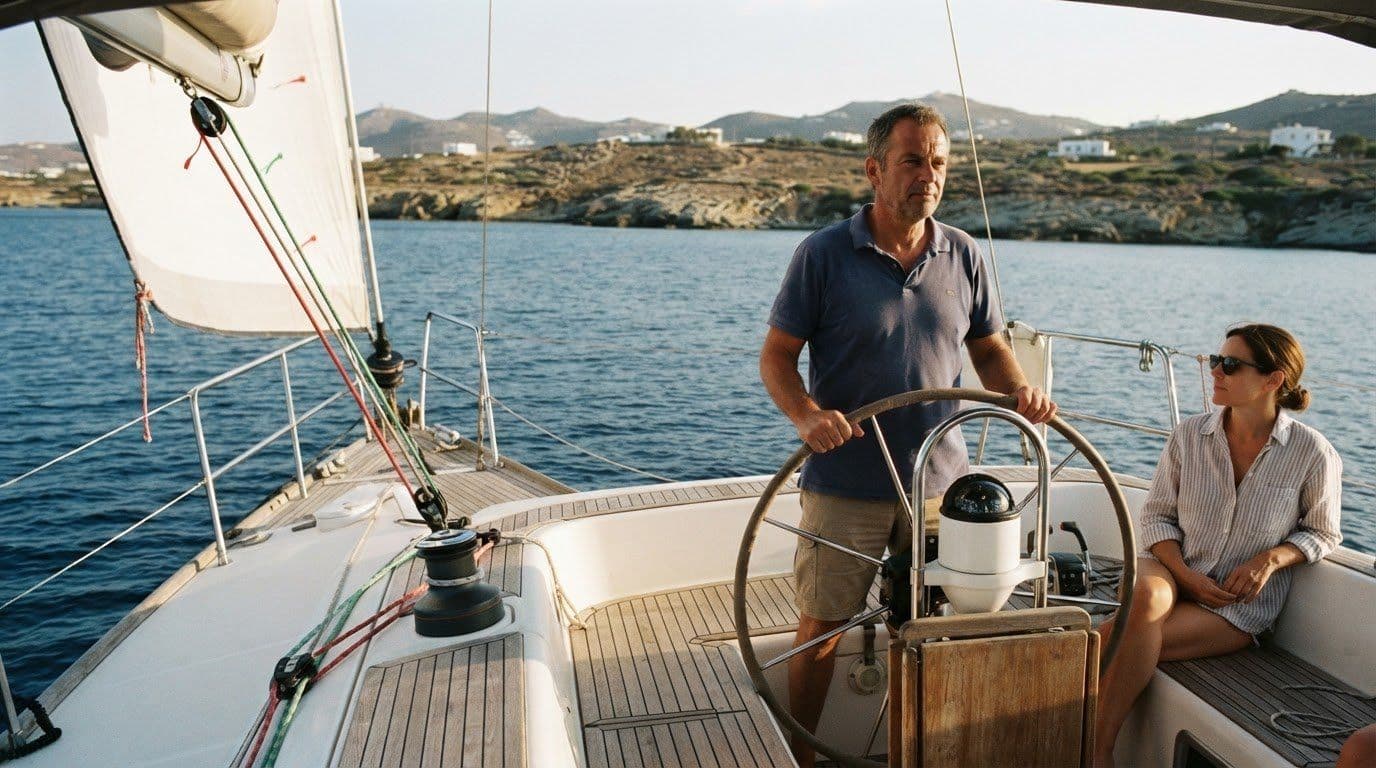
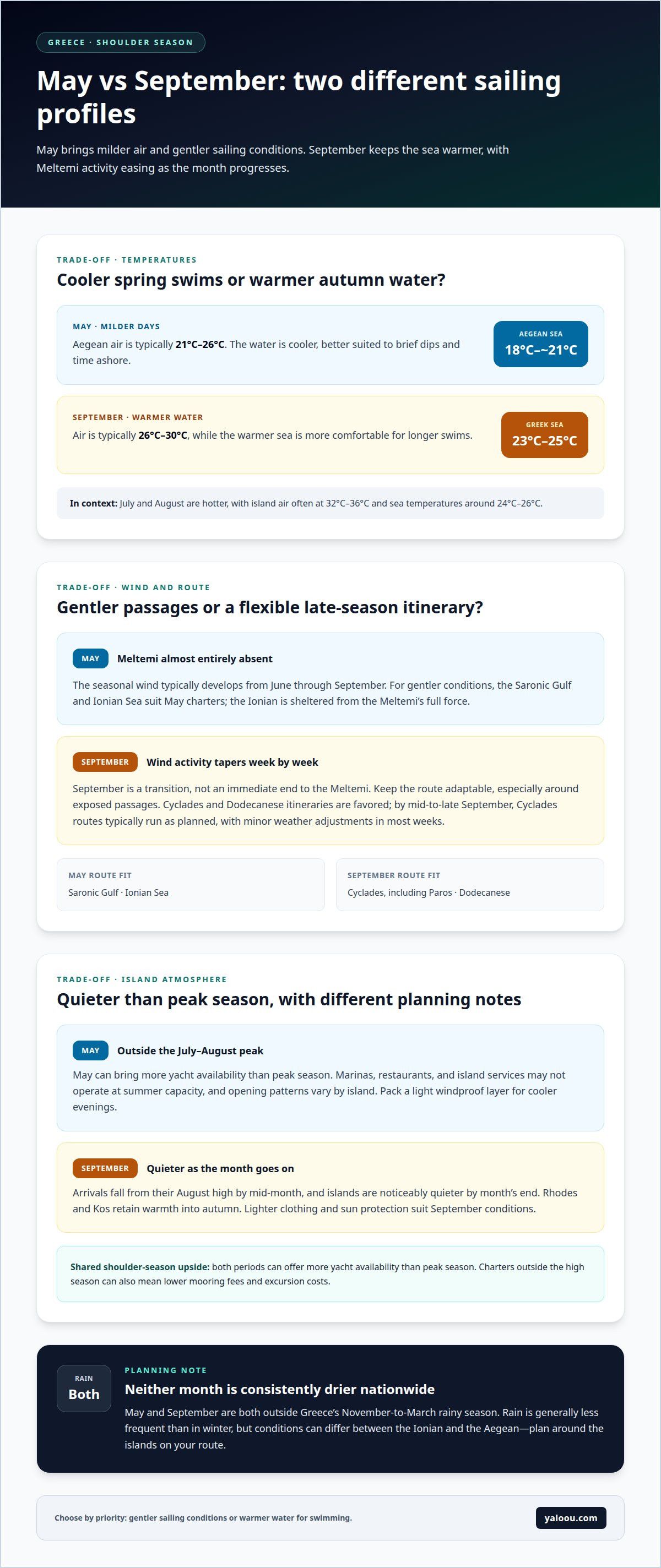
May offers the lighter-wind choice, while September brings warmer air and sea temperatures. For a shoulder-season yacht charter in Greece, May vs. September weather comes down to what matters most: May’s Aegean air typically sits at 21°C to 26°C, with the Meltemi almost entirely absent; in September, air is typically 26°C to 30°C and sea temperatures are 23°C to 25°C, while Meltemi activity eases as the month progresses.
If you’re considering a shoulder season yacht charter in Greece, comparing May and September weather helps clarify the trade-offs. May brings cooler swimming water and gentler winds; September offers warmer seas and a quieter island atmosphere, especially later in the month.
This guide compares May and September weather for a Greek shoulder-season yacht charter, including wind patterns, route planning, and off-peak benefits. Use the differences to choose a trip that suits your priorities, from relaxed passages to warm-water stops and quieter harbours.
Key Takeaways
- Choose your month by the experience you want: spring favors gentler sailing, while autumn keeps the sea warmer for swimming.
- Use September’s easing winds to shape a Cyclades or Dodecanese itinerary, with route flexibility for changing conditions.
- Plan around Greece’s April-to-October charter season and its shoulder-season windows to enjoy a quieter pace outside the summer peak.
- Consider a daily charter for a focused day on the water or a weekly crewed rental for a longer island-hopping escape.
What are the benefits of booking a yacht charter outside of the peak season in Greece?
Greece’s shoulder seasons trade summer crowds for quieter anchorages and different sailing conditions. The best fit depends on your route, preferred temperatures, and tolerance for changing winds.
Regional Sailing Conditions
Regional sailing conditions are the local wind and sea patterns that shape each route. In May, the Saronic Gulf and Ionian Sea suit charters seeking gentler conditions; the Ionian is sheltered from the Meltemi’s full force. September favors the Cyclades, including Paros, and the Dodecanese. By mid-to-late September, Cyclades itineraries typically run as planned, with minor weather adjustments in most weeks. Rhodes and Kos retain warmth into autumn.
Seasonal Charter Conditions
Charter conditions change as Greece moves from spring into autumn and winter. September and October combine easing Meltemi winds with quieter islands, while October remains within the April-to-October charter season. From November through March, Greece is colder, wetter, and windier, with rainy-season conditions less suited to sailing. Pack a light windproof layer for May’s cooler evenings and lighter clothing with sun protection for September. In May, marinas, restaurants, and island services may not operate at summer capacity, and opening patterns vary by island.
May and September Rainfall
Rainfall frequency describes how often showers interrupt time ashore or sailing. May and September both fall outside Greece’s November-to-March rainy season, so rain is generally less frequent than in winter. The seasonal pattern does not identify one month as consistently drier nationwide. For planning, account for the specific islands on your route: conditions can differ between the Ionian and the Aegean.
Availability and Crowds
Availability and crowds affect your choice of dates, anchorages, and shore stops. May is outside the July-and-August peak, while arrivals in September fall from their August high by mid-month; islands are noticeably quieter by month’s end. Both periods can offer more yacht availability than peak season. Charters outside the high season can also mean lower mooring fees and excursion costs, while September’s later weeks bring a quieter feel across the Cyclades.
Is May weather reliable for luxury yacht charters in Greece?
May offers workable charter weather, especially for guests who prioritize comfortable sailing over summer-warm swimming. In the Greek Aegean, May air temperatures typically range from 21°C to 26°C. September is warmer, with typical Greek air temperatures of 26°C to 30°C, making it a stronger choice for heat-seeking vacation plans.
Water temperatures sharpen the difference. In May, the Greek Aegean typically ranges from 18°C to around 21°C. By September, Greek sea temperatures are typically 23°C to 25°C. That warmer water changes the feel of a swim stop: May suits brief dips and time ashore, while September is more comfortable for longer swims. The specific island and conditions on your route also shape each day.
Peak season brings hotter temperatures than either shoulder-season month. In July and August, Greek island air temperatures often reach 32°C to 36°C, while sea temperatures typically sit around 24°C to 26°C. These figures put May’s milder air and September’s warmer waters in context. For many guests, the choice is between spring freshness and a later-season balance of warmth on deck and in the sea.
Across Mediterranean regions, seasonal temperatures shift at different speeds. Greece’s June-through-September daytime temperatures typically range from 28°C to 35°C, while autumn temperatures generally settle between 20°C and 26°C. May therefore begins the sailing season with milder air and cooler waters; September retains summer warmth in the sea even as autumn approaches. Choose based on whether swimming comfort or cooler days matters more.
For a May booking, plan around the cooler Aegean water; for September, prioritize the islands and route that suit your preferred pace. Explore Greek yacht charter experiences to connect the season you choose with the kind of vacation you want.
Meltemi wind patterns and route planning
The Meltemi is a seasonal wind pattern that affects sailing across the Aegean. It typically develops from June through September, while in May it is almost entirely absent. This gives May charters a different route-planning profile from midsummer trips. Wind strength and exposure matter most when choosing crossings, daily distances, and sheltered stops.
July and August bring the strongest Meltemi conditions in Greece. Across the central Cyclades, winds regularly reach 4-7 Beaufort during these summer months. In the Cyclades, the Meltemi commonly reaches 15-25 knots and can occasionally become stronger. These winds create consistent sailing opportunities, but exposed crossings and busy harbours call for careful route planning. A route with sheltered stops can offer more flexibility than one built around long open-water passages.
September is a transition, not an immediate end to the Aegean Meltemi. Activity tapers week by week, so an itinerary early in the month may face different conditions from one later on. By mid-to-late September, Cyclades routes can typically follow their intended itinerary, with minor weather adjustments in most weeks. Keep the route adaptable, particularly around exposed passages, and consider sheltered anchorages if conditions change.
The Ionian Islands offer a useful regional contrast: they’re sheltered from the Meltemi’s full force and known for calmer summer waters and lighter winds. That makes the Ionian a practical alternative when relaxed passages matter more than crossing the central Aegean. May’s near-absence of the Meltemi can also open route-planning opportunities before its usual June-to-September development. In either region, match the itinerary to the month, the exposure of each crossing, and the wind pattern rather than assuming every island group behaves alike.
Greek yacht charter season and shoulder-season dates
Greece’s yacht charter season generally runs from April through October, but definitions of shoulder season vary. One common calendar treats July and August as high season, June and September as shoulder season, and April, May, and October as low season. Other descriptions group May through mid-June and mid-September through early October as shoulder periods. The key point: dates alone don’t tell the whole story. Match your departure window to your route, preferred sailing conditions, and island plans.
July and August are the clearest peak season, bringing the greatest demand across Greek destinations. May comes earlier in the season, when spring conditions make the Saronic Gulf and Ionian useful options. September shifts the balance toward warmer waters and quieter islands, particularly later in the month. October extends the sailing season but sits closer to its close. For cultural visits ashore, seasonal timing also shapes the pace of stops and the range of open services.
Booking windows follow the calendar. For a May charter, the recommended lead time is November to February of the prior year. For September, it is March to June of the same year. These different windows help you decide when to settle your preferred dates and route. A May itinerary can prioritize sheltered regions, while a September plan can focus on Aegean islands as Meltemi activity eases.
Think of the season as a sliding scale, not a single start-and-stop date. April through October defines the broad charter window; July and August mark its busiest stretch, while May and September offer distinct alternatives. If warm swimming water matters most, September is often the stronger fit. If gentler spring sailing is the priority, consider May and routes such as the Ionian. Explore Greek charter experiences to shape your plans around the month and destinations that suit you.
YAL’OOU Exclusive Yachting & More: Daily Yacht Charters
YAL’OOU Exclusive Yachting & More offers Daily Yacht Charters and Weekly Crewed Yacht Rentals for exploring Greece by sea. Choose a daily charter for a focused outing, or a weekly rental when you want more time to explore islands and shape a longer trip. Your May-or-September decision can guide the experience: consider whether you prefer spring sailing conditions or warmer autumn waters, then match your dates and route interests to the charter format.
For a broader stay, High-End Villa Rentals and VIP Ground Transfers can complement your yacht plans. Share your preferred travel period and the kind of Greek escape you have in mind, then contact YAL’OOU to discuss your charter plans.
Shape Your Greek Escape Around the Experience You Want
Choosing a month also means choosing the rhythm of your trip. Think beyond the forecast: how much time do you want underway, is swimming central to your days, and how would you balance quiet coves with time ashore? This makes the shoulder season yacht charter Greece May vs September weather comparison practical, not just meteorological. Start with the feeling you want to bring home, then let it guide your dates and itinerary.
A clear brief makes the next conversation more useful. Share your preferred travel period, the places you’re drawn to, and whether you’re imagining a day on the water or a longer escape. From there, you can explore options that fit your plans while keeping what matters most to you in focus.
Contact YAL’OOU Exclusive Yachting & More to begin planning your Greek charter. Your island escape can start with one simple decision.
Frequently Asked Questions
What are the trade-offs of choosing shoulder season for a Greek yacht charter?
Shoulder season can bring quieter island stops and more choice than the summer peak, but conditions and services vary by month and destination. May favors comfortable sailing, though Aegean water can feel cool for swimming. September offers warmer seas, while Meltemi winds may still influence early-month routes. Build flexibility into the itinerary, especially if your plans depend on exposed crossings or specific harbour stops.
When is the worst time to sail in Greece?
November through March is generally the least favorable period for sailing in Greece. Winter is colder, wetter, and windier, and the rainy season brings conditions less suited to sailing. The impact depends on the route: an itinerary with exposed passages has different considerations from one centered on sheltered bays. For a sailing-focused trip, plan within the April-to-October charter season instead.
How Do Seasonal Weather Patterns Affect Your Route?
Seasonal weather can affect which passages feel comfortable and how much flexibility an itinerary needs. For example, a route linking Mykonos, Paros, Antiparos, Syros, Tinos, Sifnos, Serifos, Milos, Poliaigos, Kimolos, Santorini, Ios, Koufonisia, and Amorgos crosses island groups with different exposures. Allow room to adjust the sequence of stops rather than treating every crossing as fixed, particularly when Aegean winds influence the plan.
What Weather Challenges Exist During Off Season?
Outside the main sailing months, the key challenges are more frequent rain, cooler conditions, and stronger or less settled winds. These patterns matter most from November through March, when Greece’s rainy season overlaps with colder, windier weather. A planned passage may need more flexibility than a sheltered itinerary. Consider whether your trip depends on open-water sailing, swimming stops, or shore activities before choosing dates.
When is the Best Time to Visit Greece on a Sailing Charter?
May through October is a favorable window for a Greek sailing charter, and the best month depends on your priorities. Choose May if gentler spring sailing matters more than warm swimming water; consider September for warmer seas and a quieter island atmosphere. Your route can also shape the choice: the Saronic Gulf and Ionian suit May plans, while September itineraries may focus on the Cyclades or Dodecanese.
When is the best time of year to go to Greece?
For a trip combining sailing and island visits, choose dates that suit both your route and preferred pace. May through October is the broad charter season, while July and August bring the summer peak. Travelers planning time around Athens, Aegina, Poros, Spetses, Crete, Corfu, or Zakinthos can weigh sailing plans against their preferred balance of busy destinations and quieter stops.
Disclaimer
The YAL’OOU Travel Guide is curated with care to inspire and inform discerning travelers. While every effort is made to ensure the accuracy and relevance of the information provided, all content is offered for general guidance only and may evolve over time.
Details such as local regulations, availability, pricing, and services are subject to change without prior notice. We encourage guests to seek personalized advice and confirm arrangements directly when planning their journeys.
YAL’OOU accepts no liability for any inaccuracies, omissions, or outcomes arising from the use of this information. The Travel Guide may feature recommendations, insights, and selected third-party experiences, presented solely as a source of inspiration and not as formal endorsements.
By accessing this section of our website, you acknowledge and accept this disclaimer as part of your experience with YAL’OOU.