
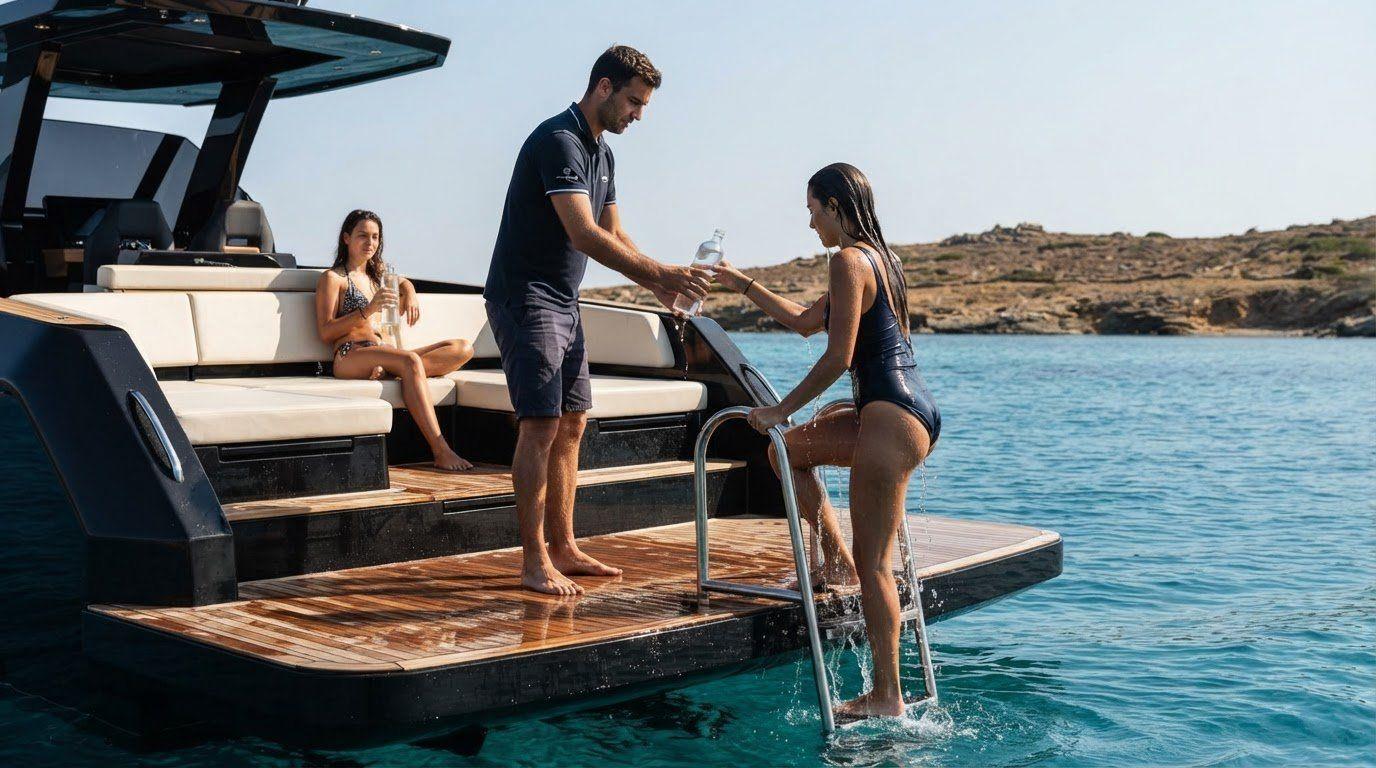
Staying hydrated and healthy on a yacht charter starts with drinking water regularly, rather than waiting until you feel thirsty. The NHS advises drinking enough to keep your urine pale, and more in hot weather or when you’re sweating. Sun, sea breezes, swimming, and time on deck can make it easy to lose track of how much you’re drinking.
It’s easy to focus on the views, swim stops, and next meal. A few simple habits can help you enjoy them more comfortably: keep water close, take breaks from the sun, and be mindful of alcohol in the heat.
This guide covers practical ways to stay hydrated throughout the day, choose meals that feel good on board, and reduce heat- and alcohol-related health risks. You’ll also find tips for managing water activities, time in the sun, and your onboard routine, so you can relax into the experience with confidence.
Key Takeaways
- Drink water regularly throughout the day, and keep bottled water handy for time in the sun or in the water.
- Limit alcohol in hot, sunny conditions and learn which symptoms of heat-related illness need urgent attention.
- Choose balanced meals and share dietary needs ahead of time to make eating comfortably on board easier.
- Use urine color as a simple hydration cue, drink more when you’re sweating, and be mindful of fresh water reserves.
1. Crew support and bottled water during water activities
Before swimming, ask the crew which water is used for drinking and cooking. Keep bottled water within reach in your cabin, and take a bottle on deck before sunbathing or heading out for water activities. Ocean breezes can mask the heat, while swimming and time in the sun can make it easy to forget to drink. Sip throughout the day instead of waiting until you feel thirsty.
Ask the crew to keep drinking water nearby during swim stops. Crew members can keep watch while guests are in the water and bring bottled water when needed. Swim only with the captain’s approval, never alone, and return aboard if you feel cold, dizzy, or tired. Choose water or diluted, sugar-free squash; caffeine and alcohol can add to dehydration.
Protect your skin before leaving the shade. The NHS recommends sunscreen with at least SPF 30 and four-star UVA protection. Use sunscreen before going outside and reapply regularly, choosing a water-resistant formula for swimming. Seek shade during the hottest part of the day. Keep babies under six months out of direct sunlight. Reef-friendly, water-resistant sunscreen is a practical choice around coral reefs.
Make meals and drinks work for your needs. Share dietary requirements on the preference sheet so the chef can prepare suitable food, such as gluten-free or vegan meals. Keep water available at mealtimes, especially after swimming in the heat.
Store medications in their original packaging in a cool, dry place away from direct sun, heat, and humidity. Follow the storage instructions on each medicine’s label, and ask a pharmacist about temperature-sensitive medicines before travel.
2. Alcohol, dehydration, and heat-related illness
Alcohol can increase the risk of dehydration, sunstroke, and heat exhaustion when you’re spending time in the sun. A cocktail on deck may feel refreshing, but it doesn’t replace water. Alternate alcoholic drinks with water, and pause alcohol if you’re sweating, feeling overheated, or preparing for activity. Sun and sea breezes can make it easy to underestimate the heat your body is handling.
When it comes to swimming, keep the decision simple: don’t enter the water after drinking. Swim only from the stern with the captain’s approval, never alone, and return aboard if you feel cold, dizzy, or tired. Alcohol can affect judgment and coordination, making it harder to follow instructions or respond safely in the water. Choose a shaded break and water instead.
Heat exhaustion needs prompt attention. Move the person out of the sun, help them cool down, and offer water if they’re alert and able to drink. Heat exhaustion usually doesn’t need emergency help if the person cools down within 30 minutes. If they aren’t improving within that time, seek medical help. Don’t leave someone who feels unwell alone on deck.
Heatstroke is a medical emergency. Call emergency services and follow the crew’s instructions; don’t wait to see if rest alone resolves it. Tell the crew promptly if someone becomes unwell, so they can respond and coordinate next steps. Avoid alcohol during active periods in strong sun, and build shaded pauses into the day between swimming, walking, and time on deck.
Plan a more comfortable day by balancing lively yacht experiences with water, shade, and rest. A relaxed pace helps you enjoy the sunshine without letting drinks or heat take over the day.
3. Balanced meals and indigestion
Build balanced meals around fruit, vegetables, and lean protein. For example, pair grilled fish or chicken with vegetables, or choose beans and vegetables for a plant-based plate. Fruit makes a simple snack between meals. These choices add variety without making every meal feel heavy. If you’re planning a full day of swimming or exploring ashore, consider whether a large meal may affect your comfort, and adjust your portions accordingly.
Enjoy the yacht’s meals without feeling you need to sample everything at once. Start with a moderate serving, then decide whether you’d like more. Rich dishes, multiple courses, and generous snacks can add up, particularly during a quiet afternoon aboard. If you overeat and develop indigestion, packed antacids may help. Follow the product label, and don’t use them to mask severe or persistent symptoms.
Dietary requirements matter as much as menu balance. Put allergies, intolerances, and preferences on the charter preference sheet so the chef can plan suitable meals. Gluten-free, dairy-free, alkaline, and vegan diets are examples of preferences a yacht chef can accommodate. Include clear details, such as whether you avoid an ingredient entirely or simply prefer alternatives. This gives the galley a practical starting point for planning meals throughout the charter.
Keep communication specific as plans unfold. If a dish contains an ingredient you avoid, raise it before eating and explain your concern plainly. For example, distinguish a preference for dairy-free meals from a serious dairy allergy. Tell the crew if a meal leaves you feeling uncomfortable, so the next menu can better suit your needs. Thoughtful choices, balanced plates, and clear dietary details help make dining onboard enjoyable without letting food disrupt your time at sea.
4. Hydration during a yacht charter
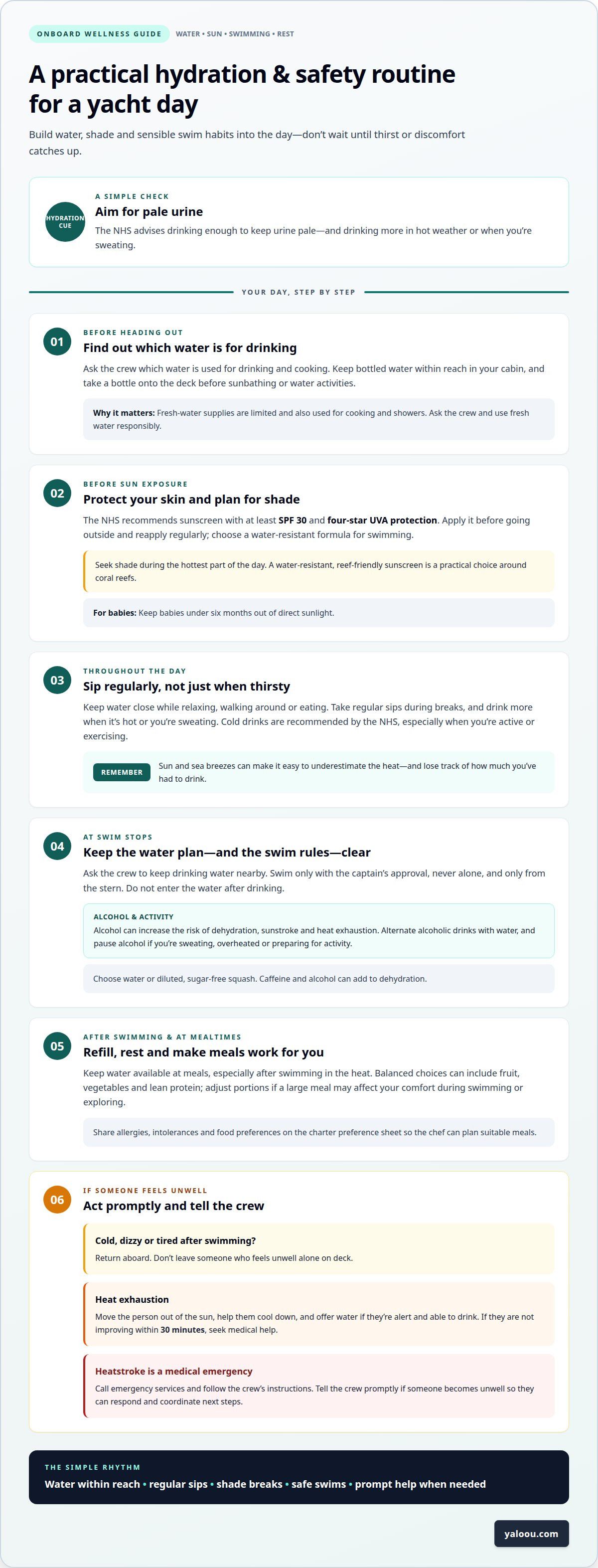
A routine for staying hydrated and healthy on a yacht charter should match the day’s activities, rather than rely on thirst alone. The NHS advises drinking enough to keep urine pale, and more in hot weather or when sweating. Keep a bottle close while reading on deck, walking around, or eating, and take regular sips during breaks. The NHS also recommends cold drinks, especially when you’re active or exercising.
There isn’t one daily water-provision figure that suits every guest and yacht. Needs depend on the number of people aboard, the heat, planned activity, time at sea, and the vessel’s fresh-water capacity. Factor in drinking and cooking while remembering that showers also use the yacht’s limited reserves. Ask the crew which water is for drinking, and use fresh water responsibly.
To reduce seasickness, sit near the middle of the yacht, look at a fixed point such as the horizon, and get fresh air. Keep water nearby and sip regularly. If eating feels difficult, try a light snack; ginger tablets, biscuits, or tea are options the NHS mentions for motion sickness. Electrolyte drinks can help restore fluid balance. They contain minerals such as sodium, magnesium, and potassium, which support fluid retention, muscle recovery, and nervous system function.
Make staying hydrated and healthy on a yacht charter part of your onboard routine: keep a drink within reach, take breaks after activity, and adjust as conditions change. For a day shaped around time at sea, explore yacht experiences and build refreshment pauses into your plans.
There is no fixed daily amount per person. Plan around the heat, activity, time at sea, number of guests, and the yacht’s fresh-water capacity.
YAL’OOU Exclusive Yachting & More: Daily Yacht Charters
YAL’OOU Exclusive Yachting & More offers Daily Yacht Charters for guests who want to enjoy time on the water without planning a longer stay. For an extended escape, Weekly Crewed Yacht Rentals offer another way to shape your charter around your group’s plans.
Use these practical tips to prepare for time aboard: share dietary requirements, plan for regular drinking water, and pace activities around the sun and heat. These simple choices can make swimming, dining, and relaxing more comfortable throughout your trip. YAL’OOU also offers High-End Villa Rentals and VIP Ground Transfers for guests planning more of their stay.
For a yacht charter shaped around your plans, contact YAL’OOU Exclusive Yachting & More.
Make well-being part of the journey
A memorable charter isn’t defined only by where you sail. It also comes from choosing a pace that leaves room to enjoy each moment. Think about the kind of day you want: energetic and full of activity, slow and restorative, or a mix that changes with the weather and your mood. This gives your charter planning a personal starting point, rather than leaving comfort to chance once you’re aboard.
Make staying hydrated and healthy on a yacht charter part of your wider travel plans. Consider what helps you feel at ease, from meal preferences to time for rest, and include those priorities in your plans. A thoughtful itinerary can make the experience feel more balanced while leaving space for spontaneity and discovery.
Ready to shape your time on the water around the experience you want? Contact YAL’OOU Exclusive Yachting & More to start planning, and look forward to a charter that feels unmistakably yours.
Stay Hydrated and Healthy with YAL’OOU Exclusive Yachting & More
YAL’OOU Exclusive Yachting & More offers Daily Yacht Charters and Weekly Crewed Yacht Rentals. When you’re ready to plan a yacht stay that leaves room for regular water breaks and healthy routines, explore these options.
For a trip that brings together time on the water and other arrangements, YAL’OOU also offers High-End Villa Rentals, VIP Ground Transfers, Private Chef Services, and Exclusive Event Planning.
Frequently Asked Questions
How much water should you drink each day on a yacht charter?
There isn’t one fixed daily amount that suits every charter day. Heat, sweating, and activity affect how much you need, so use urine color as a practical cue: the NHS advises drinking enough to keep it pale, and more in hot weather or when sweating. For example, a day spent swimming and exercising calls for more frequent drinks than a quiet day indoors.
What are signs and symptoms of dehydration and heat exhaustion at sea?
Pale urine is a useful hydration cue, while dizziness or feeling unwell in the heat should prompt a break and a check-in with the crew. Move out of direct sun and cool down. Heat exhaustion generally does not need emergency help if the person cools down within 30 minutes. Heatstroke is a medical emergency, so get urgent help rather than waiting.
What drinks and foods help maintain hydration on a yacht?
Choose water or diluted, sugar-free squash, and pair drinks with water-rich foods such as fruit and vegetables. A piece of fruit with lunch, for example, adds a refreshing option alongside a balanced meal. Lean protein can round out the plate. Don’t rely on alcohol or caffeine as refreshments, especially during an active, sunny day, as they can add to dehydration.
Is tap water safe to drink on charter yachts, and how is onboard water stored or treated?
Don’t assume every yacht uses the same water source or treatment system. Ask the crew which water is intended for drinking and cooking, and follow their onboard instructions. Keep drinking water separate from water used for other purposes. Fresh water reserves are limited, so use them responsibly; bottled water kept in your cabin can be a convenient drinking option.
What sun protection and cooling measures help prevent heat-related illness on a yacht?
Use sunscreen with at least SPF 30 and four-star UVA protection, as recommended by the NHS. Apply it before going outside and reapply regularly, particularly after swimming. Build shade breaks into the day, especially between 11am and 3pm. If you start feeling overheated, pause activity, move out of direct sun, and drink a cool beverage.
What should you do if someone becomes severely dehydrated or overheated at sea?
Tell the crew immediately, move the person out of the sun, and help them cool down. Offer water only if they’re alert and able to drink. If someone isn’t cooling down within 30 minutes, seek medical help. Heatstroke is a medical emergency, so contact emergency services promptly and follow the crew’s instructions while help is arranged.
Disclaimer
The YAL’OOU Travel Guide is curated with care to inspire and inform discerning travelers. While every effort is made to ensure the accuracy and relevance of the information provided, all content is offered for general guidance only and may evolve over time.
Details such as local regulations, availability, pricing, and services are subject to change without prior notice. We encourage guests to seek personalized advice and confirm arrangements directly when planning their journeys.
YAL’OOU accepts no liability for any inaccuracies, omissions, or outcomes arising from the use of this information. The Travel Guide may feature recommendations, insights, and selected third-party experiences, presented solely as a source of inspiration and not as formal endorsements.
By accessing this section of our website, you acknowledge and accept this disclaimer as part of your experience with YAL’OOU.