
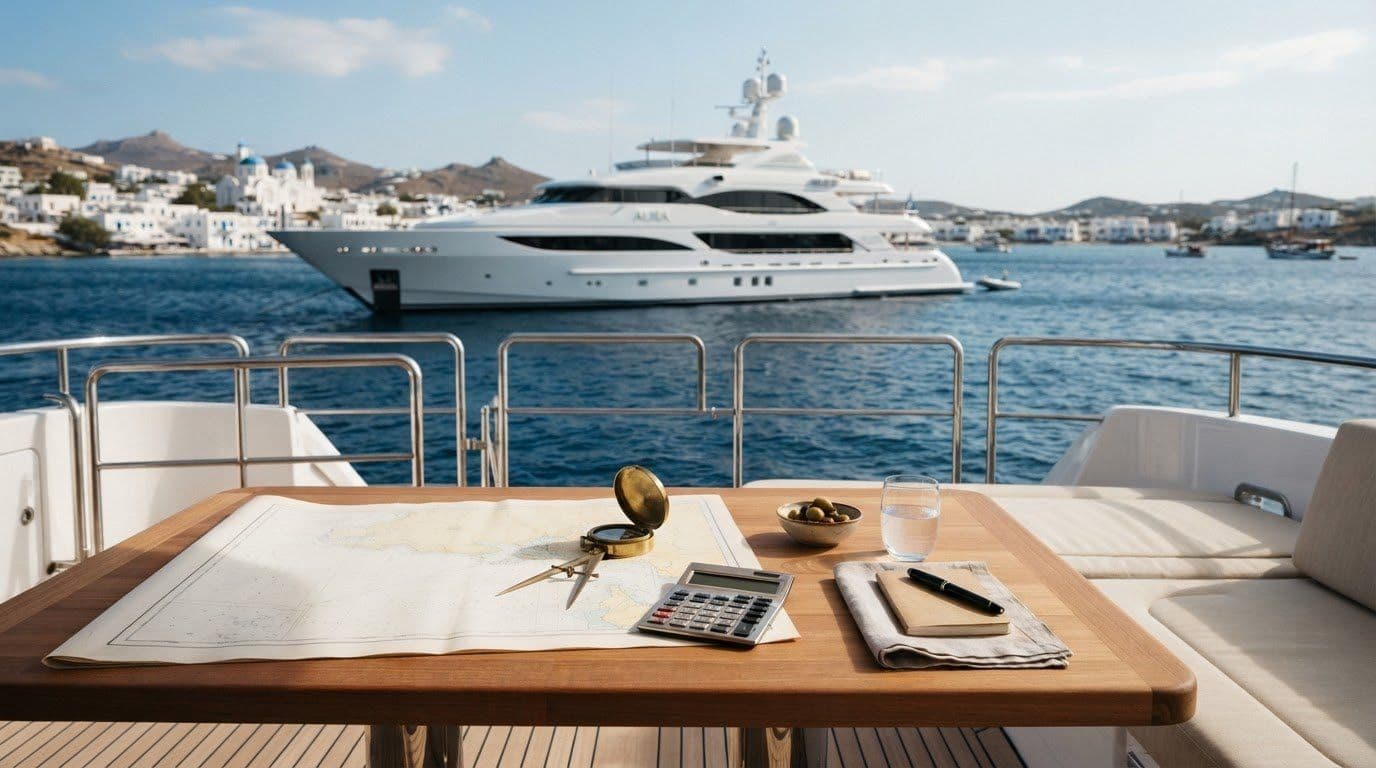
Yes, you can shape a superyacht itinerary around your preferred destinations, pace and activities. One of the best practices for chartering a superyacht is to plan the route as part of the experience while leaving room for the captain to adjust it to weather and sea conditions.
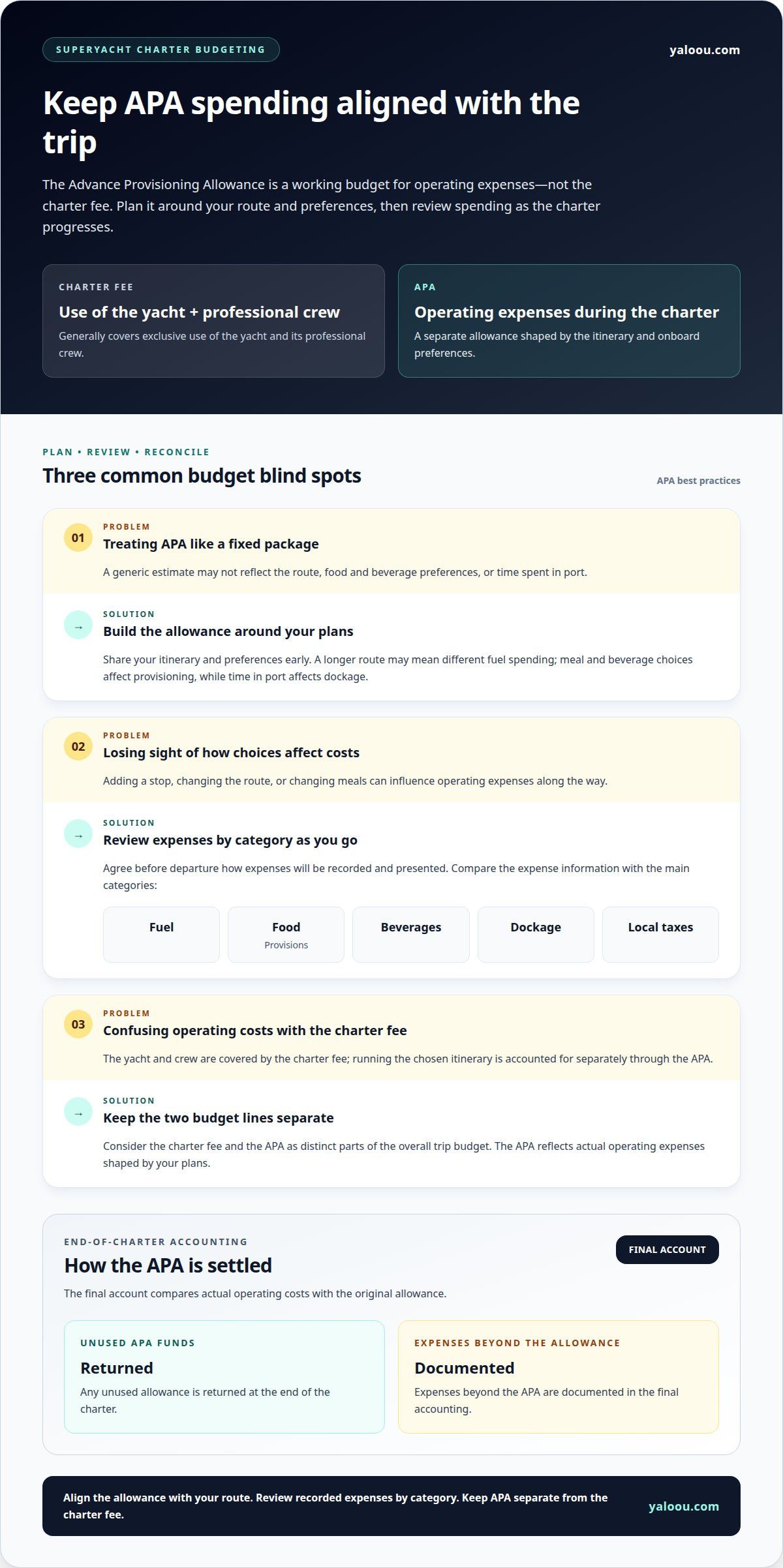
The freedom to tailor a trip is a major part of its appeal, but the costs extend beyond the charter fee. That fee generally covers exclusive use of the yacht and its professional crew, while the Advance Provisioning Allowance (APA) typically covers operating expenses such as fuel, food, beverages, dockage and local taxes.
This guide explains how itinerary choices, booking timelines and the difference between charter fees and APA shape your plans. You’ll also learn how unused APA funds and additional expenses are handled, and how specialist support can bring the details together for a more seamless charter.
Key Takeaways
- Plan early: booking six to twelve months ahead can open up a wider choice of yachts and destinations.
- Track APA spending during the charter; unused funds are returned, while expenses beyond the allowance are documented.
- Shape the itinerary around your priorities, with flexibility for the captain to adapt to weather and sea conditions.
- A charter specialist can help align the yacht, route and trip details with your plans, including a daily charter or a weekly crewed rental.
Advance Provisioning Allowance (APA)
The Advance Provisioning Allowance, or APA, is a fund for operating expenses during a superyacht charter. It is separate from the charter fee, which generally covers exclusive use of the yacht and its professional crew. APA spending typically covers fuel, food, beverages, dockage and local taxes. Understanding this distinction helps you see which costs cover the charter itself and which arise from running your chosen itinerary.
Think of the APA as a working budget shaped by your plans, not a fixed package of onboard extras. A longer route may require different fuel spending from a slower itinerary. Meal preferences, beverage choices and time in port also affect provisioning and dockage. Share your itinerary and preferences early so the planned allowance reflects the trip you want, rather than a generic estimate.
Before departure, discuss how expenses will be recorded and presented during the charter. Track the main categories, such as fuel, provisions and dockage, and compare them with the expense information provided. This makes it easier to understand how decisions affect spending. For example, adding a stop or changing the route can influence fuel use or port costs, while changing meals can affect provisions.
- Use the itinerary, food and beverage preferences, and planned port stops to frame the APA discussion.
- Review the recorded expenses by category as the charter progresses.
- Keep the APA separate from the charter fee when considering the total trip budget.
At the end of the charter, unused APA funds are returned, while expenses beyond the allowance are documented. The final account shows how actual operating costs compared with the original plan. These are practical best practices for chartering a superyacht: understand what the APA covers, align it with your route and preferences, and review the expense record through to the final accounting.
Booking timelines
For the widest choice of yachts and destinations, book a superyacht charter six to twelve months in advance. This gives you more time to compare options against your travel dates, preferred destination and itinerary. During peak Mediterranean season, the world’s most desirable superyachts may be booked more than a year ahead. If a particular yacht or season matters most, start planning early.
Timing shapes more than yacht selection. Your destination can affect the route, departure point and pace of the trip. Booking early gives you more opportunity to consider these elements together, rather than treating the yacht and itinerary as separate decisions. For example, a Greek island itinerary with several coastal stops may call for different planning priorities from a trip focused on time aboard.
Start with the details that are hardest to change: your travel dates, destination and essential yacht preferences. Then compare suitable options and consider how each fits the experience you have in mind. If your dates are fixed, planning early is especially useful because it gives you a wider selection to explore. If your destination is flexible, compare locations before settling on a route.
- Six to twelve months ahead: Begin comparing yachts and destinations for the widest selection.
- More than a year ahead: Consider planning earlier for highly sought-after yachts during peak Mediterranean seasons.
- As plans take shape: Align your dates, destination and itinerary priorities before making a final choice.
These timing considerations are part of the best practices for chartering a superyacht. They help you weigh the appeal of a specific yacht against the flexibility of your travel plans. Fixed dates and a popular destination make early planning more important; flexible dates leave more room to compare alternatives.
Use the planning window to explore the kind of trip you want, from a relaxed coastal escape to a more active itinerary. Reviewing yacht charter experiences can help you turn broad preferences into a clearer direction for your plans.
Charter fees and operating expenses
A superyacht charter fee generally covers exclusive use of the yacht and its professional crew. Your overall budget also reflects operating expenses, contract terms, destination choices and any gratuity you decide to leave.
Choose a destination and season based on the experience you want, then consider route flexibility, preferred ports and seasonal demand. For a Greek island itinerary, think about how your chosen stops and travel dates shape the route and yacht selection.
Crewed and bareboat charters differ in responsibility: a professional captain and crew manage navigation and onboard operations on a crewed charter; bareboat guests take responsibility for the vessel, including navigation, provisioning and crew selection. Who can charter bareboat depends on the vessel’s flag and the country where the charter takes place. Age requirements are usually 18+ years or 21 years or older, depending on location, and licensing requirements vary.
Travel documents, customs procedures and local rules depend on your itinerary and the jurisdictions you visit. Identify entry requirements and port procedures for each destination, whether your route includes Greece or the United States. In the United States, the U.S. Coast Guard sets safety and operational standards for yacht charters.
Contract, Cancellation, and Payment Terms
A charter contract records the agreed yacht use, payment schedule and cancellation conditions. Review when payments are due, how cancellations affect amounts paid, and what the agreement says about itinerary changes. For example, compare the cancellation terms with your travel dates before committing. Clear terms help you understand your financial obligations if plans change and distinguish the charter fee from other trip expenses.
Crew Gratuities and Etiquette
Gratuities are an additional way to recognize the crew’s service, but there is no single customary amount across U.S. and Mediterranean charters. Practices differ by region, so don’t assume etiquette in one location applies elsewhere. Consider the quality of service and your charter’s stated arrangements when deciding what to leave. Follow the agreed onboard process and offer your thanks directly to the crew or captain.
Working with a charter specialist
A charter specialist can connect your group’s priorities with yacht options, itinerary choices and charter arrangements. Focus the discussion on fit, not just appearance.
Choosing a Charter Specialist
A charter specialist can translate your preferences into a suitable shortlist and coordinated plans. Share your preferred dates, destination, group’s interests and desired pace, then discuss how each yacht fits those priorities. A relaxed coastal trip and an activity-focused itinerary, for example, may call for different planning choices. A clear brief helps compare options and explain the trade-offs that matter to your group.
Matching Yacht Features to the Group
The right yacht balances your group’s needs with its preferred onboard experience. Consider the number of guests, privacy, shared spaces, sleeping arrangements and activities before comparing layouts or amenities. A group that values quiet downtime may prioritize separate spaces, while guests who enjoy shared meals may focus on communal areas. Describe these preferences clearly so the yacht’s size and configuration support how your party plans to spend time aboard.
Verifying Yacht Safety and Reputation
Verification means reviewing a yacht’s relevant certification, condition information and charter history before signing. Confirm that the yacht is properly licensed and certified, and examine available maintenance or condition records. Request a clear account of its recent charter experience and consider feedback from previous guests. These checks help you compare the information presented with the vessel and service you expect, rather than relying on attractive images alone.
Avoiding Charter Risks and Scams
Charter risks include misleading yacht descriptions, unclear contract terms and payment requests that don’t match the agreed documents. Compare the yacht, dates, costs and payment instructions across the proposal and contract before sending funds. Treat a sudden change to payment details as a reason to pause and verify through an established communication channel. Keep written records of agreed terms, itinerary changes and payment confirmations so details remain traceable.
Put these best practices for chartering a superyacht into action by defining your group’s priorities and comparing suitable charter experiences. Explore yacht charter experiences to shape the kind of trip you want.
YAL’OOU Exclusive Yachting & More: Daily Yacht Charters
YAL’OOU offers Daily Yacht Charters for guests planning a focused day on the water. Choose this format when your plans call for a shorter escape rather than an extended itinerary. For a longer stay aboard, YAL’OOU’s Weekly Crewed Yacht Rentals offer another way to shape your time at sea.
Let your priorities guide the next step: decide whether you want a day charter or a weekly experience, then consider the destinations and pace that suit your plans. This gives you a clear starting point for exploring a yacht experience tailored to your style of travel.
For your next charter, contact YAL’OOU Exclusive Yachting & More or visit yaloou.com.
Make Your Charter Plans Take Shape
Turn your ideas into a clear brief before choosing the details. Decide how you want the time away to feel, who is joining you, and what matters most: time on the water, a longer escape aboard, or a private stay ashore. Applying the best practices for chartering a superyacht means letting those priorities guide the experience, rather than starting with a yacht’s features alone.
YAL’OOU also offers High-End Villa Rentals for plans centered on a private stay on land. Explore the possibilities, then focus your inquiry on the experience you want to create. A thoughtful starting point can make the next planning decisions clearer and more personal.
Explore yacht charter experiences and take the next step toward a trip shaped around your plans.
Frequently Asked Questions
Can I customize my itinerary?
Yes, you can shape the itinerary around your preferred destinations, activities and pace. In Greece, options include Mykonos, Paros, Antiparos, Athens, Aegina, Poros, Spetses, Syros, Tinos, Sifnos, Serifos, Milos, Poliaigos, Kimolos, Santorini, Ios, Koufonisia, Amorgos, Crete, Corfu and Zakynthos. These are individual destinations to consider, not a single suggested route. Your chosen stops and time aboard help define the plan.
Can dietary restrictions and personal preferences be accommodated?
Share dietary requirements, allergies and activity interests before departure so the crew can plan around your preferences. A preference questionnaire may also cover medical considerations. For example, clearly note an allergy and describe any foods you avoid instead of relying on assumptions at mealtimes. Specific information helps the onboard team prepare provisions and consider activities suited to your group’s needs.
What happens if weather conditions change?
The captain monitors weather and sea conditions and may adjust the itinerary when needed for comfort and safety. A planned stop may shift, or the route may change as conditions develop. Keep your expectations flexible, especially around individual destinations or activities. The captain’s decisions guide onboard operations, and a revised plan can help the trip adapt to changing conditions.
What is included in the charter fee?
The charter fee generally covers exclusive use of the yacht and its professional crew. It is not a catch-all for every trip expense. Fuel, food, beverages, dockage and local taxes are typically managed separately through the APA. For a clear budget, distinguish the fee from operating costs and review how the agreement presents any other charges.
Why Choose a Superyacht Charter?
A superyacht charter offers private time aboard, with a professional captain and crew managing navigation, operations and onboard service. Guests don’t need boating experience to enjoy the charter. It can suit a group seeking a tailored trip, whether the priority is quiet time at sea, shared meals or exploring chosen destinations. The experience brings travel, accommodation and onboard service together in one setting.
What is the average cost to charter a superyacht, including VAT, APA, crew gratuity, and other fees?
There is no single total that applies to every charter. The overall budget depends on the yacht, dates, destination, itinerary and expenses recorded through the APA. Consider the charter fee, applicable VAT, operating expenses, any charges listed in the contract and a planned gratuity as separate parts of the budget. Their amounts depend on the charter terms and your choices, so compare the full cost structure rather than relying on one headline figure.
Disclaimer
The YAL’OOU Travel Guide is curated with care to inspire and inform discerning travelers. While every effort is made to ensure the accuracy and relevance of the information provided, all content is offered for general guidance only and may evolve over time.
Details such as local regulations, availability, pricing, and services are subject to change without prior notice. We encourage guests to seek personalized advice and confirm arrangements directly when planning their journeys.
YAL’OOU accepts no liability for any inaccuracies, omissions, or outcomes arising from the use of this information. The Travel Guide may feature recommendations, insights, and selected third-party experiences, presented solely as a source of inspiration and not as formal endorsements.
By accessing this section of our website, you acknowledge and accept this disclaimer as part of your experience with YAL’OOU.