
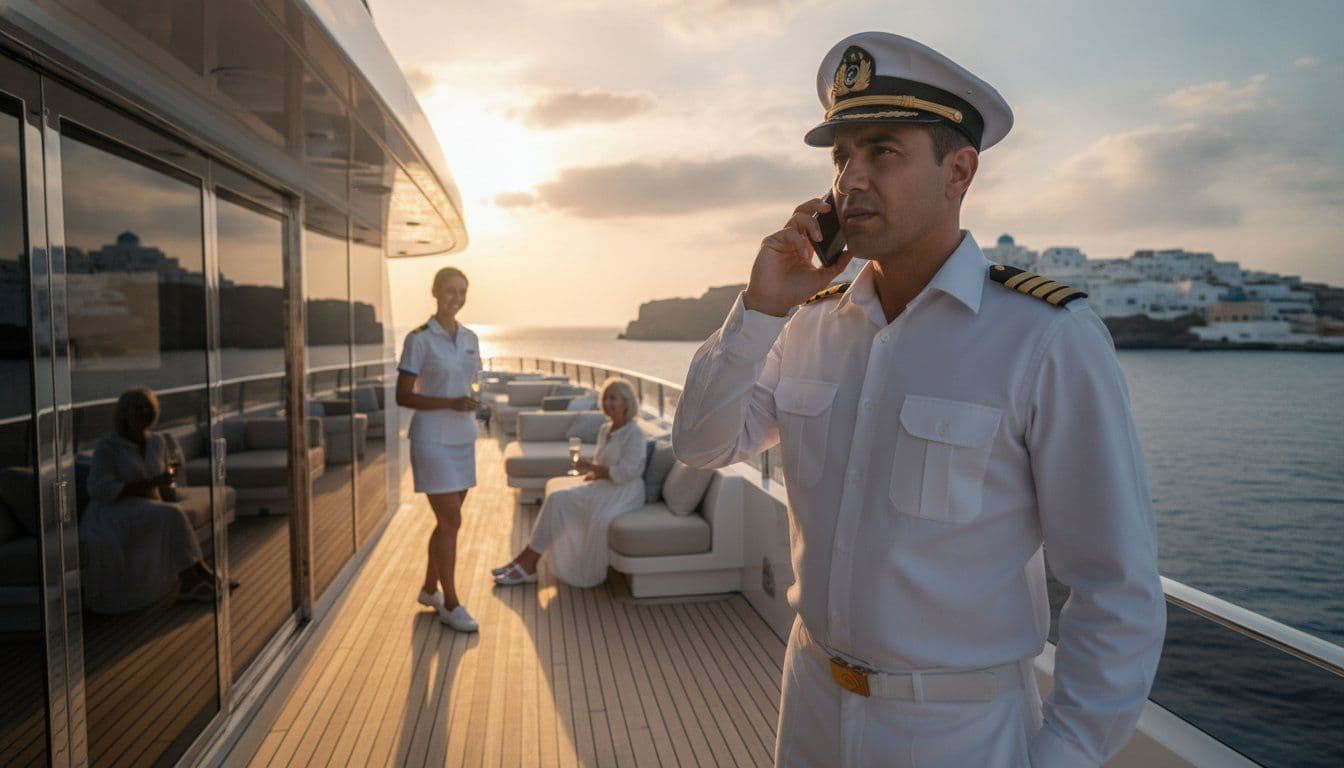
What if the biggest threat to your Greek summer isn't a missed sunset, but a sudden health crisis miles from the nearest port? It's a sobering thought when you're cruising between Mykonos and Paros. You've planned every detail of your luxury escape. However, the uncertainty of what to do in case of a medical emergency on a yacht can still weigh on your mind. You might worry about language barriers or whether the crew is truly prepared for the unexpected while at sea.
We believe that true luxury is synonymous with total security. You deserve to feel as safe on the water as you do on land. This 2026 safety checklist will empower you with the essential steps to handle any medical event with confidence. We'll dive into the latest maritime telemedicine tech, the specialized STCW training your crew maintains, and the robust Greek medical infrastructure waiting at your next destination. Discover how professional coordination and local expertise ensure your journey remains a story of pure, uninterrupted freedom.
Key Takeaways
- Act instantly with a 60-second response protocol designed to keep you calm and the crew informed during a crisis.
- Navigate emergency communication with confidence by mastering the vital protocols for what to do in case of a medical emergency on a yacht.
- Rely on the expertise of STCW-certified professionals and high-tech onboard medical kits to manage health risks effectively.
- Explore how Greek evacuation logistics and concierge support bridge the gap between the open sea and premier private hospitals.
- Secure your voyage with essential pre-charter checklists, covering everything from medical disclosures to specialized insurance requirements.
Immediate Response: The Guest’s Checklist for the First 60 Seconds
A crisis at sea feels different than one on land. You are on the deck of a Baglietto 100, surrounded by the deep blue of the Aegean, when a guest suddenly collapses. Knowing what to do in case of a medical emergency on a yacht begins with a clear head and immediate action. On a professional crewed charter, you are never alone. You have a highly trained team ready to pivot into rescue mode within seconds.
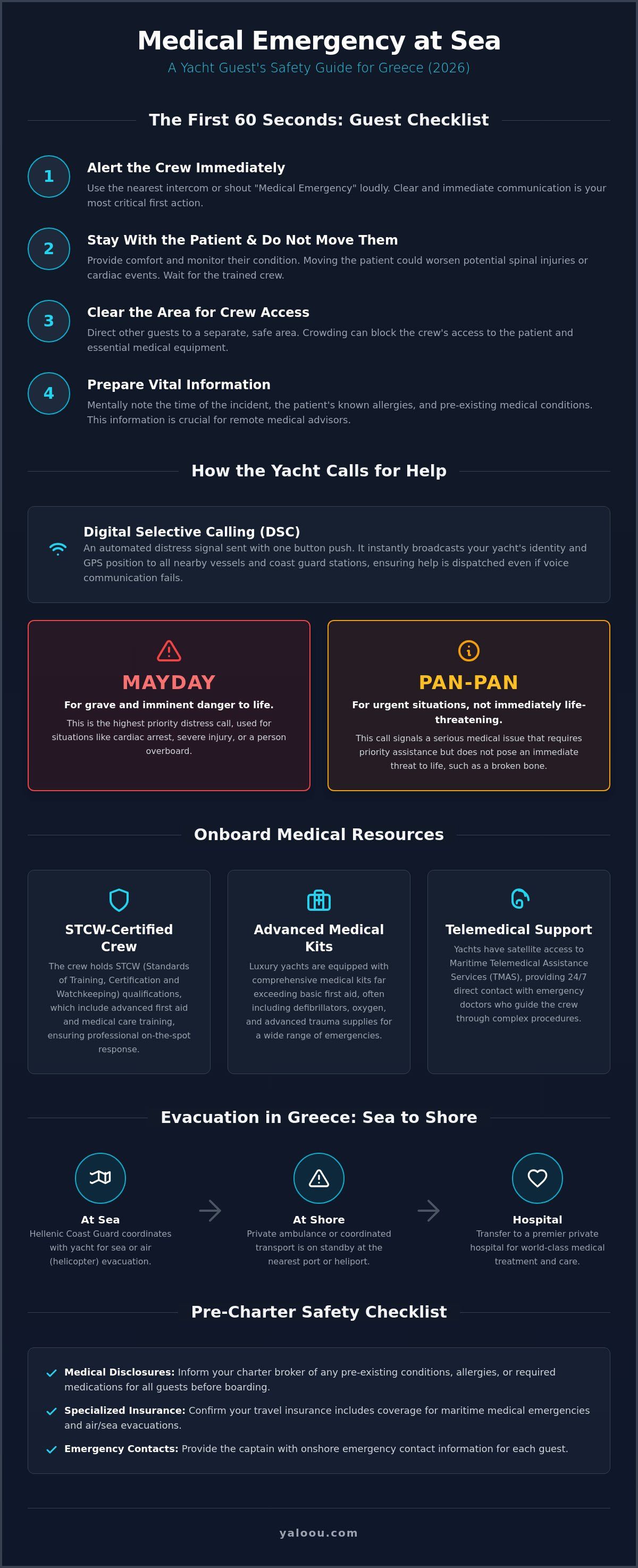
Your primary goal in the first minute is communication. Alert the crew immediately. Use the onboard intercom if you are in a cabin; if you are on deck, shout "Medical Emergency" loudly and clearly. Stay with the patient to provide comfort and monitoring. Do not attempt to move them. Spinal injuries or cardiac events require absolute stability. You should only move a patient if there is a secondary, immediate threat like fire or water ingress.
To better understand how professional teams handle these high-pressure moments, watch this helpful video:
Clearing the area is your next priority. Well-meaning guests often crowd around the patient, which unintentionally blocks the crew's access to life-saving equipment. Direct other family members to a designated safe zone. While the crew works, prepare a mental summary of the situation. Note the time the incident began and any known allergies. This information is vital when the crew contacts Maritime Telemedical Assistance Services (TMAS) for expert remote advice. Mastering what to do in case of a medical emergency on a yacht ensures that a medical event is managed with precision rather than panic.
The Role of the Captain and Crew
The Captain is the absolute authority during any crisis. They manage the chain of command, balancing the patient's needs with the safety of the vessel. While a stewardess might provide initial first aid, the Captain coordinates the navigation and external rescue services. Under Greek maritime law, the Captain holds ultimate legal responsibility for the safety and medical welfare of every person on board while the vessel is at sea. Their decisions regarding vessel speed, course changes, or helicopter evacuations are final and must be respected without question.
Maintaining Composure in a High-Stakes Environment
Panic is the enemy of safety. You support the crew best by remaining a calm, silent observer unless asked to help. Modern luxury yacht experiences are built on a foundation of rigorous safety protocols. Even in remote locations like the uninhabited island of Poliaigos, the combination of onboard technology and professional expertise provides a safety net. Keep other guests occupied and reassured. Remind them that the yacht is equipped with advanced medical tools and that a professional plan is already in motion.
Communication Protocols: How the Yacht Calls for Help
Effective communication is the backbone of maritime safety. When you are on a yacht, "calling for help" is a multi-layered process that combines high-tech automation with human coordination. Modern vessels rely on Digital Selective Calling (DSC), an automated system that broadcasts a digital distress signal to all nearby ships and coast stations at the touch of a button. This ensures that even if voice communication is difficult, your exact position and identity are known instantly. It's a silent, powerful guardian that works in tandem with traditional radio calls.
Understanding the terminology used on the radio is part of knowing what to do in case of a medical emergency on a yacht. Professional crews distinguish between two main types of calls. A "MAYDAY" signal is reserved for immediate, grave threats to life, such as a cardiac arrest. In contrast, a "PAN-PAN" call signifies an urgent medical situation that is not yet life-threatening but requires priority assistance. By using the correct protocol, the crew ensures that the Hellenic Coast Guard and nearby vessels prioritize the response correctly.
To maintain the highest standards of care, crews often refer to authoritative resources like The Ship Captain's Medical Guide. This ensures that the medical information relayed to shore-side doctors is clinically relevant and precise. Clear data leads to better advice, which can be life-saving when you're hours away from a hospital.
Contacting the Hellenic Coast Guard
The Greek islands are supported by the "Olympia Radio" network. This is a sophisticated communication system that monitors VHF Channel 16 around the clock. When the Captain initiates a call, they provide the vessel's name, precise coordinates, and a clear description of the medical issue. This data allows the Coast Guard to determine the fastest route to care. Whether it involves a high-speed intercept by a patrol boat or coordinating with a local clinic in Santorini or Crete, the response is swift and methodical.
The Role of VIP Concierge Support
While the Coast Guard manages the sea, YAL’OOU Exclusive Yachting & More manages the shore. This is where our service goes beyond standard safety. Our concierge team acts as a bridge, preparing the ground before the yacht even reaches the port. We coordinate VIP concierge services to ensure a private ambulance is waiting at the pier, bypassing the delays often found in public logistics.
Our team doesn't just stop at the hospital gates. We handle the logistics of private hospital admissions in Athens and secure luxury accommodation for family members who wish to stay near the patient. This seamless transition from sea to shore is what defines a truly elite charter experience. You don't just get a rescue; you get a complete support system that prioritizes your comfort and peace of mind during a difficult time. Knowing what to do in case of a medical emergency on a yacht includes trusting this invisible but powerful network.
Onboard Medical Resources: Equipment and Training
A luxury yacht is more than a floating villa. It is a sophisticated, self-contained environment designed for safety. When you are considering what to do in case of a medical emergency on a yacht, the first line of defense is the equipment hidden behind the elegant cabinetry. Premier vessels are equipped with Automated External Defibrillators (AEDs), medical-grade oxygen, and advanced trauma kits. These tools allow the crew to stabilize patients effectively before reaching shore. This immediate access to life-saving technology is a standard feature of a high-end charter.
Modern technology bridges the gap between the open sea and the world's best doctors. Many yachts now feature 24/7 satellite links to emergency physicians through services like MedAire. This organization handled 19,016 medical assistance calls in 2025 alone, proving how vital remote support has become. New maritime telehealth services, such as Tether Medical launching in April 2026, offer virtual consultations that bring expert eyes to the vessel. Your crew isn't just following a manual. They are receiving real-time, professional guidance from specialists while at sea.
If an incident occurs, the crew may implement the "Safe Room" concept. This involves converting the main salon or a specific cabin into a stabilized medical bay. This area provides the necessary space, lighting, and power for medical equipment. It keeps the environment controlled and quiet, allowing the medical officer to focus entirely on the patient. Understanding what to do in case of a medical emergency on a yacht means knowing that the vessel itself is designed to support your health.
Medical Kits on Luxury Vessels
The medical inventory on a high-end vessel like the Baglietto 100 far exceeds a standard first aid box. These yachts often carry an MCA Category A medical kit. This kit is priced at $5,995.00 and is a requirement for commercial vessels with no limitation on their voyage length. It includes advanced wound care, diagnostic tools, and cardiac medications. While these resources are extensive, you should still bring your own specialized prescription medications. Onboard kits are designed for emergencies, not for managing chronic pre-existing conditions.
Crew Training Standards in 2026
Equipment is only as good as the people using it. All professional crew members hold STCW certifications, which include mandatory training in Elementary First Aid. Officers go much further, completing intensive Medical First Aid (MFA) and Medical Care (MC) modules. These courses cover complex procedures like suturing and administering IV fluids. On vessels managed by YAL’OOU Exclusive Yachting & More, the crew participates in annual refresher courses to ensure their skills remain sharp. Every crewed charter includes at least one certified medical officer who is legally responsible for passenger safety in Greek waters.
Evacuation Procedures: From Sea to Shore in Greece
Speed defines the success of a medical evacuation. Once the crew has stabilized a patient using the onboard resources discussed earlier, the focus shifts to physical transport. Knowing what to do in case of a medical emergency on a yacht involves understanding how a patient moves from a moving vessel to a sterile hospital bed. This transition is a choreographed effort between the Captain, the Hellenic Coast Guard, and shore-side medical teams. Depending on your location and the severity of the situation, the method of evacuation will vary to ensure the fastest possible care.
If the yacht is cruising near the Cyclades, a tender transfer is often the most efficient route. High-speed tenders, like the Tesoro 40 Inboard, can bridge the gap to a local pier in minutes. For incidents further offshore, the Coast Guard might coordinate a ship-to-ship transfer. Larger patrol vessels provide a more stable platform for moving a patient in choppy Aegean waters. In the most critical, time-sensitive cases, a helicopter medevac is initiated. This is the gold standard of maritime rescue, bypassing sea conditions entirely to reach specialized trauma centers in record time.
Regional Medical Hubs in the Greek Islands
Greece offers a robust network of medical facilities, but they aren't all equal. Athens is the primary destination for complex cases. It's home to premier private hospitals like Hygeia and Mitera, where specialized specialists and advanced diagnostic tools are available 24/7. For urgent stabilization, Mykonos and Santorini have sophisticated private medical centers that cater specifically to the yachting community. If you're exploring the Southern Aegean or the Ionian, Crete and Corfu serve as the secondary hubs, offering comprehensive emergency services that rival those in the capital.
Logistics of a Helicopter Lift
A helicopter evacuation is a high-intensity operation that requires total guest cooperation. The crew will immediately secure the deck, removing loose cushions, sunbeds, and umbrellas to create a safe hoist zone. Communication is seamless; the Captain speaks directly to the pilot to maintain a steady course and wind angle. If you are the one being evacuated, you must have your passport and insurance documents ready. Pack a small bag with only the absolute essentials. Weight is a critical factor for the pilot, and the priority is always the patient's safety over their luggage.
Our team ensures that the transition from the deck to the doctor is flawless. Explore our VIP concierge support to see how YAL’OOU Exclusive Yachting & More manages every detail of your shore-side logistics, from private ambulances to hospital admissions.
Pre-Charter Preparation: Proactive Safety for Peace of Mind
Confidence at sea isn't a happy accident. It's the result of meticulous planning. While the crew is responsible for the vessel, your proactive steps as a guest create the foundation for a secure journey. True luxury is the ability to relax completely, knowing that every contingency has been considered. When you understand what to do in case of a medical emergency on a yacht, you transform potential anxiety into total peace of mind. Preparation starts weeks before you step onto the teak deck.
Your most powerful tool is the Medical Disclosure Form. Be radically honest. The crew needs to know about chronic conditions, past surgeries, and even minor allergies. This information allows the onboard medical officer to tailor their response to your specific needs. Additionally, verify your travel insurance. A single medical diversion can cost an average of $180,000, and 20% of these incidents could be managed better with the right prep. Ensure your policy explicitly covers "Medical Evacuation by Sea" and "Private Hospitalization" in Greece.
Once you board, request a dedicated safety briefing. Don't just listen to the life jacket instructions. Ask the crew to show you the exact location of the Automated External Defibrillator (AED) and the primary first aid kits. Pack a personal medical bag that includes a two-week surplus of your prescriptions and a printed summary of your medical history. This simple step ensures that if a transition to shore occurs, the doctors in Athens have an immediate, accurate roadmap of your health. Knowing what to do in case of a medical emergency on a yacht starts with being your own best advocate.
Choosing the Right Yacht for Your Needs
Safety begins with the vessel itself. If you have guests with mobility issues or a higher risk of seasickness, stability is paramount. A yacht like the Tesoro 40 Inboard offers exceptional balance and ease of movement. For larger groups, you should browse our full fleet of yachts to find a layout that allows for easy patient stabilization and clear access for medical equipment. Choosing a vessel that matches your group's physical requirements is a vital part of risk management.
The Importance of a Detailed Itinerary
A well-planned route is a safety net. When you share your planned destinations with our team, we don't just look at the best beaches. We map out the proximity to regional medical hubs. Island hopping in the Cyclades is popular because it keeps you within reach of developed infrastructure in Mykonos or Syros. We help you balance the desire for remote, crystal-clear waters with the logistical necessity of staying within a safe distance of premier Greek clinics. This strategic approach ensures your adventure remains inspired and uninterrupted.
Sail with Absolute Confidence in the Aegean
Your journey through the Greek islands should be defined by the wind in your hair and the sun on your skin, not by worry. By mastering the protocols of what to do in case of a medical emergency on a yacht, you turn potential crises into managed situations. You now understand the vital role of STCW-certified crews, the power of maritime telemedicine, and the importance of proactive disclosure. Safety at sea isn't about fear. It's about having a professional team and a robust infrastructure standing behind every nautical mile.
We maintain Red Dot-level safety standards and rigorous vessel maintenance to ensure your environment is as secure as it is beautiful. Our STCW-certified professional crews and 24/7 VIP Concierge support provide a seamless bridge to Greece’s premier medical facilities. This commitment to excellence allows you to focus on the horizon while we handle the details. Every experience we create is built on the promise of absolute freedom, backed by unwavering responsibility.
Ready to explore the Aegean with total peace of mind? Book your safe and seamless Greek yacht charter with YAL’OOU and experience the ultimate in secure luxury. Your dream escape is waiting, and we are ready to make it perfect.
Frequently Asked Questions
What is the first thing I should do if a guest collapses on a yacht?
Alert the crew immediately by shouting "Medical Emergency" or using the onboard intercom system. This is the most critical first step in knowing what to do in case of a medical emergency on a yacht. Stay with the patient and don't attempt to move them unless they're in immediate physical danger. The crew will take over within seconds, initiating their trained response protocols while you provide the patient with stability.
Does a yacht crew have a doctor on board?
Most luxury yachts don't carry a doctor as part of the standard crew. However, every professional charter includes at least one officer trained in advanced Medical First Aid and Medical Care. They're supported 24/7 by emergency physicians through satellite links. If your group has specific health requirements, you can request a private doctor or nurse as an additional crew member through our concierge team.
How much does a medical evacuation by helicopter cost in Greece?
Helicopter evacuation costs in Greece vary based on the distance from the mainland and whether a private provider is used. While the Hellenic Coast Guard coordinates life-saving rescues, private air ambulances are often the fastest route to specific hospitals. These costs are substantial, which is why verifying that your insurance covers maritime medevac is a vital part of your pre-trip preparation.
Will my standard travel insurance cover a medical emergency at sea?
Standard travel insurance often doesn't cover specialized maritime rescues or private hospital admissions in Greece. You must verify that your policy includes a specific rider for "Medical Evacuation by Sea." Without this coverage, you might be responsible for the high costs associated with vessel diversions or private helicopter transfers to specialized trauma centers in Athens.
What medical equipment is required on a commercial Greek charter yacht?
Commercial Greek yachts must carry medical kits that meet international MCA standards. For vessels operating without distance limitations, this includes the MCA Category A medical kit, which is valued at $5,995.00. These kits contain advanced diagnostic tools, medical-grade oxygen, and cardiac medications, ensuring the crew has the resources to manage serious incidents until professional medical help arrives on the scene.
Can a yacht return to port immediately in a medical emergency?
The Captain will return to port or divert the vessel immediately if the medical situation is deemed life-threatening. Safety is always the absolute priority at sea. The Captain uses real-time advice from telemedical services to decide whether a high-speed run to the nearest island clinic or a helicopter evacuation is the most effective way to protect the patient's health.
What happens if I need a prescription refilled while on a charter?
Contact the yacht’s concierge team immediately if you need a prescription refill. They can coordinate with local pharmacies in regional hubs like Mykonos or Rhodes to have your medication delivered directly to the pier. This is a key reason why knowing what to do in case of a medical emergency on a yacht includes keeping a digital copy of your original prescription available.
Is there a specific VHF channel for medical advice in the Mediterranean?
VHF Channel 16 is the international frequency used to initiate contact for medical advice or distress in the Mediterranean. Once contact is established, the Hellenic Coast Guard or "Olympia Radio" will typically move the conversation to a dedicated working channel. Modern yachts also use Digital Selective Calling (DSC) to send an automated distress signal that includes the vessel's precise coordinates.
Disclaimer
The YAL’OOU Travel Guide is curated with care to inspire and inform discerning travelers. While every effort is made to ensure the accuracy and relevance of the information provided, all content is offered for general guidance only and may evolve over time.
Details such as local regulations, availability, pricing, and services are subject to change without prior notice. We encourage guests to seek personalized advice and confirm arrangements directly when planning their journeys.
YAL’OOU accepts no liability for any inaccuracies, omissions, or outcomes arising from the use of this information. The Travel Guide may feature recommendations, insights, and selected third-party experiences, presented solely as a source of inspiration and not as formal endorsements.
By accessing this section of our website, you acknowledge and accept this disclaimer as part of your experience with YAL’OOU.