
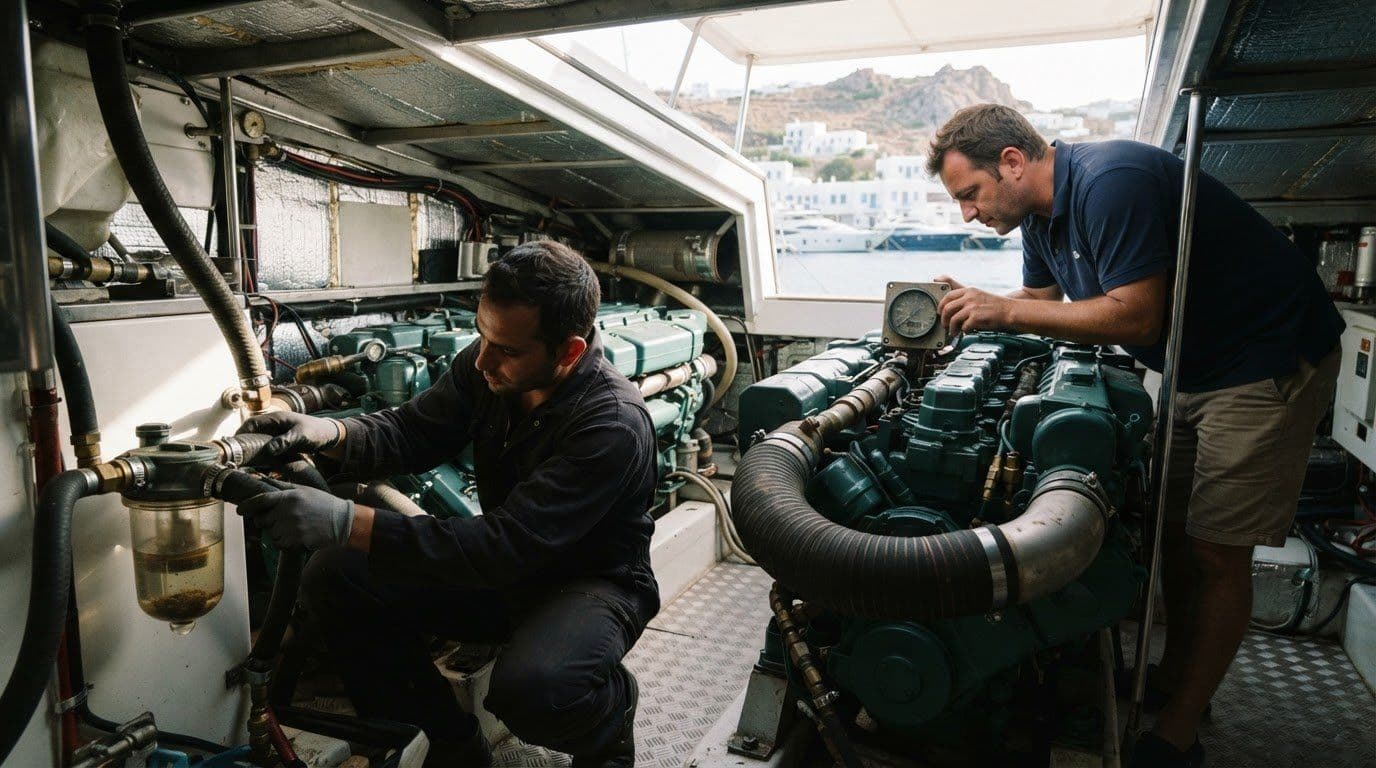
A yacht with past repairs isn’t automatically a risky charter. Clear records and evidence of sound follow-up matter more than a spotless history. Checking a yacht’s maintenance history before charter means reviewing what was repaired, why, and whether key systems were maintained on schedule. There’s no universal boat-history database equivalent to Carfax, so the yacht’s own records are especially important.
It’s reasonable to pause at a repair entry, particularly one involving the engine, hull, or onboard systems. But a documented repair can show that an issue was addressed, while missing or inconsistent records can leave important questions unanswered.
This guide explains how to assess past repairs, review engine and system maintenance, and interpret service intervals. You’ll also learn how maintenance records can help you evaluate insurance documentation and charter readiness, so you can make a more informed choice before setting sail.
Key Takeaways
- Read engine hours alongside service entries, and look for recorded checks of cooling, fuel, lubrication, and exhaust systems.
- Use the yacht’s installed-engine schedule to interpret maintenance intervals; calendar time and running hours can both determine when servicing is due.
- Organized service records, registration and title documents, and previous surveys can help show how prepared a yacht is for insurance review and charter.
- Equipment condition matters too: survey records should include the dates and weights of liferafts, EPIRBs, and fire extinguishers.
Engine, cooling, exhaust, and fuel-system maintenance
Read engine hours alongside service records and the yacht’s physical condition. A consistent log can show whether maintenance followed the schedule for the installed engine.
Testing Engines and Onboard Systems
An inspection combines visual checks with operational testing of engines and generators. Before starting either, inspect accessible machinery spaces for leaks and check fluid levels according to the equipment’s specified procedure. Review records for checks of transmissions, fuel intake, lubricant, exhaust, air intake, and coolant. Testing matters because recurring overheating, fuel leaks, suspected exhaust leaks, or unexplained water ingress can signal unresolved concerns affecting guests. Stop using affected equipment and seek qualified help if these issues appear.
Comparing Engine Hours With Condition
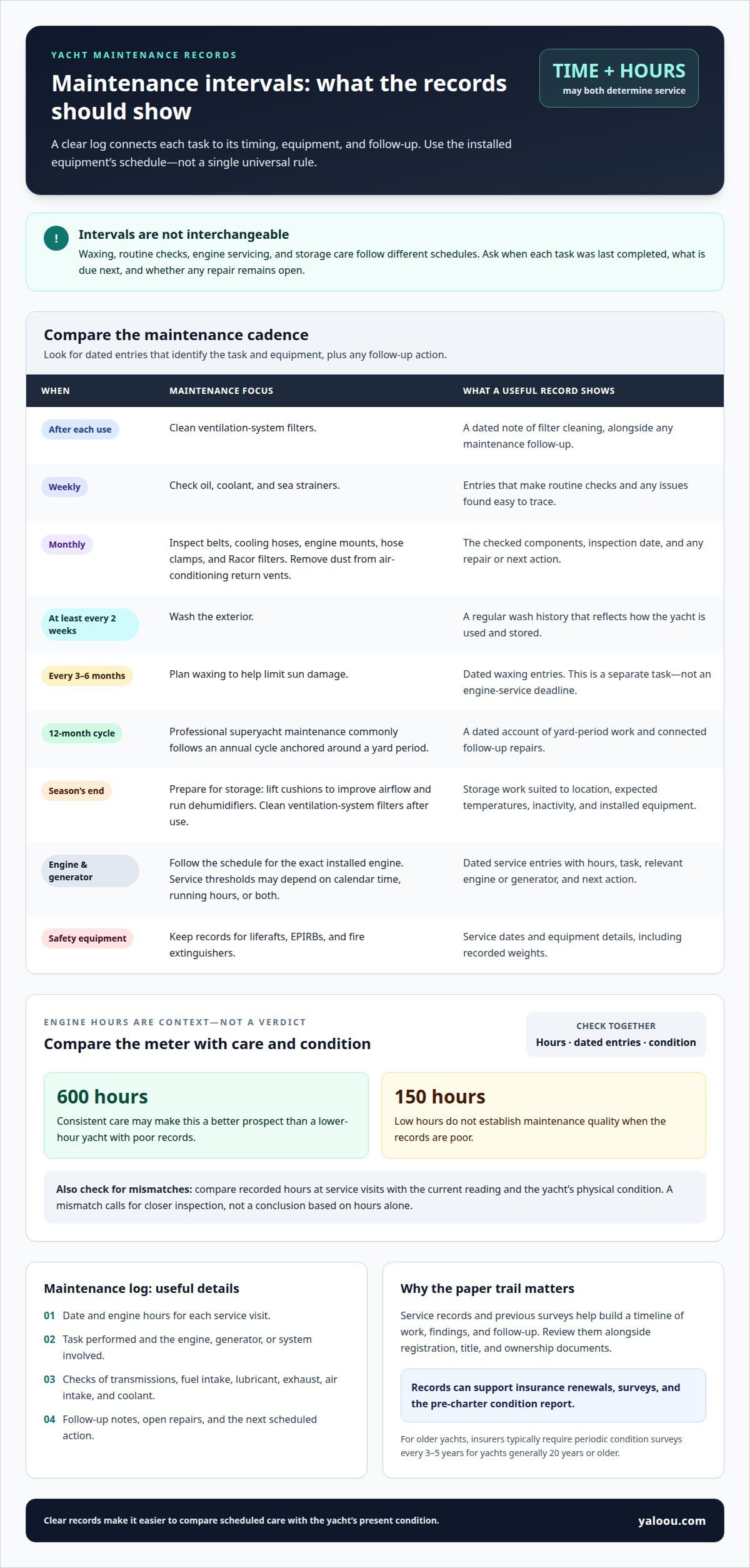
Engine hours show accumulated use, but they don’t establish maintenance quality on their own. A yacht with 600 engine hours and consistent care may be a better prospect than one with 150 hours and poor records. Conversely, a fifteen-year-old yacht with seventy hours may still raise concern if preventative maintenance is absent. Compare the hour-meter reading with dated service entries, the yacht’s condition, and any follow-up noted. Mismatches call for closer inspection, not a conclusion based on hours alone.
Tracking Hours and Maintenance History
A useful maintenance history pairs engine hours with dated work and follow-up notes. Check whether entries identify the task, the relevant engine or generator, and any next action. Records should cover transmissions, fuel intake, lubricant, exhaust, air intake, and coolant. Compare the recorded hours at each service visit with the current reading. A clear timeline helps show how use and maintenance relate. The schedule for the exact installed engine matters because service thresholds can depend on calendar time, running hours, or both.
Recent Servicing for Key Systems
There’s no single calendar age that defines recent servicing for every yacht. Engine and generator maintenance should follow the schedule for the exact installed engine, which may be based on calendar time, running hours, or both. Safety-equipment records should show service dates and equipment details, including liferaft, EPIRB, and fire-extinguisher dates and weights. For routine checks, the checklist calls for monthly inspection of belts, cooling hoses, engine mounts, hose clamps, and Racor filters. Weekly checks include oil, coolant, and sea strainers. These entries help show whether the equipment is being maintained.
Three-, six-, and twelve-month maintenance intervals
Ask the yacht owner or charter broker when scheduled maintenance was last completed, which tasks are due next, and whether any repairs remain open. Ask how the vessel’s schedule follows the manufacturer’s guidance, and how the crew manages moisture, ventilation, and interior cleaning between charters.
Intervals depend on the equipment and the work involved. Professional superyacht maintenance commonly follows a 12-month cycle anchored around a yard period, while waxing is generally planned every three to six months to help limit sun damage. Treat these as different tasks, not interchangeable deadlines. An engine or generator schedule may use calendar time and running hours, so log entries should explain which threshold triggered each service.
Look for dated entries that connect routine work with follow-up repairs. Interior care follows its own schedule: clean ventilation-system filters after each use, and remove dust from air-conditioning return vents monthly. At season’s end, preparing the vessel for storage can include lifting cushions to improve airflow and running dehumidifiers. These steps help reduce trapped moisture during inactivity. Cleaning frequency should also reflect how the yacht is used and stored.
For the exterior, the checklist recommends washing at least every two weeks. Seasonal storage work should reflect location, expected temperatures, inactivity, and installed equipment. Together, these records help show whether care matches operating conditions, rather than simply listing completed tasks. Missing entries around storage or recurring dampness can make it harder to understand how the interior was protected between trips.
Once you’ve reviewed the maintenance picture, explore yacht experiences on the water to plan the kind of charter that suits your time aboard.
Using maintenance records for insurance renewals and charter readiness
Maintenance records support insurance renewals, surveys, and the pre-charter condition report. Compare the written history with the yacht’s present condition to identify gaps that could affect readiness.
A charter contract should clearly explain how maintenance issues, breakdowns, and any refund or remedy are handled. Read those terms before signing, including how the crew will communicate a fault during the charter.
Service Records and Previous Surveys
Service records and previous surveys provide a timeline of work, findings, and follow-up. Review them alongside registration, title, and ownership documents to understand the yacht’s history. Maintenance records generated throughout the year feed into the next insurance renewal, class survey, and pre-charter condition report. For older yachts, insurers typically require periodic condition surveys every 3-5 years, generally those 20 years or older.
Documenting Leaks and Operational Changes
Clear documentation captures new leaks, damage, and changes from normal operation. Photographs of hull changes help repair yards distinguish new damage from previously observed conditions. A new shaft vibration or altered handling deserves a dated record and a report to a yard. One symptom alone doesn’t establish whether alignment or bearing wear is the cause. Knowing what changed, and when, helps technicians assess the mechanical issue.
Checking Condition Against Records
Compare recorded repairs with visible evidence during inspection. If a service entry describes a hull repair, look for corresponding documentation and photographs. If records mention corrosion, check whether follow-up work is recorded. A mismatch doesn’t prove poor care, but it does flag an issue that needs an explanation. Compare the yacht’s current condition with previous survey findings and documented repairs, then note unresolved work or recurring faults in the condition report.
Surveyor Inspections and Maintenance Warning Signs
A surveyor’s inspection can assess the yacht’s condition and help interpret technical records before chartering. The survey fee depends on scope, yacht size, and whether engine expertise or haul-out work is involved. Pre-purchase survey estimates aren’t a reliable price for every charter inspection. Warning signs include recurring leaks, unexplained changes in handling, corrosion without documented follow-up, or repairs that don’t align with survey history. These findings help frame questions about charter readiness.
Replacement of equipment and component parts
In the United States, applicable U.S. Coast Guard and state safety requirements depend on vessel type, charter operation, and location. Review safety-equipment records and inspection documents as part of assessing readiness.
Replacement entries should identify the component removed and installed, the work date, equipment details, and reason for the change. For example, an entry for a replaced pump should connect the repair to its system and note any resulting test or follow-up. This helps show whether the work addressed a fault, rather than simply recording a new part.
Equipment doesn’t follow one universal service schedule. The manufacturer’s instructions, installation, condition, and running use can affect when a component needs attention. Compare scheduled maintenance entries with the equipment actually installed. If a part has been replaced, its service history should start with the replacement date and identify relevant model or serial details where recorded. This creates a clear reference for future inspections and maintenance.
For life-saving and fire-safety equipment, review the available survey records and compare them with the equipment aboard:
- Liferafts, including recorded service or replacement details.
- EPIRBs, with their identifying and service information.
- Fire extinguishers, with dates and weights recorded.
Check whether those details match the equipment aboard. A missing entry, damaged casing, or mismatch between a record and the item’s label is worth clarifying. For other replaced components, note visible condition, such as a worn surface, alongside the service entry. This comparison can help distinguish a planned replacement from work prompted by wear or failure. A dated record also gives future maintenance teams a baseline for tracking the new part’s service life.
Want to turn careful preparation into time on the water? Explore yacht experiences and plan your next charter.
Applicable Coast Guard and state safety requirements vary with the yacht’s type, charter operation, and location.
YAL’OOU Exclusive Yachting & More: Daily Yacht Charters
YAL’OOU Exclusive Yachting & More offers Daily Yacht Charters for guests planning time on the water and Weekly Crewed Yacht Rentals for a longer escape. Once you’ve reviewed the maintenance records and charter readiness, choose the format that suits your plans. A daily charter works for a shorter outing, while a weekly rental gives you more time aboard with a crew.
Clear maintenance documentation helps you understand a yacht’s service history. The right charter experience turns that preparation into a well-planned getaway. Share your preferred timing and trip style to shape your next step.
Contact YAL’OOU Exclusive Yachting & More to discuss your charter plans.
Make Your Charter Plans With Confidence
Checking a yacht's maintenance history before charter is part of choosing an experience that meets your expectations. Use what you’ve learned to decide what matters most for your time aboard, from a relaxed day on the water to a longer escape. Then plan your trip around those priorities.
A well-matched charter starts with clear expectations. Consider the atmosphere you want, how you’d like to spend your time, and whether you’re planning a short outing or an extended stay. Sharing your preferences helps shape a trip around your plans, with the yacht as one part of the experience.
Ready to explore your options? Contact YAL’OOU Exclusive Yachting & More to discuss your charter plans and take the next step toward time on the water.
Make room for the journey you’re looking forward to. A thoughtful choice now can set the tone for a memorable escape.
Frequently Asked Questions
Should I worry about a boat with past repairs?
Not automatically. A documented repair is easier to assess when records explain the cause, work completed, parts changed, and follow-up. Check whether the same fault returned and whether the repair aligns with the yacht’s present condition. A cosmetic fix differs from work involving hull structure or propulsion. Unclear repair scope or recurring symptoms deserve closer attention before booking.
What are acceptable engine hours?
There’s no single engine-hour figure that makes a yacht acceptable for charter. Put the reading in context by comparing it with the yacht’s age, use pattern, service entries, and current mechanical condition. A lower reading doesn’t prove good upkeep, just as higher hours alone don’t show neglect. Give greater weight to a coherent history and evidence of scheduled care for the installed engine.
What maintenance records should I request before chartering a yacht?
Request dated engine and generator logs, repair invoices, records of recurring faults and follow-up, and service information for installed systems. Checking a yacht's maintenance history before charter also means reviewing registration, title, ownership history, previous survey reports, and safety-equipment records. For example, an invoice naming a replaced pump is more useful when it identifies the date, system, reported fault, and any post-repair test.
How can I verify a yacht's service history and maintenance records?
Build a timeline from the yacht’s documentation by matching dates, engine-hour entries, invoices, and survey observations. Checking a yacht's maintenance history before charter can include a Hull Identification Number search for past incidents or repairs, but there’s no universal boat-history database equivalent to Carfax. Compare search results with owner records and survey notes, then review any discrepancies as part of the yacht’s broader history.
What inspection reports should I review before booking a yacht charter?
Review the latest condition or insurance survey, previous surveys, and any available pre-charter condition report. Focus on recorded defects, recommended repairs, and whether later documents show completed work. Consider each report’s scope and date alongside subsequent maintenance records, since the yacht’s condition may have changed. For hull work, photographs and repair documents can help show how the condition developed.
How can I check a yacht for recalls, accident history, or damage repairs?
Use the yacht’s Hull Identification Number to search for incident or repair history, then compare results with surveys, service records, and dated hull photographs. For a possible recall, match the exact manufacturer and model against manufacturer notices. Look for documented corrective work corresponding to the identified issue. Treat each result as one part of the yacht’s history, not a complete account on its own.
Disclaimer
The YAL’OOU Travel Guide is curated with care to inspire and inform discerning travelers. While every effort is made to ensure the accuracy and relevance of the information provided, all content is offered for general guidance only and may evolve over time.
Details such as local regulations, availability, pricing, and services are subject to change without prior notice. We encourage guests to seek personalized advice and confirm arrangements directly when planning their journeys.
YAL’OOU accepts no liability for any inaccuracies, omissions, or outcomes arising from the use of this information. The Travel Guide may feature recommendations, insights, and selected third-party experiences, presented solely as a source of inspiration and not as formal endorsements.
By accessing this section of our website, you acknowledge and accept this disclaimer as part of your experience with YAL’OOU.